Salvia hydrangea
Salvia hydrangea · Accepted scientific name
Scientific literature: Very Sparse (18 studies) · ★☆☆☆☆
Salvia hydrangea, scientifically known as Salvia hydrangea, is a remarkable medicinal plant cherished for its unique therapeutic properties. Renowned in traditional herbalism, it offers diverse health benefits, ranging from soothing inflammation to supporting cognitive function. This guide explores its botanical characteristics, potent bioactive compounds, and essential holistic applications.
- Family
- Lamiaceae
- Native range
- Asia-Temperate
- Parts used
- Not available
- Common names
- Not available
- Scientific synonyms
- Schraderia Dracocephaloides · Arischrada Dracocephaloides · 5 more
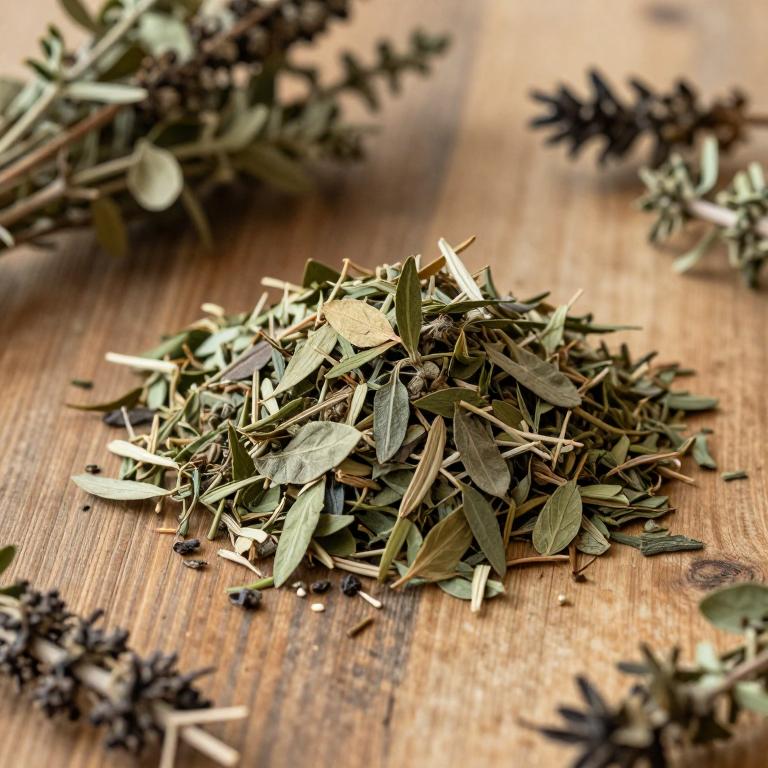
Names and Synonyms
Scientific Names
Accepted name
Salvia hydrangeaSynonyms
- Schraderia dracocephaloides
- Arischrada dracocephaloides
- Salvia shielii
- Stiefia hydrangea
- Salvia dracocephaloides
- Schraderia hydrangea
- Schraderia shielii
Sources: Wikidata, Catalogue of Life
Taxonomical Classification
This plant belongs to the kingdom Plantae and is classified under the phylum Streptophyta and class Equisetopsida. Within the subclass Magnoliidae, it is placed in the order Lamiales and the family Lamiaceae. Finally, it is categorized under the genus Salvia.
| Rank | Classification |
|---|---|
| Kingdom | Plantae |
| Phylum | Streptophyta |
| Class | Equisetopsida |
| Subclass | Magnoliidae |
| Order | Lamiales |
| Family | Lamiaceae |
| Genus | Salvia |
Sources: The World Checklist of Vascular Plants (WCVP)
Distribution
This plant exhibits a specific geographical distribution concentrated within certain mountainous and temperate regions. It is found naturally throughout the Caucasus, particularly within the Transcaucasus area. Additionally, its habitat extends into Western Asia, where it thrives in various environments. Specifically, the species can be located across the landscape of Iran. Finally, its range includes the diverse terrains found within Türkiye.
| Region | Area |
|---|---|
| Caucasus | Transcaucasus |
| Western Asia | Iran |
| Western Asia | Türkiye |
Sources: The World Checklist of Vascular Plants (WCVP)
Botanical Identification
Ecology
The ecology of Salvia hydrangea is characterized by its specialized preference for stony places, where it thrives amidst rocky substrates and fragmented terrain. This preference for lithic environments suggests an adaptation to well-draining soils and microhabitats that may provide thermal stability or specific moisture retention patterns found within crevices and rocky outcrops. By occupying these stony niches, the plant avoids competition with species that require deeper, more continuous soil layers, instead leveraging the unique drainage and mineral availability inherent to such rugged landscapes.
- Habitat :
- stony places
Life history
The life history of Salvia hydrangea is characterized by its status as a perennial plant, allowing it to persist through multiple growing seasons rather than completing its cycle in a single year. In terms of its growth habit and structural classification, the species functions as a chamaephyte, a life form where the regenerative buds are located close to the soil surface, often protected by a layer of leaf litter or surface debris. This chamamyphyte classification, consistent across its biological life form traits, ensures that the plant can endure seasonal fluctuations by maintaining its vital structures at a low profile near the ground level.
- Life form :
- chamaephyte
- Lifecycle :
- perennial
Morphology
The morphology of Salvia hydrangea is characterized by its stature as a low-growing plant, reaching a minimum height of 0.2 m and a maximum height of 0.5 m. It exhibits a growth form categorized as both a shrub and a subshrub, possessing a woody texture throughout its structure. The plant is self-supporting in its growth habit, requiring no external structures for support, and functions as an independent organism rather than a parasite. Furthermore, it is a terrestrial species, establishing its root system directly in the ground.
- Climber :
- self-supporting
- Epiphyte :
- terrestrial
- Growth form :
- shrub
- Growth form :
- subshrub
- Parasite :
- independent
- Plant height max:
- 0.5 m
- Plant height min:
- 0.2 m
- Woodiness :
- woody
Reproduction
The reproduction of Salvia hydrangea is characterized by a specific seasonal flowering window and highly consistent seed production metrics. The plant enters its flowering stage in May and continues to bloom until July, providing a distinct period for pollination. Regarding its seed characteristics, the species exhibits remarkable uniformity, with a mean seed mass of 0.0041 g. This precision is reflected in its reproductive output, as both the minimum and maximum recorded seed masses are identical at 0.0041 g, indicating a highly stabilized seed size during the reproductive cycle.
- Flowering time :
- May
- Flowering time :
- Jul
- Seed mass mean:
- 0.0041 g
Sources: Global Inventory of Floras and Traits (GIFT)
Chemicals
Salvia hydrangea has 10 reported phytochemicals identified across 0 scientific publications and several other databases. The most consistently reported chemicals include 1,8-Cineol, BETA-CARYOPHYLLENE, Caryophyllene oxide, Hydrangenone, Isoprenoids.
| Chemical | Supporting sources | Consensus |
|---|---|---|
| 1,8-Cineol | 1 supporting sources | ★☆☆☆☆ |
| BETA-CARYOPHYLLENE | 1 supporting sources | ★☆☆☆☆ |
| Caryophyllene oxide | 1 supporting sources | ★☆☆☆☆ |
| Hydrangenone | 1 supporting sources | ★☆☆☆☆ |
| Isoprenoids | 1 supporting sources | ★☆☆☆☆ |
| OLEANOLIC ACID | 1 supporting sources | ★☆☆☆☆ |
| Perovskone | 1 supporting sources | ★☆☆☆☆ |
| Perovskone B | 1 supporting sources | ★☆☆☆☆ |
| Salvadione A | 1 supporting sources | ★☆☆☆☆ |
| Salvadione C | 1 supporting sources | ★☆☆☆☆ |
1,8-Cineol
- Zeitschrift fur Naturforschung. C, Journal of biosciences
BETA-CARYOPHYLLENE
- Zeitschrift fur Naturforschung. C, Journal of biosciences
Caryophyllene oxide
- Zeitschrift fur Naturforschung. C, Journal of biosciences
Hydrangenone
- Organic letters
Isoprenoids
- Journal of natural products
OLEANOLIC ACID
- Planta medica
Perovskone
- Journal of natural products
Perovskone B
- Journal of natural products
Salvadione A
- Journal of natural products
Salvadione C
- Journal of natural products
Activities
Salvia hydrangea has 1 reported activities identified across 0 scientific publications and several other databases. The most consistently reported activities include Antiplasmodial.
| Activity | Supporting sources | Consensus |
|---|---|---|
| Antiplasmodial | 2 supporting sources | ★☆☆☆☆ |
Antiplasmodial
- Planta medica
- Journal of natural products
Conditions
Salvia hydrangea has 3 reported investigations on conditions identified across 0 scientific publications and several other databases. The most consistently reported conditions include Leishmania donovani, Plasmodium falciparum, pancreatic cancer.
| Condition | Supporting sources | Consensus |
|---|---|---|
| Leishmania donovani | 1 supporting sources | ★☆☆☆☆ |
| Plasmodium falciparum | 1 supporting sources | ★☆☆☆☆ |
| Pancreatic cancer | 1 supporting sources | ★☆☆☆☆ |
Leishmania donovani
- Journal of natural products
Plasmodium falciparum
- Journal of natural products
Pancreatic cancer
- BMC complementary medicine and therapies
Preparations
Salvia hydrangea has 2 reported preparations identified across 0 scientific publications and several other databases. The most consistently reported preparations include methanolic extracts, n-hexane extract.
| Preparation | Supporting sources | Consensus |
|---|---|---|
| Methanolic extracts | 1 supporting sources | ★☆☆☆☆ |
| N-hexane extract | 1 supporting sources | ★☆☆☆☆ |
Methanolic extracts
- BMC complementary medicine and therapies
N-hexane extract
- Journal of natural products