chía
Salvia hispanica · Accepted scientific name
Scientific literature: Very Sparse (48 studies) · ★☆☆☆☆
Chía, scientifically known as Salvia hispanica, is a nutritional powerhouse native to Central America. Renowned for its remarkable concentration of omega-3 fatty acids, fiber, and antioxidants, these tiny seeds offer significant health benefits. Often used in smoothies and baked goods, chía serves as a versatile superfood in modern diets.
- Family
- Lamiaceae
- Native range
- Europe
- Parts used
- Seed · Leaf
- Common names
- Not available
- Scientific synonyms
- Kiosmina Hispanica · Salvia Prysmatica · 4 more
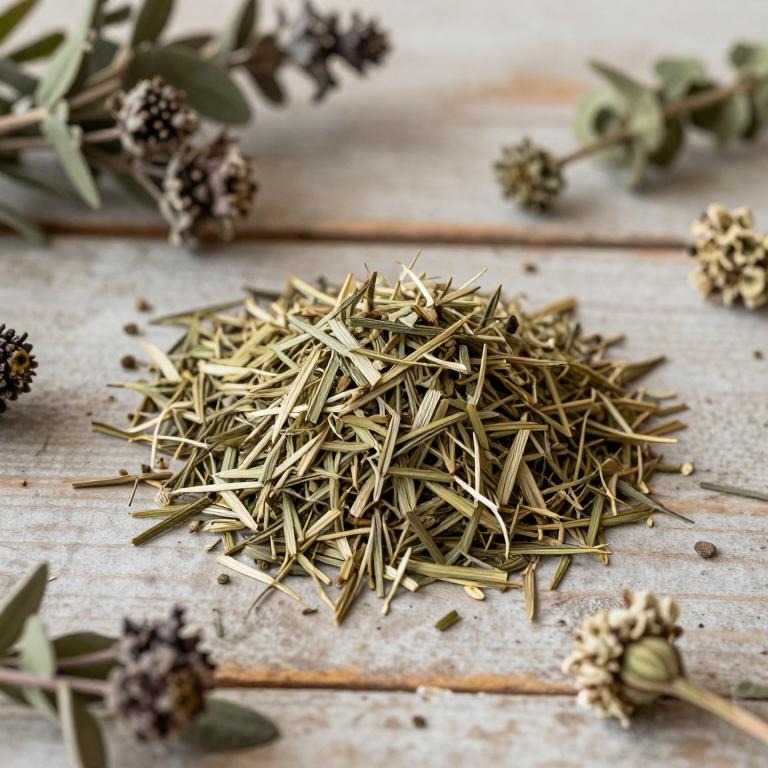
Names and Synonyms
Scientific Names
Accepted name
Salvia hispanicaSynonyms
- Kiosmina hispanica
- Salvia prysmatica
- Salvia schiedeana
- Salvia hispanica var. chionocalyx
- Salvia hispanica var. intonsa
- Salvia chia
Regional and Traditional Names
Spanish:
- Chía planta
- Salvia hispánica
- Chia planta
- Kiosmina hispanica
- Salvia neohispanica
- Salvia tetragona
- Salvia prysmatica
- Salvia chia
- Salvia schiedeana
- chía
German:
- Mexikanische Chia
- Chia
French:
- chia
Sources: Wikidata, Catalogue of Life
Taxonomical Classification
This plant belongs to the kingdom Plantae and the phylum Streptophyta, placing it within the class Equisetopsida and the subclass Magnoliidae. It is further classified under the order Lamiales and the family Lamiaceae, belonging to the genus Salvia.
| Rank | Classification |
|---|---|
| Kingdom | Plantae |
| Phylum | Streptophyta |
| Class | Equisetopsida |
| Subclass | Magnoliidae |
| Order | Lamiales |
| Family | Lamiaceae |
| Genus | Salvia |
Sources: The World Checklist of Vascular Plants (WCVP)
Distribution
This plant exhibits a fragmented geographical distribution across several distinct regions of Europe. In Northern Europe, its presence can be identified within Great Britain. Moving into Middle Europe, it is found across Germany, Austria, and the Czechia-Slovakia region. The species also extends into Southwestern Europe, specifically inhabiting the Baleares. Together, these locations define the varying territories where the species thrives.
| Region | Area |
|---|---|
| Northern Europe | Great Britain |
| Middle Europe | Austria |
| Middle Europe | Czechia-Slovakia |
| Middle Europe | Germany |
| Southwestern Europe | Baleares |
| Southwestern Europe | Sardegna |
| Southwestern Europe | Spain |
| Southeastern Europe | Bulgaria |
| Eastern Europe | Central European Russia |
| Macaronesia | Madeira |
Sources: The World Checklist of Vascular Plants (WCVP)
Botanical Identification
Ecology
The ecology of Salvia hispanica is defined by its presence in anthropogenic areas (Área Antrópica), where it thrives within environments influenced by human activity. This species is specifically adapted to high-altitude ecosystems, occupying an elevational range that begins at 1,800 m AMSL and extends up to a maximum of 2,400 m AMSL. This distribution pattern indicates a preference for montane or sub-alpine conditions within modified landscapes, where it manages the specific climatic demands of these high-elevation zones.
- Elevational range max:
- 2400 m AMSL
- Elevational range min:
- 1800 m AMSL
- Habitat :
- Área Antrópica
Life history
The life history of Salvia hispanica is characterized by its status as an annual plant, meaning it completes its entire developmental cycle—from germination to seed production—within a single growing season. In terms of its structural life form, it is classified as a therophyte, a strategy where the plant survives unfavorable environmental conditions primarily through seeds, leaving no persistent vegetative organs above ground after its seasonal cycle concludes. This life history strategy allows the species to rapidly exploit available resources and ensure reproductive success before the onset of environmental stressors.
- Life form :
- therophyte
- Lifecycle :
- annual
Morphology
The morphology of Salvia hispanica is characterized by a growth form classified as a non-woody herb and, more specifically, a forb. It is a self-supporting plant that does not exhibit climbing behavior, such as acting as a liana or vine, and functions as an independent organism rather than a parasite. The plant is strictly terrestrial, lacking any epiphytic or aquatic characteristics. In terms of stature, it reaches an average plant height of approximately 1.375 m.
- Aquatic :
- terrestrial
- Climber :
- self-supporting
- Epiphyte :
- terrestrial
- Growth form :
- herb
- Growth form :
- forb
- Parasite :
- independent
- Plant height mean:
- 1.375 m
- Woodiness :
- non-woody
Physiology
The physiology of Salvia hispanica is characterized by a robust metabolic framework optimized for resilience in diverse environmental conditions, though it does not function as a nitrogen fixer. Unlike leguminous species that engage in symbiotic relationships with rhizobia to convert atmospheric nitrogen into bioavailable forms, this plant relies on the uptake of nitrates and ammonium from the soil through its root system. Its physiological processes are heavily centered around efficient water regulation and nutrient assimilation to support the development of nutrient-dense seeds. The plant exhibits specialized photosynthetic pathways and secondary metabolite production, which contribute to its overall vigor and survival. While it possesses highly efficient mechanisms for managing mineral nutrition and carbon sequestration, the physiological trait of being a nitrogen fixer is marked as no.
- Nitrogen fixer :
- no
Reproduction
The reproduction of Salvia hispanica is characterized by a biotic pollination syndrome, relying heavily on living organisms to facilitate genetic exchange. Specifically, the pollination process is driven by insects, with bees serving as a primary pollinator type. Following successful fertilization, the plant produces seeds with a highly specific mass profile. The individual seeds are quite small, with a minimum recorded mass of 0.0004 g and a maximum mass of 0.00113 g. On average, the seed mass is approximately 0.000765 g, a characteristic that influences its dispersal and germination potential within its ecological niche.
- Pollination syndrome :
- insect
- Pollination syndrome :
- bee
- Pollination syndrome :
- biotic
- Seed mass max:
- 0.00113 g
- Seed mass mean:
- 0.000765 g
- Seed mass min:
- 4e-04 g
Sources: Global Inventory of Floras and Traits (GIFT)
Plant Parts
Salvia hispanica has 3 reported plant parts identified across 4 scientific publications and several other databases that are studied for medicinal purposes. The most consistently reported plant part include seed, leaf, root.
| Plant part | Supporting sources | Consensus |
|---|---|---|
| Seed | 2 supporting sources | ★☆☆☆☆ |
| Leaf | 1 supporting sources | ★☆☆☆☆ |
| Root | 1 supporting sources | ★☆☆☆☆ |
Seed
- Cardiovascular & hematological agents in medicinal chemistry
- Pharmaceuticals (Basel, Switzerland)
Leaf
- Plants (Basel, Switzerland)
Root
- Plants (Basel, Switzerland)
Chemicals
Salvia hispanica has 18 reported phytochemicals identified across 4 scientific publications and several other databases. The most consistently reported chemicals include caffeic acid, Antioxidants, rosmarinic acid, Anthocyanins, Bioelements.
| Chemical | Supporting sources | Consensus |
|---|---|---|
| caffeic acid | 3 supporting sources | ★★☆☆☆ |
| Antioxidants | 2 supporting sources | ★☆☆☆☆ |
| rosmarinic acid | 2 supporting sources | ★☆☆☆☆ |
| Anthocyanins | 1 supporting sources | ★☆☆☆☆ |
| Bioelements | 1 supporting sources | ★☆☆☆☆ |
| Carotenoids | 1 supporting sources | ★☆☆☆☆ |
| Essential amino acids | 1 supporting sources | ★☆☆☆☆ |
| Flavonoids | 1 supporting sources | ★☆☆☆☆ |
| Kaempferol 3-O-glucuronide | 1 supporting sources | ★☆☆☆☆ |
| Omega-3 Fatty Acids | 1 supporting sources | ★☆☆☆☆ |
caffeic acid
- Molecules (Basel, Switzerland)
- Biomedical chromatography : BMC
- Pharmaceuticals (Basel, Switzerland)
Antioxidants
- Molecules (Basel, Switzerland)
- Current topics in medicinal chemistry
rosmarinic acid
- Molecules (Basel, Switzerland)
- Biomedical chromatography : BMC
Anthocyanins
- Current topics in medicinal chemistry
Bioelements
- Molecules (Basel, Switzerland)
Carotenoids
- Current topics in medicinal chemistry
Essential amino acids
- Molecules (Basel, Switzerland)
Flavonoids
- Current topics in medicinal chemistry
Kaempferol 3-O-glucuronide
- Pharmaceuticals (Basel, Switzerland)
Omega-3 Fatty Acids
- Molecular biology reports
Activities
Salvia hispanica has 8 reported activities identified across 4 scientific publications and several other databases. The most consistently reported activities include Antioxidant, Anticancer, Antidiabetic, Antihyperglycemic, Antimicrobial.
| Activity | Supporting sources | Consensus |
|---|---|---|
| Antioxidant | 2 supporting sources | ★☆☆☆☆ |
| Anticancer | 1 supporting sources | ★☆☆☆☆ |
| Antidiabetic | 1 supporting sources | ★☆☆☆☆ |
| Antihyperglycemic | 1 supporting sources | ★☆☆☆☆ |
| Antimicrobial | 1 supporting sources | ★☆☆☆☆ |
| Cardioprotective | 1 supporting sources | ★☆☆☆☆ |
| Hypoglycemic | 1 supporting sources | ★☆☆☆☆ |
| Hypolipidemic | 1 supporting sources | ★☆☆☆☆ |
Antioxidant
- Current topics in medicinal chemistry
- Cardiovascular & hematological agents in medicinal chemistry
Anticancer
- Current topics in medicinal chemistry
Antidiabetic
- Cardiovascular & hematological agents in medicinal chemistry
Antihyperglycemic
- Cardiovascular & hematological agents in medicinal chemistry
Antimicrobial
- Current topics in medicinal chemistry
Cardioprotective
- Current topics in medicinal chemistry
Hypoglycemic
- Current topics in medicinal chemistry
Hypolipidemic
- Cardiovascular & hematological agents in medicinal chemistry
Conditions
Salvia hispanica has 10 reported investigations on conditions identified across 4 scientific publications and several other databases. The most consistently reported conditions include antidiabetic, antihyperglycemic, breast cancer, cancer, cardiovascular disease.
| Condition | Supporting sources | Consensus |
|---|---|---|
| Antidiabetic | 1 supporting sources | ★☆☆☆☆ |
| Antihyperglycemic | 1 supporting sources | ★☆☆☆☆ |
| Breast cancer | 1 supporting sources | ★☆☆☆☆ |
| Cancer | 1 supporting sources | ★☆☆☆☆ |
| Cardiovascular disease | 1 supporting sources | ★☆☆☆☆ |
| Lung cancer | 1 supporting sources | ★☆☆☆☆ |
| Neuroblastoma | 1 supporting sources | ★☆☆☆☆ |
| Obesity | 1 supporting sources | ★☆☆☆☆ |
| Salinity stress | 1 supporting sources | ★☆☆☆☆ |
| Salt stress | 1 supporting sources | ★☆☆☆☆ |
Antidiabetic
- Cardiovascular & hematological agents in medicinal chemistry
Antihyperglycemic
- Cardiovascular & hematological agents in medicinal chemistry
Breast cancer
- Molecular biology reports
Cancer
- Current topics in medicinal chemistry
Cardiovascular disease
- Current topics in medicinal chemistry
Lung cancer
- Pharmaceuticals (Basel, Switzerland)
Neuroblastoma
- Biomedical chromatography : BMC
Obesity
- Current topics in medicinal chemistry
Salinity stress
- 3 Biotech
Salt stress
- 3 Biotech
Preparations
Salvia hispanica has 3 reported preparations identified across 4 scientific publications and several other databases. The most consistently reported preparations include aqueous extract, methanol extracts, seed aqueous extract.
| Preparation | Supporting sources | Consensus |
|---|---|---|
| Aqueous extract | 1 supporting sources | ★☆☆☆☆ |
| Methanol extracts | 1 supporting sources | ★☆☆☆☆ |
| Seed aqueous extract | 1 supporting sources | ★☆☆☆☆ |
Aqueous extract
- Cardiovascular & hematological agents in medicinal chemistry
Methanol extracts
- Biomedical chromatography : BMC
Seed aqueous extract
- Cardiovascular & hematological agents in medicinal chemistry