Salvia grossheimii
Salvia grossheimii · Accepted scientific name
Scientific literature: Very Sparse (4 studies) · ★☆☆☆☆
Salvia grossheimii, scientifically known as Salvia grossheimii, is a rare and captivating perennial sage native to the rugged landscapes of Central Asia. Renowned for its distinctive floral structure and aromatic foliage, this medicinal plant offers significant ethnobotanical potential, providing a unique subject for pharmacological study and conservation efforts.
- Family
- Lamiaceae
- Native range
- Asia-Temperate
- Parts used
- Not available
- Common names
- Not available
- Scientific synonyms
- Not available
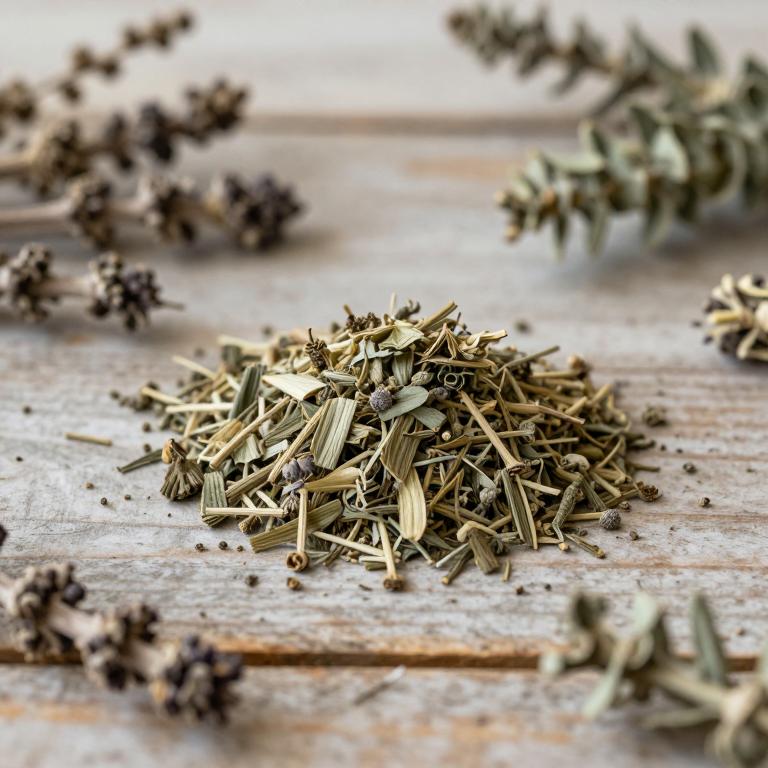
Names and Synonyms
Scientific Names
Accepted name
Salvia grossheimiiSources: Wikidata, Catalogue of Life
Taxonomical Classification
This plant belongs to the kingdom Plantae within the phylum Streptophyta and the class Equisetopsida. Classified under the subclass Magnoliidae and the order Lamiales, it is a member of the family Lamiaceae. Specifically, it is categorized under the genus Salvia.
| Rank | Classification |
|---|---|
| Kingdom | Plantae |
| Phylum | Streptophyta |
| Class | Equisetopsida |
| Subclass | Magnoliidae |
| Order | Lamiales |
| Family | Lamiaceae |
| Genus | Salvia |
Sources: The World Checklist of Vascular Plants (WCVP)
Distribution
This plant exhibits a specific geographical range primarily centered within the mountainous regions of Western Asia. Its distribution is notably concentrated in the Transcaucasus area of the Caucasus. Additionally, the species can be found extending into the territory of Iran. These specific locations define the natural habitat where the plant thrives. Consequently, its presence is limited to these particular parts of the Middle East and surrounding highlands.
| Region | Area |
|---|---|
| Caucasus | Transcaucasus |
| Western Asia | Iran |
Sources: The World Checklist of Vascular Plants (WCVP)
Botanical Identification
Ecology
The ecology of Salvia grossheimii is defined by its preference for high-altitude and rugged terrain, where it thrives within diverse montane ecosystems. This species is primarily found inhabiting open meadows and mountainous regions, specifically favoring stony places and rocky substrates that provide necessary drainage and stability. Its presence in these environments suggests an adaptation to well-drained soils and varying levels of solar exposure common to alpine and subalpine landscapes. By colonizing these stony habitats and meadowlands, Salvia grossheimii occupies specific ecological niches characterized by seasonal shifts in temperature and moisture typical of mountainous terrains.
- Habitat :
- meadows, mountains, stony places
Life history
The life history of Salvia grossheimii is characterized by a perennial lifecycle, allowing the plant to persist through multiple growing seasons. In terms of its structural adaptation to its environment, it exhibits a life form classified as a hemicryptophyte, meaning its perennially produced buds are located at or just below the soil surface, typically protected by leaf litter or ground debris. This hemicrypto-phyte growth habit, combined with its perennial nature, enables the species to maintain stability and recover effectively across successive seasonal cycles.
- Life form :
- hemicryptophyte
- Lifecycle :
- perennial
Morphology
The morphology of Salvia grossheimii is characterized by its growth form as a herb, which lacks any woody structure, making it a non-woody species. It functions as an independent organism, meaning it does not exhibit parasitic behavior, and it follows a terrestrial life cycle rather than being an epiphyte. In terms of its structural support, the plant is classified as a self-supporting climber, utilizing its own physical architecture to maintain its position.
- Climber :
- self-supporting
- Epiphyte :
- terrestrial
- Growth form :
- herb
- Parasite :
- independent
- Woodiness :
- non-woody
Reproduction
The reproduction of Salvia grossheimii is characterized by a specific phenological cycle centered around its flowering period. The reproductive process begins during the month of June, marking the onset of its flowering stage. This period of floral development is relatively concentrated, as the flowering phase concludes within the same month of June. Consequently, the plant exhibits a brief but defined reproductive window during the early summer, with all necessary floral activities occurring within this single month.
- Flowering time :
- Jun
Sources: Global Inventory of Floras and Traits (GIFT)
Activities
Salvia grossheimii has 2 reported activities identified across 0 scientific publications and several other databases. The most consistently reported activities include Antidiabetic, Cytotoxic.
| Activity | Supporting sources | Consensus |
|---|---|---|
| Antidiabetic | 1 supporting sources | ★☆☆☆☆ |
| Cytotoxic | 1 supporting sources | ★☆☆☆☆ |
Antidiabetic
- Journal of receptor and signal transduction research
Cytotoxic
- Journal of receptor and signal transduction research
Conditions
Salvia grossheimii has 2 reported investigations on conditions identified across 0 scientific publications and several other databases. The most consistently reported conditions include COVID-19, antidiabetic.
| Condition | Supporting sources | Consensus |
|---|---|---|
| Covid-19 | 1 supporting sources | ★☆☆☆☆ |
| Antidiabetic | 1 supporting sources | ★☆☆☆☆ |
Covid-19
- Journal of receptor and signal transduction research
Antidiabetic
- Journal of receptor and signal transduction research