Hermit Sage
Salvia eremophila · Accepted scientific name
Scientific literature: Very Sparse (5 studies) · ★☆☆☆☆
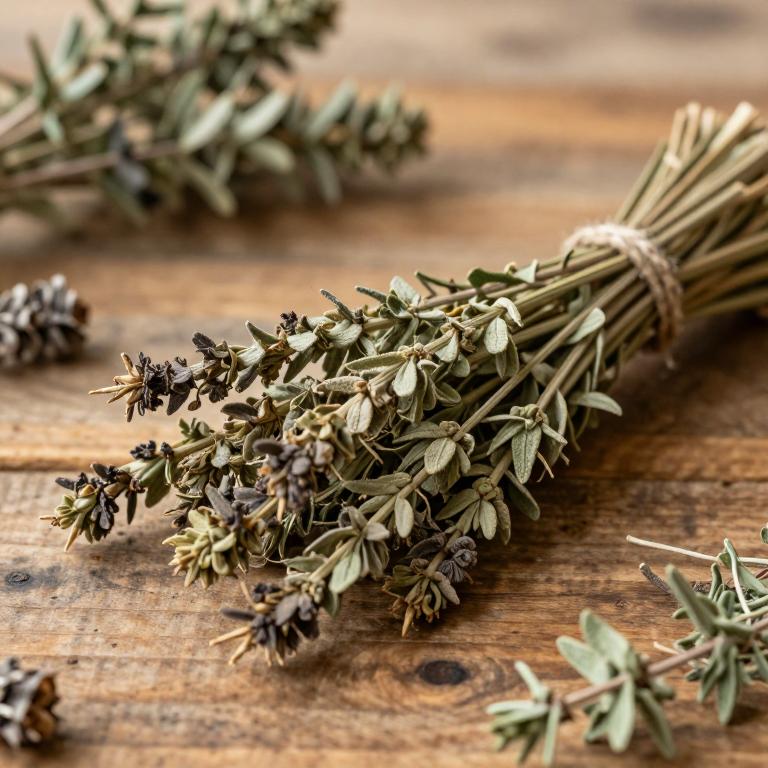
Hermit Sage, scientifically known as Salvia eremophila, is a resilient perennial native to arid landscapes. Renowned for its striking silvery foliage and delicate blooms, this medicinal plant offers unique therapeutic potential. Its hardy nature allows it to thrive in harsh environments, providing valuable phytochemicals used in traditional herbal remedies.
- Family
- Lamiaceae
- Native range
- Asia-Temperate
- Parts used
- Not available
- Common names
- Hermit Sage
- Scientific synonyms
- Pleudia Eremophila
Names and Synonyms
Common Names
- Hermit Sage
Scientific Names
Accepted name
Salvia eremophilaSynonyms
- Pleudia eremophila
Sources: Wikidata, Catalogue of Life
Taxonomical Classification
This plant belongs to the kingdom Plantae and the phylum Streptophyta, falling under the class Equisetopsida and subclass Magnoliidae. Within the order Lamiales and the family Lamiaceae, it is classified under the genus Salvia. Specifically, its taxonomic identity is defined as Salvia eremophila.
| Rank | Classification |
|---|---|
| Kingdom | Plantae |
| Phylum | Streptophyta |
| Class | Equisetopsida |
| Subclass | Magnoliidae |
| Order | Lamiales |
| Family | Lamiaceae |
| Genus | Salvia |
Sources: The World Checklist of Vascular Plants (WCVP)
Distribution
This plant is a specific species of the sage family with a very restricted range. Its natural occurrence is confined to the specific region of Western Asia. Within this vast territory, it can be found growing in the country of Iran. This limited distribution suggests that the species is highly adapted to the unique environmental conditions of its native habitat. Consequently, researchers focusing on its ecology must prioritize studies within these particular Iranian landscapes.
| Region | Area |
|---|---|
| Western Asia | Iran |
Sources: The World Checklist of Vascular Plants (WCVP)
Botanical Identification
Life history
The life history of Salvia eremophila is characterized by its adaptation to arid environments, functioning primarily as a chamaephyte. This classification indicates that its perennating buds are located close to the soil surface, often protected by a layer of substrate or organic matter, which allows the plant to survive seasonal extremes. Within the spectrum of plant life forms, it is specifically categorized as a chamaephyte, a trait that dictates its growth habit and survival strategy in its natural habitat. This life history strategy enables the species to maintain a low profile, minimizing exposure to desiccating winds and intense solar radiation while ensuring the persistence of its regenerative organs near the ground level.
- Life form :
- chamaephyte
Morphology
The morphology of Salvia eremophila is characterized by its distinct growth habit and ecological positioning. As a plant, it functions as a self-supporting climber, meaning it possesses the structural integrity to maintain its own posture without the absolute necessity of external support, though it may utilize surrounding vegetation for stability. It is an independent organism, lacking any parasitic tendencies and maintaining its own nutritional and metabolic processes without reliance on a host. Furthermore, it is a terrestrial plant, establishing its root system and growth within the soil rather than existing as an epiphyte.
- Climber :
- self-supporting
- Epiphyte :
- terrestrial
- Parasite :
- independent
Sources: Global Inventory of Floras and Traits (GIFT)
Chemicals
Salvia eremophila has 3 reported phytochemicals identified across 0 scientific publications and several other databases. The most consistently reported chemicals include Diterpene, Flavonoids, triterpene.
| Chemical | Supporting sources | Consensus |
|---|---|---|
| Diterpene | 1 supporting sources | ★☆☆☆☆ |
| Flavonoids | 1 supporting sources | ★☆☆☆☆ |
| triterpene | 1 supporting sources | ★☆☆☆☆ |
Diterpene
- Natural product research
Flavonoids
- Natural product research
triterpene
- Natural product research
Conditions
Salvia eremophila has 1 reported investigations on conditions identified across 0 scientific publications and several other databases. The most consistently reported conditions include Type 2 diabetes.
| Condition | Supporting sources | Consensus |
|---|---|---|
| Type 2 diabetes | 1 supporting sources | ★☆☆☆☆ |
Type 2 diabetes
- Journal of diabetes and metabolic disorders