pineapple sage
Salvia elegans · Accepted scientific name
Scientific literature: Very Sparse (17 studies) · ★☆☆☆☆
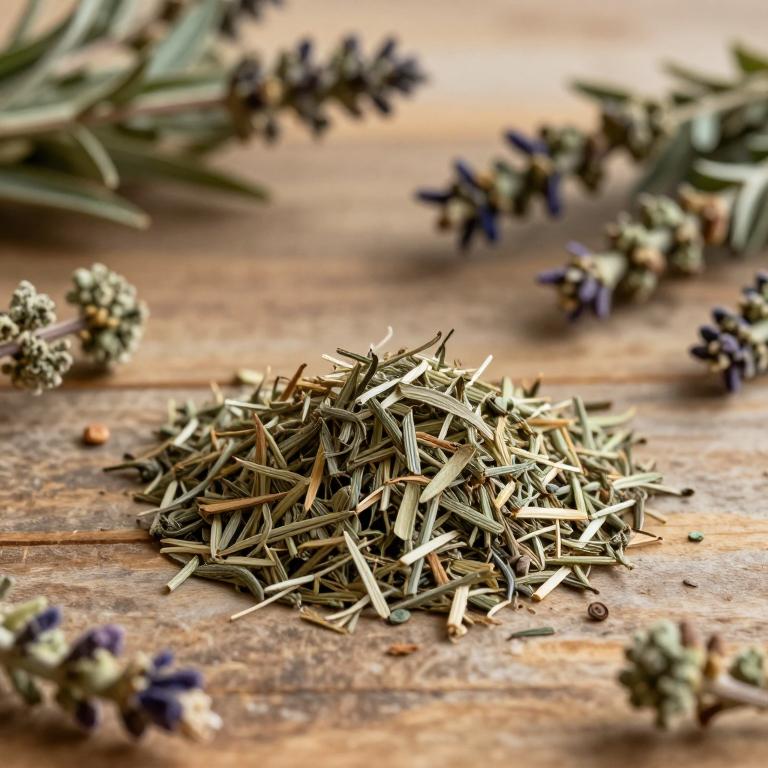
Pineapple sage, scientifically known as Salvia elegans, is a striking perennial herb celebrated for its vibrant red tubular flowers and unique, fruity aroma. Native to Mexico, this aromatic plant offers a delightful scent reminiscent of ripe pineapples, making it a versatile choice for both ornamental gardens and medicinal purposes.
Names and Synonyms
Common Names
- pineapple sage
- pineapple-scented sage
- Pineapple Scented Sage
Scientific Names
Accepted name
Salvia elegansSynonyms
- Salvia microcalyx
- Salvia microculis
- Salvia rutilans
- Salvia punicea
- Salvia elegans var. sonorensis
- Salvia camertonii
Regional and Traditional Names
Spanish:
- Hierba del burro
German:
- Honigmelonen-Salbei
- Ananassalbei
- Ananas-Salbei
- Honigmelonen-Salbei
French:
- Sauge ananas
Sources: Wikidata, Catalogue of Life
Taxonomical Classification
This plant belongs to the kingdom Plantae and is classified under the phylum Streptophyta within the class Equisetopsida. It is further categorized under the subclass Magnoliidae and the order Lamiales, falling into the family Lamiaceae. Ultimately, its taxonomic identity is defined by the genus Salvia.
| Rank | Classification |
|---|---|
| Kingdom | Plantae |
| Phylum | Streptophyta |
| Class | Equisetopsida |
| Subclass | Magnoliidae |
| Order | Lamiales |
| Family | Lamiaceae |
| Genus | Salvia |
Sources: The World Checklist of Vascular Plants (WCVP)
Distribution
This plant exhibits a broad presence across several diverse regions within Mexico. It is widely distributed throughout the Mexico Central area, forming a core part of its habitat. The species also extends its reach into the Mexico Northeast and the Mexico Gulf regions. Furthermore, its geographical range includes the Mexico Northwest territories. Finally, the plant can be found growing within the Mexico Southwest portion of the country.
| Region | Area |
|---|---|
| Mexico | Mexico Central |
| Mexico | Mexico Northeast |
| Mexico | Mexico Gulf |
| Mexico | Mexico Northwest |
| Mexico | Mexico Southwest |
Sources: The World Checklist of Vascular Plants (WCVP)
Botanical Identification
Ecology
The ecology of Salvia elegans is primarily characterized by its preference for lowland environments, where it thrives in warm, tropical, and subtropical climates. It is commonly found in disturbed areas, forest edges, and open scrublands, often colonizing regions with moderate to high levels of sunlight. In these lowland habitats, the plant typically occupies well-drained soils, ranging from sandy to loamy textures, and is adapted to seasonal variations in moisture. Its presence in such ecological niches allows it to interact closely with various pollinators, particularly hummingbirds and insects, which are drawn to its vibrant floral displays within these open, low-altitude landscapes.
- Habitat :
- Lowland
Life history
The life history of Salvia elegans is characterized by its nature as a perennial plant, allowing it to persist through multiple growing seasons. It exhibits a chamaephyte life form, meaning its primary regenerative buds are located close to the soil surface, which helps it navigate its environmental conditions. This species maintains an evergreen status, retaining its foliage throughout the year rather than shedding it seasonally.
- Deciduousness :
- evergreen
- Life form :
- chamaephyte
- Lifecycle :
- perennial
Morphology
The morphology of Salvia elegans is characterized by its growth form as an herb, typically reaching an average plant height of approximately 1 m. It is a terrestrial species, functioning as an independent organism rather than a parasite or an epiphyte. In terms of its structural habit, the plant is self-supporting rather than acting as a climber, such as a liana or vine. Furthermore, its woodiness is classified as variable, reflecting its developmental characteristics as it matures.
- Aquatic :
- terrestrial
- Climber :
- self-supporting
- Epiphyte :
- terrestrial
- Growth form :
- herb
- Parasite :
- independent
- Plant height mean:
- 1 m
- Woodiness :
- variable
Physiology
The physiology of Salvia elegans is characterized by its specialized metabolic processes designed for efficient resource acquisition and survival in diverse environmental conditions. As an angiosperm, its primary physiological functions revolve around photosynthesis, utilizing C3 metabolic pathways to convert light energy and atmospheric carbon dioxide into chemical energy. The plant exhibits robust transpiration rates regulated by stomatal conductance, which facilitates nutrient transport through the xylem while managing water loss. In terms of nutrient cycling, Salvia elegans is not a nitrogen fixer; it lacks the symbiotic relationship with nitrogen-fixing bacteria (such as Rhizobium) required to convert atmospheric nitrogen into bioavailable forms, meaning it relies entirely on the uptake of nitrates and ammonium from the soil through its root system. Its physiological resilience is further supported by the production of secondary metabolites, including terpenoids and phenolic compounds, which serve defensive roles against herbivory and oxidative stress.
- Nitrogen fixer :
- no
Reproduction
The reproduction of Salvia elegans is characterized by a biotic pollination syndrome, relying on living organisms to facilitate the transfer of pollen between flowers. Specifically, this plant utilizes a bee pollination mechanism, where insects are drawn to the floral structures to aid in the fertilization process. This biotic interaction ensures efficient genetic exchange through the movement of pollinators across the landscape.
- Pollination syndrome :
- bee
- Pollination syndrome :
- biotic
Sources: Global Inventory of Floras and Traits (GIFT)
Chemicals
Salvia elegans has 7 reported phytochemicals identified across 0 scientific publications and several other databases. The most consistently reported chemicals include Flavonoids, Sterols, caffeic acid, choline, glycerol.
| Chemical | Supporting sources | Consensus |
|---|---|---|
| Flavonoids | 1 supporting sources | ★☆☆☆☆ |
| Sterols | 1 supporting sources | ★☆☆☆☆ |
| caffeic acid | 1 supporting sources | ★☆☆☆☆ |
| choline | 1 supporting sources | ★☆☆☆☆ |
| glycerol | 1 supporting sources | ★☆☆☆☆ |
| methyl glucose | 1 supporting sources | ★☆☆☆☆ |
| rosmarinic acid | 1 supporting sources | ★☆☆☆☆ |
Flavonoids
- Molecules (Basel, Switzerland)
Sterols
- Molecules (Basel, Switzerland)
caffeic acid
- Molecules (Basel, Switzerland)
choline
- Journal of ethnopharmacology
glycerol
- Molecules (Basel, Switzerland)
methyl glucose
- Molecules (Basel, Switzerland)
rosmarinic acid
- Molecules (Basel, Switzerland)
Activities
Salvia elegans has 3 reported activities identified across 0 scientific publications and several other databases. The most consistently reported activities include Antidepressant, Antihyperglycemic, Antihypertensive.
| Activity | Supporting sources | Consensus |
|---|---|---|
| Antidepressant | 1 supporting sources | ★☆☆☆☆ |
| Antihyperglycemic | 1 supporting sources | ★☆☆☆☆ |
| Antihypertensive | 1 supporting sources | ★☆☆☆☆ |
Antidepressant
- Molecules (Basel, Switzerland)
Antihyperglycemic
- Molecules (Basel, Switzerland)
Antihypertensive
- Molecules (Basel, Switzerland)
Conditions
Salvia elegans has 7 reported investigations on conditions identified across 0 scientific publications and several other databases. The most consistently reported conditions include Depression, Metabolic Syndrome, adiposity, dyslipidemia, hyperglycemia.
| Condition | Supporting sources | Consensus |
|---|---|---|
| Depression | 1 supporting sources | ★☆☆☆☆ |
| Metabolic syndrome | 1 supporting sources | ★☆☆☆☆ |
| Adiposity | 1 supporting sources | ★☆☆☆☆ |
| Dyslipidemia | 1 supporting sources | ★☆☆☆☆ |
| Hyperglycemia | 1 supporting sources | ★☆☆☆☆ |
| Hypertension | 1 supporting sources | ★☆☆☆☆ |
| Insulin resistance | 1 supporting sources | ★☆☆☆☆ |
Depression
- Molecules (Basel, Switzerland)
Metabolic syndrome
- Molecules (Basel, Switzerland)
Adiposity
- Molecules (Basel, Switzerland)
Dyslipidemia
- Molecules (Basel, Switzerland)
Hyperglycemia
- Molecules (Basel, Switzerland)
Hypertension
- Molecules (Basel, Switzerland)
Insulin resistance
- Molecules (Basel, Switzerland)