Salvia dominica
Salvia dominica · Accepted scientific name
Scientific literature: Very Sparse (5 studies) · ★☆☆☆☆
Salvia dominica, scientifically known as Salvia dominica, is a distinctive medicinal plant valued for its therapeutic properties. Belonging to the Lamiaceae family, this herb is often recognized for its aromatic qualities and traditional uses in holistic wellness. Exploring its botanical characteristics reveals its significant potential in natural medicine.
- Family
- Lamiaceae
- Native range
- Asia-Temperate
- Parts used
- Root
- Common names
- Not available
- Scientific synonyms
- Salvia Graveolens · Salvia Commutata · 1 more
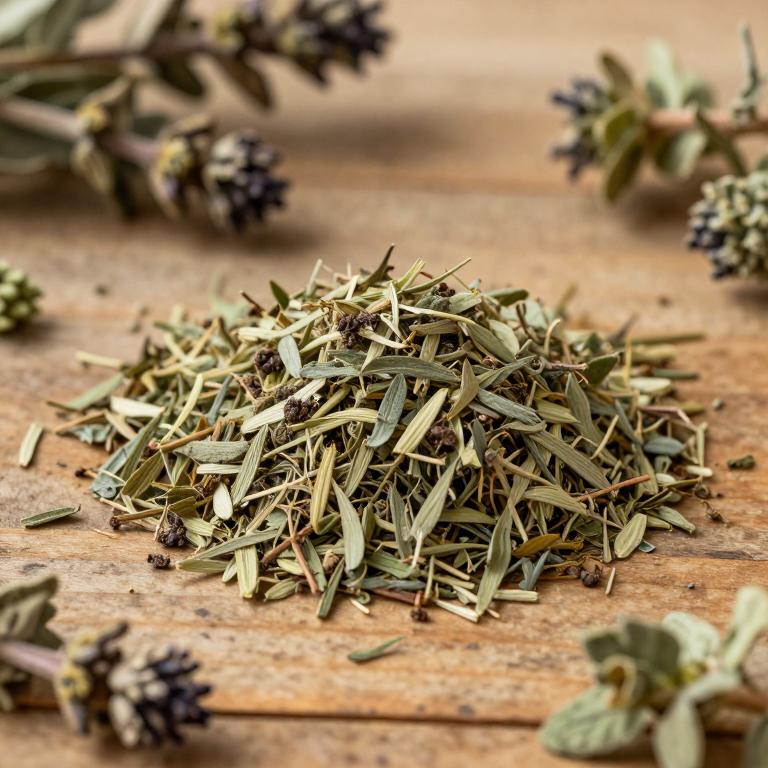
Names and Synonyms
Scientific Names
Accepted name
Salvia dominicaSynonyms
- Salvia graveolens
- Salvia commutata
- Salvia syriaca
Regional and Traditional Names
Spanish:
- Salvia syriaca
- Salvia commutata
- Salvia graveolens
Sources: Wikidata
Taxonomical Classification
This plant belongs to the kingdom Plantae and is classified within the phylum Streptophyta and the class Equisetopsida. It falls under the subclass Magnoliidae and the order Lamiales, specifically within the family Lamiaceae. Finally, it is categorized under the genus Salvia.
| Rank | Classification |
|---|---|
| Kingdom | Plantae |
| Phylum | Streptophyta |
| Class | Equisetopsida |
| Subclass | Magnoliidae |
| Order | Lamiales |
| Family | Lamiaceae |
| Genus | Salvia |
Sources: The World Checklist of Vascular Plants (WCVP)
Distribution
This plant exhibits a specific geographical distribution concentrated within the Middle East and parts of Western Asia. In the region of Western Asia, Salvia dominica can be found growing in Cyprus. Its range continues through the Levant, specifically spanning the areas of Lebanon and Syria. Furthermore, the species is documented to inhabit the territory of Palestine. Finally, its distribution extends into the Arabian Peninsula, where it is located in Saudi Arabia.
| Region | Area |
|---|---|
| Western Asia | Cyprus |
| Western Asia | Lebanon-Syria |
| Western Asia | Palestine |
| Arabian Peninsula | Saudi Arabia |
Sources: The World Checklist of Vascular Plants (WCVP)
Botanical Identification
Life history
The life history of Salvia dominica is characterized by its growth habit as a hemicryptophyte, a life form where the perennating buds are located at or just below the soil surface, protected by leaf litter or surface debris during unfavorable seasons. As a perennial species, it undergoes seasonal cycles of vegetative growth and reproductive development, emerging from its protected subterranean buds to establish its foliage once environmental conditions become favorable. Its development follows a pattern typical of many members of the Lamiaceae family, transitioning from initial seedling establishment to a mature state where it can sustain itself through multiple growing seasons. The plant's lifecycle is deeply intertwined with its ability to survive dormant periods, utilizing its protected buds to withstand fluctuations in temperature and moisture, thereby ensuring its persistence in its natural habitat.
- Life form :
- hemicryptophyte
Morphology
The morphology of Salvia dominica is characterized by a growth form that functions as both a herb and a subshrub. It is a non-woody plant that exhibits a self-supporting structure, lacking any climbing tendencies. In terms of its ecological positioning, the species is terrestrial, functioning neither as an epiphyte nor as a parasite, and maintains an independent existence. Its habitat preference spans a range of moisture levels, being categorized as aquatic, semiaquatic, or terrestrial.
- Aquatic :
- terrestrial
- Climber :
- self-supporting
- Epiphyte :
- terrestrial
- Growth form :
- herb
- Growth form :
- subshrub
- Parasite :
- independent
- Woodiness :
- non-woody
Reproduction
Reproduction in Salvia dominica is characterized by the production of seeds that exhibit a highly consistent physical profile. Based on measured reproductive data, the seed mass for this species is uniform, with a mean value of 0.00524 g. This consistency is reflected in the lack of variance within the sampled population, as both the maximum and minimum recorded seed masses are identical at 0.00524 g. This precise measurement indicates a standardized reproductive output regarding the individual weight of the seeds produced by the plant.
- Seed mass mean:
- 0.00524 g
Sources: Global Inventory of Floras and Traits (GIFT)
Plant Parts
Salvia dominica has 1 reported plant parts identified across 1 scientific publications and several other databases that are studied for medicinal purposes. The most consistently reported plant part include root.
| Plant part | Supporting sources | Consensus |
|---|---|---|
| Root | 1 supporting sources | ★☆☆☆☆ |
Root
- Fitoterapia
Chemicals
Salvia dominica has 2 reported phytochemicals identified across 1 scientific publications and several other databases. The most consistently reported chemicals include Corosolic acid, triterpenoids.
| Chemical | Supporting sources | Consensus |
|---|---|---|
| Corosolic acid | 1 supporting sources | ★☆☆☆☆ |
| triterpenoids | 1 supporting sources | ★☆☆☆☆ |
Corosolic acid
- Fitoterapia
triterpenoids
- International journal of nanomedicine
Conditions
Salvia dominica has 2 reported investigations on conditions identified across 1 scientific publications and several other databases. The most consistently reported conditions include Parkinson's disease, apoptosis.
| Condition | Supporting sources | Consensus |
|---|---|---|
| Parkinson's disease | 1 supporting sources | ★☆☆☆☆ |
| Apoptosis | 1 supporting sources | ★☆☆☆☆ |
Parkinson's disease
- International journal of nanomedicine
Apoptosis
- International journal of nanomedicine
Preparations
Salvia dominica has 2 reported preparations identified across 1 scientific publications and several other databases. The most consistently reported preparations include hairy root (HR) cultures, roots.
| Preparation | Supporting sources | Consensus |
|---|---|---|
| Hairy root (hr) cultures | 1 supporting sources | ★☆☆☆☆ |
| Roots | 1 supporting sources | ★☆☆☆☆ |
Hairy root (hr) cultures
- Bio-protocol
Roots
- Fitoterapia