Bengali Sage
Salvia dianthera · Accepted scientific name
Scientific literature: Very Sparse (28 studies) · ★☆☆☆☆
Bengali Sage, scientifically known as Salvia dianthera, is a versatile medicinal herb celebrated for its potent therapeutic properties. Renowned in traditional healing, it offers significant antioxidant and anti-inflammatory benefits. This aromatic plant serves as a natural remedy, supporting holistic wellness through its unique bioactive compounds and restorative botanical qualities.
- Family
- Lamiaceae
- Native range
- Africa
- Parts used
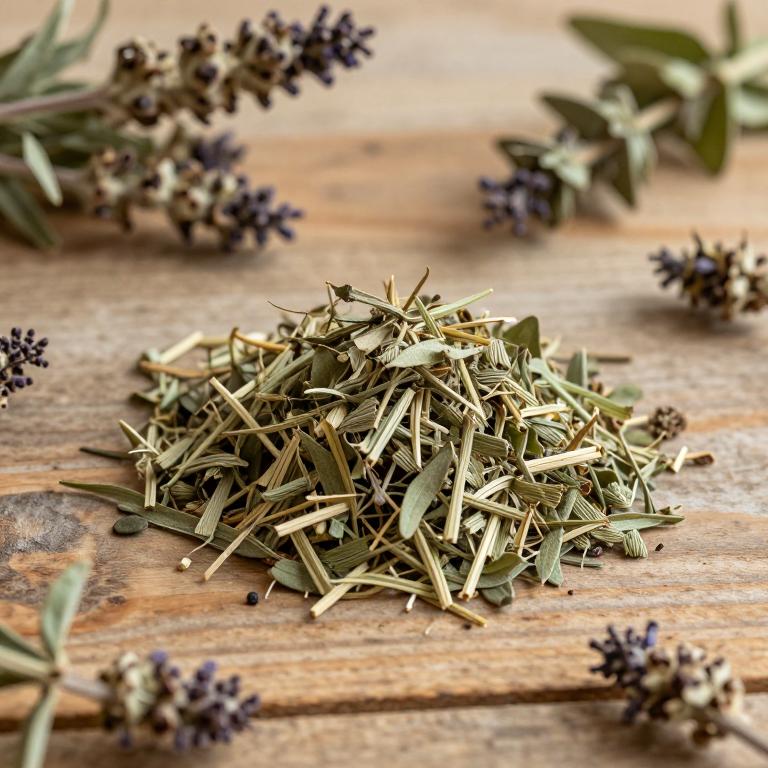
- Leaf
- Common names
- Bengali Sage
- Scientific synonyms
- Meriandra Dianthera · Meriandra Bengalensis · 3 more
Names and Synonyms
Common Names
- Bengali Sage
Scientific Names
Accepted name
Salvia diantheraSynonyms
- Meriandra dianthera
- Meriandra bengalensis
- Meriandra abyssinica
- Salvia stachydea
- Salvia bengalensis
Sources: Wikidata, Catalogue of Life
Taxonomical Classification
This plant belongs to the kingdom Plantae and the phylum Streptophyta, falling under the class Equisetopsida and subclass Magnoliidae. Within the order Lamiales and the family Lamiaceae, it is classified under the genus Salvia.
| Rank | Classification |
|---|---|
| Kingdom | Plantae |
| Phylum | Streptophyta |
| Class | Equisetopsida |
| Subclass | Magnoliidae |
| Order | Lamiales |
| Family | Lamiaceae |
| Genus | Salvia |
Sources: The World Checklist of Vascular Plants (WCVP)
Distribution
This plant exhibits a wide geographical distribution stretching across several distinct regions. In Northeast Tropical Africa, it can be found growing in both Eritrea and Ethiopia. Its range extends into the Arabian Peninsula, where it inhabits parts of Saudi Arabia and Yemen. Additionally, the species reaches the Indian Subcontinent, specifically appearing in India. This diverse spread demonstrates the plant's ability to thrive in varied environments across these territories.
| Region | Area |
|---|---|
| Northeast Tropical Africa | Eritrea |
| Northeast Tropical Africa | Ethiopia |
| Arabian Peninsula | Saudi Arabia |
| Arabian Peninsula | Yemen |
| Indian Subcontinent | India |
Sources: The World Checklist of Vascular Plants (WCVP)
Botanical Identification
Life history
The life history of Salvia dianthera is characterized by its specific growth strategies and structural classifications within its ecosystem. In terms of its botanical life form, this species is categorized under two distinct morphological frameworks: it functions as a phanerophyte, where its perennating buds are elevated above the ground level, and it is also identified as a nanophanerophyte, representing a sub-category of phanerophyte where the shoots are relatively short but still maintain buds above the soil surface. This life history allows the plant to endure seasonal variations by protecting its vital reproductive and vegetative structures above the substrate, facilitating its survival and subsequent regrowth during favorable growing periods.
- Life form :
- nanophanerophyte
- Life form :
- phanerophyte
Morphology
The morphology of Salvia dianthera is characterized by its growth habit and structural composition, functioning as a self-supporting climber that utilizes its physical structure to ascend. It is an independent organism, showing no parasitic tendencies toward other plants, and maintains a terrestrial existence rather than growing as an epiphyte. Additionally, the plant exhibits a woody nature, providing the necessary structural rigidity for its development.
- Climber :
- self-supporting
- Epiphyte :
- terrestrial
- Parasite :
- independent
- Woodiness :
- woody
Sources: Global Inventory of Floras and Traits (GIFT)
Plant Parts
Salvia dianthera has 1 reported plant parts identified across 2 scientific publications and several other databases that are studied for medicinal purposes. The most consistently reported plant part include leaf.
| Plant part | Supporting sources | Consensus |
|---|---|---|
| Leaf | 2 supporting sources | ★☆☆☆☆ |
Leaf
- Journal of experimental pharmacology
- Evidence-based complementary and alternative medicine : eCAM
Chemicals
Salvia dianthera has 21 reported phytochemicals identified across 2 scientific publications and several other databases. The most consistently reported chemicals include 1,8-Cineole, As, BA, CA, CAMPHENE.
| Chemical | Supporting sources | Consensus |
|---|---|---|
| 1,8-Cineole | 1 supporting sources | ★☆☆☆☆ |
| As | 1 supporting sources | ★☆☆☆☆ |
| BA | 1 supporting sources | ★☆☆☆☆ |
| CA | 1 supporting sources | ★☆☆☆☆ |
| CAMPHENE | 1 supporting sources | ★☆☆☆☆ |
| CO | 1 supporting sources | ★☆☆☆☆ |
| CR | 1 supporting sources | ★☆☆☆☆ |
| CU | 1 supporting sources | ★☆☆☆☆ |
| FE | 1 supporting sources | ★☆☆☆☆ |
| Flavonoids | 1 supporting sources | ★☆☆☆☆ |
1,8-Cineole
- Molecules (Basel, Switzerland)
As
- TheScientificWorldJournal
BA
- TheScientificWorldJournal
CA
- TheScientificWorldJournal
CAMPHENE
- Molecules (Basel, Switzerland)
CO
- TheScientificWorldJournal
CR
- TheScientificWorldJournal
CU
- TheScientificWorldJournal
FE
- TheScientificWorldJournal
Flavonoids
- Evidence-based complementary and alternative medicine : eCAM
Activities
Salvia dianthera has 3 reported activities identified across 2 scientific publications and several other databases. The most consistently reported activities include Antimicrobial, Antioxidant, Cytotoxic.
| Activity | Supporting sources | Consensus |
|---|---|---|
| Antimicrobial | 1 supporting sources | ★☆☆☆☆ |
| Antioxidant | 1 supporting sources | ★☆☆☆☆ |
| Cytotoxic | 1 supporting sources | ★☆☆☆☆ |
Antimicrobial
- Molecules (Basel, Switzerland)
Antioxidant
- Molecules (Basel, Switzerland)
Cytotoxic
- Molecules (Basel, Switzerland)
Preparations
Salvia dianthera has 9 reported preparations identified across 2 scientific publications and several other databases. The most consistently reported preparations include aqueous extract, aqueous residue fraction, chloroform extract, crude aqueous leaf extract, crude extract.
| Preparation | Supporting sources | Consensus |
|---|---|---|
| Aqueous extract | 1 supporting sources | ★☆☆☆☆ |
| Aqueous residue fraction | 1 supporting sources | ★☆☆☆☆ |
| Chloroform extract | 1 supporting sources | ★☆☆☆☆ |
| Crude aqueous leaf extract | 1 supporting sources | ★☆☆☆☆ |
| Crude extract | 1 supporting sources | ★☆☆☆☆ |
| Decoction | 1 supporting sources | ★☆☆☆☆ |
| Essential oil | 1 supporting sources | ★☆☆☆☆ |
| Fractions | 1 supporting sources | ★☆☆☆☆ |
| Methanol extract | 1 supporting sources | ★☆☆☆☆ |
Aqueous extract
- Evidence-based complementary and alternative medicine : eCAM
Aqueous residue fraction
- Journal of experimental pharmacology
Chloroform extract
- Evidence-based complementary and alternative medicine : eCAM
Crude aqueous leaf extract
- Journal of experimental pharmacology
Crude extract
- Journal of experimental pharmacology
Decoction
- Journal of experimental pharmacology
Essential oil
- Molecules (Basel, Switzerland)
Fractions
- Journal of experimental pharmacology
Methanol extract
- Evidence-based complementary and alternative medicine : eCAM