Fleecy Sage
Salvia compressa · Accepted scientific name
Scientific literature: Very Sparse (2 studies) · ★☆☆☆☆
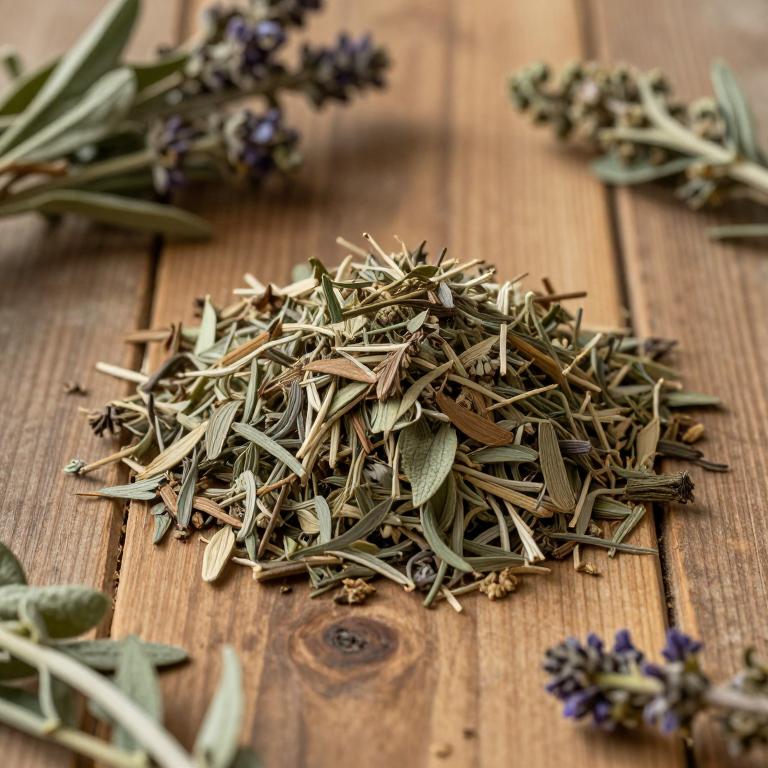
Fleecy Sage, scientifically known as Salvia compressa, is a charming perennial native to the rocky slopes of California. Characterized by its soft, woolly foliage and vibrant blue-to-purple blooms, this resilient plant thrives in Mediterranean climates, offering essential nectar for pollinators while adding textured beauty to any drought-tolerant garden.
- Family
- Lamiaceae
- Native range
- Asia-Temperate
- Parts used
- Not available
- Common names
- Fleecy Sage
- Scientific synonyms
- Stiefia Compressa · Salvia Polyclonos
Names and Synonyms
Common Names
- Fleecy Sage
Scientific Names
Accepted name
Salvia compressaSynonyms
- Stiefia compressa
- Salvia polyclonos
Sources: Wikidata, Catalogue of Life
Taxonomical Classification
This plant belongs to the kingdom Plantae within the phylum Streptophyta and the class Equisetopsida. It is further classified under the subclass Magnoliidae in the order Lamiales and the family Lamiaceae. Finally, it is identified by the genus Salvia.
| Rank | Classification |
|---|---|
| Kingdom | Plantae |
| Phylum | Streptophyta |
| Class | Equisetopsida |
| Subclass | Magnoliidae |
| Order | Lamiales |
| Family | Lamiaceae |
| Genus | Salvia |
Sources: The World Checklist of Vascular Plants (WCVP)
Distribution
This plant, known scientifically as Salvia compressa, exhibits a specific geographical range within the Middle East. Its natural habitat is primarily concentrated in the region of Western Asia. Specifically, the species can be found growing in the country of Afghanistan. It also maintains a presence across the landscapes of Iran. Furthermore, its distribution extends into the territory of Iraq.
| Region | Area |
|---|---|
| Western Asia | Afghanistan |
| Western Asia | Iran |
| Western Asia | Iraq |
Sources: The World Checklist of Vascular Plants (WCVP)
Botanical Identification
Ecology
The ecology of Salvia compressa is characterized by its specific distribution within montane environments, where it occupies a distinct altitudinal niche. This species is found across an elevational range that begins at a minimum of 850 m AMSL and extends up to a maximum of 1400 m AMSL. Within this vertical gradient, the plant adapts to the varying climatic conditions and soil compositions typical of these mid-to-high altitude zones, playing its part in the specialized ecosystems defined by these specific topographic constraints.
- Elevational range max:
- 1400 m AMSL
- Elevational range min:
- 850 m AMSL
Life history
The life history of Salvia compressa is characterized by its classification as a hemicryptophyte, a growth form where the perennating buds are located at or just below the soil surface, protected by leaf litter or debris during unfavorable seasons. This life strategy allows the plant to persist through seasonal fluctuations by maintaining its regenerative capacity at the ground level. Within the broader spectrum of plant life forms, it specifically aligns with the hemicryptophyte category, distinguishing it from other forms such as phanerophytes, chamaephytes, or therophytes. By utilizing this specific life history pattern, Salvia compressa can effectively manage its energy reserves and navigate its environmental niche, ensuring survival and regrowth following periods of dormancy.
- Life form :
- hemicryptophyte
Morphology
The morphology of Salvia compressa is characterized by its growth habit as a self-supporting climber, utilizing its structure to ascend without the need for a host organism. It functions as an independent organism, exhibiting no parasitic behavior toward other plants. Furthermore, it is a terrestrial species rather than an epiphyte, establishing its root system in the soil to support its developmental processes.
- Climber :
- self-supporting
- Epiphyte :
- terrestrial
- Parasite :
- independent
Sources: Global Inventory of Floras and Traits (GIFT)
Chemicals
Salvia compressa has 2 reported phytochemicals identified across 0 scientific publications and several other databases. The most consistently reported chemicals include Citrostadienol, GERANIOL.
| Chemical | Supporting sources | Consensus |
|---|---|---|
| Citrostadienol | 1 supporting sources | ★☆☆☆☆ |
| GERANIOL | 1 supporting sources | ★☆☆☆☆ |
Citrostadienol
- Iranian journal of pharmaceutical research : IJPR
GERANIOL
- Iranian journal of pharmaceutical research : IJPR