Salvia chloroleuca
Salvia chloroleuca · Accepted scientific name
Scientific literature: Very Sparse (12 studies) · ★☆☆☆☆
Salvia chloroleuca, scientifically known as Salvia chloroleuca, is a captivating medicinal plant native to specific subtropical regions. Renowned for its distinctive foliage and therapeutic potential, it is utilized in traditional medicine to address various ailments. Exploring its phytochemical properties offers promising insights into natural healing and modern pharmacology.
- Family
- Lamiaceae
- Native range
- Asia-Temperate
- Parts used
- Not available
- Common names
- Not available
- Scientific synonyms
- Not available
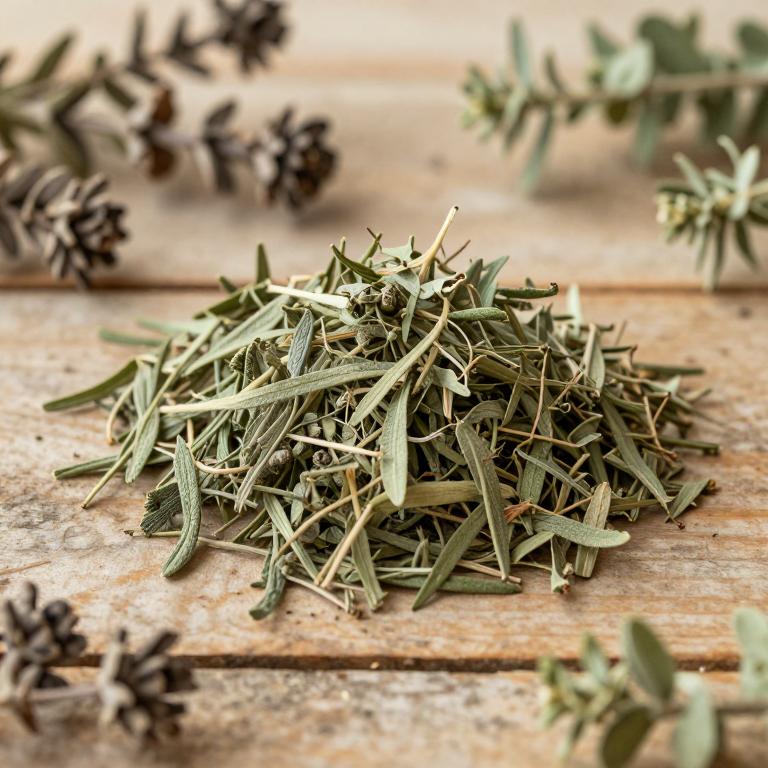
Names and Synonyms
Scientific Names
Accepted name
Salvia chloroleucaSources: Wikidata, Catalogue of Life
Taxonomical Classification
This plant belongs to the kingdom Plantae and the phylum Streptophyta within the class Equisetopsida. Following the subclass Magnoliidae, it is classified under the order Lamiales and the family Lamiaceae. Ultimately, it is identified by the genus Salvia.
| Rank | Classification |
|---|---|
| Kingdom | Plantae |
| Phylum | Streptophyta |
| Class | Equisetopsida |
| Subclass | Magnoliidae |
| Order | Lamiales |
| Family | Lamiaceae |
| Genus | Salvia |
Sources: The World Checklist of Vascular Plants (WCVP)
Distribution
This plant exhibits a specific geographical range concentrated within certain regions of Western and Central Asia. In the realm of Western Asia, its presence is notably documented within the borders of Iran. Moving further east, its distribution extends into the territory of Turkmenistan. These two countries represent the primary locations where the species can be found in the wild. Consequently, the habitat of Salvia chloroleuca is limited to these specific arid or semi-arid landscapes.
| Region | Area |
|---|---|
| Central Asia | Turkmenistan |
| Western Asia | Iran |
Sources: The World Checklist of Vascular Plants (WCVP)
Botanical Identification
Ecology
The ecology of Salvia chloroleuca is fundamentally defined by its preference for high-altitude environments, specifically occurring within mountainous regions. It thrives in forest ecosystems where the complex canopy and soil structure provide the necessary conditions for its growth. These montane forest habitats offer a specific microclimate characterized by varying levels of shade and moisture levels that are essential for the species' survival and reproductive success within these rugged topographical settings.
- Habitat :
- forest, mountains
Life history
The life history of Salvia chloroleuca is characterized by a perennial lifecycle, allowing the plant to persist through multiple growing seasons. Structurally, it functions as a hemicryptophyte, a life form where the perennating buds are located at the soil surface, protected by leaf litter or organic debris during unfavorable conditions. This classification as a hemicryptophyte defines its survival strategy, ensuring its continued presence within its ecological niche over long durations.
- Life form :
- hemicryptophyte
- Lifecycle :
- perennial
Morphology
The morphology of Salvia chloroleuca is characterized by a herbaceous growth form that is primarily non-woody in structure. This plant typically reaches a height ranging from a minimum of 0.4 m to a maximum of 0.6 m. As a terrestrial species, it grows independently of other plants and does not function as a parasite. Regarding its structural habit, it is classified as a self-supporting plant rather than a climber.
- Climber :
- self-supporting
- Epiphyte :
- terrestrial
- Growth form :
- herb
- Parasite :
- independent
- Plant height max:
- 0.6 m
- Plant height min:
- 0.4 m
- Woodiness :
- non-woody
Reproduction
The reproduction of Salvia chloroleuca is characterized by a specific seasonal flowering cycle that dictates its reproductive availability. The flowering process begins in May, marking the onset of its reproductive phase. This period of blooming continues through the late spring and early summer, eventually reaching its conclusion in June. Consequently, the plant exhibits a relatively concentrated flowering window, transitioning from the initiation of floral development in May to the end of its blooming period in June.
- Flowering time :
- May
- Flowering time :
- Jun
Sources: Global Inventory of Floras and Traits (GIFT)
Chemicals
Salvia chloroleuca has 7 reported phytochemicals identified across 0 scientific publications and several other databases. The most consistently reported chemicals include Salvigenin, Cirsiliol, Daucosterol, Luteolin 7-O-glucoside, Luteolin 7-O-glucuronide.
| Chemical | Supporting sources | Consensus |
|---|---|---|
| Salvigenin | 2 supporting sources | ★☆☆☆☆ |
| Cirsiliol | 1 supporting sources | ★☆☆☆☆ |
| Daucosterol | 1 supporting sources | ★☆☆☆☆ |
| Luteolin 7-O-glucoside | 1 supporting sources | ★☆☆☆☆ |
| Luteolin 7-O-glucuronide | 1 supporting sources | ★☆☆☆☆ |
| diosmetin 7-O-glucuronide | 1 supporting sources | ★☆☆☆☆ |
| luteolin | 1 supporting sources | ★☆☆☆☆ |
Salvigenin
- Iranian Red Crescent medical journal
- Iranian journal of pharmaceutical research : IJPR
Cirsiliol
- Iranian Red Crescent medical journal
Daucosterol
- Iranian Red Crescent medical journal
Luteolin 7-O-glucoside
- Iranian journal of pharmaceutical research : IJPR
Luteolin 7-O-glucuronide
- Iranian journal of pharmaceutical research : IJPR
diosmetin 7-O-glucuronide
- Iranian journal of pharmaceutical research : IJPR
luteolin
- Iranian Red Crescent medical journal
Conditions
Salvia chloroleuca has 2 reported investigations on conditions identified across 0 scientific publications and several other databases. The most consistently reported conditions include breast carcinoma, type 2 diabetes.
| Condition | Supporting sources | Consensus |
|---|---|---|
| Breast carcinoma | 1 supporting sources | ★☆☆☆☆ |
| Type 2 diabetes | 1 supporting sources | ★☆☆☆☆ |
Breast carcinoma
- Iranian journal of pharmaceutical research : IJPR
Type 2 diabetes
- Iranian journal of pharmaceutical research : IJPR
Preparations
Salvia chloroleuca has 3 reported preparations identified across 0 scientific publications and several other databases. The most consistently reported preparations include ethyl acetate, methanol, n-hexane.
| Preparation | Supporting sources | Consensus |
|---|---|---|
| Ethyl acetate | 1 supporting sources | ★☆☆☆☆ |
| Methanol | 1 supporting sources | ★☆☆☆☆ |
| N-hexane | 1 supporting sources | ★☆☆☆☆ |
Ethyl acetate
- Iranian Red Crescent medical journal
Methanol
- Iranian Red Crescent medical journal
N-hexane
- Iranian Red Crescent medical journal