Rough blue sage
Salvia chamelaeagnea · Accepted scientific name
Scientific literature: Very Sparse (13 studies) · ★☆☆☆☆
Rough blue sage, scientifically known as Salvia chamelaeagnea, is a versatile perennial herb native to Mexico and Central America. Renowned for its aromatic, serrated leaves and striking blue flowers, this plant is highly valued in traditional medicine for its antimicrobial, anti-inflammatory, and digestive properties, offering significant therapeutic potential.
- Family
- Lamiaceae
- Native range
- Africa
- Parts used
- Not available
- Common names
- Rough Blue Sage
- Scientific synonyms
- Salvia Chamelaeagnus · Salvia Paniculata
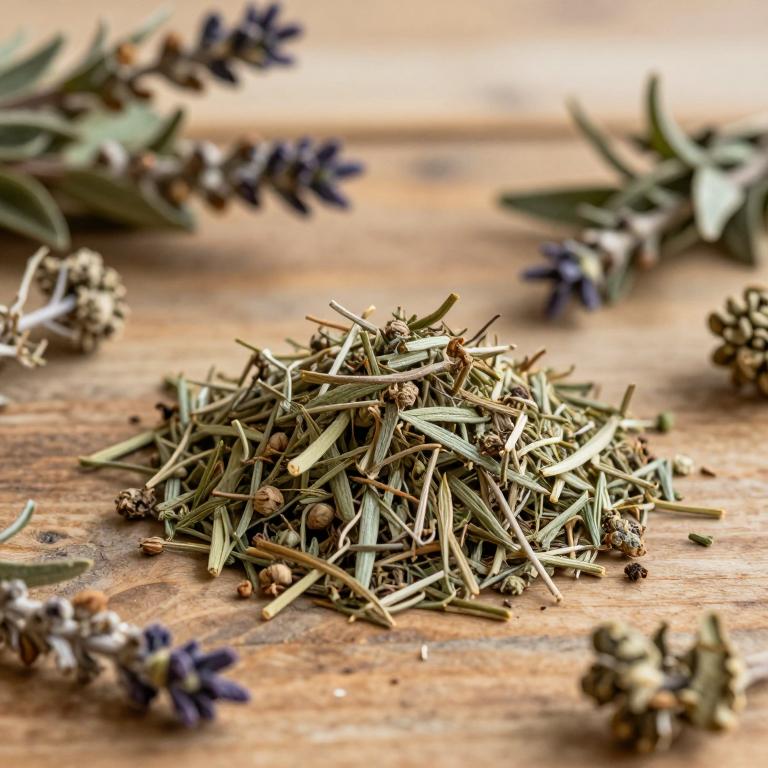
Names and Synonyms
Common Names
- Rough blue sage
Scientific Names
Accepted name
Salvia chamelaeagneaSynonyms
- Salvia chamelaeagnus
- Salvia paniculata
Regional and Traditional Names
Spanish:
- Salvia paniculata
- Salvia chamelaeagnus
Sources: Wikidata, Catalogue of Life
Taxonomical Classification
This plant belongs to the kingdom Plantae and is classified under the phylum Streptophyta and class Equisetopsida. Within the subclass Magnoliidae, it falls under the order Lamiales and the family Lamiaceae. Finally, it is specifically categorized under the genus Salvia.
| Rank | Classification |
|---|---|
| Kingdom | Plantae |
| Phylum | Streptophyta |
| Class | Equisetopsida |
| Subclass | Magnoliidae |
| Order | Lamiales |
| Family | Lamiaceae |
| Genus | Salvia |
Sources: The World Checklist of Vascular Plants (WCVP)
Distribution
This plant is specifically found within a localized region of the African continent. Its geographical range is restricted to the southern portion of the landmass. Within this area, it is native to the Cape Provinces. This specific distribution pattern highlights its unique ecological niche in Southern Africa. Consequently, its presence is a defining characteristic of the local flora in these provinces.
| Region | Area |
|---|---|
| Southern Africa | Cape Provinces |
Sources: The World Checklist of Vascular Plants (WCVP)
Botanical Identification
Ecology
The ecology of Salvia chamelaeagnea is defined by its adaptation to a broad altitudinal gradient, allowing it to inhabit diverse topographical niches. This species is found across a significant vertical span, with an elevational range starting from as low as 15 m AMSL and extending up to a maximum of 1100 m AMSL. This wide distribution suggests a high degree of environmental plasticity, enabling the plant to thrive in both lowland coastal or tropical settings and more elevated, potentially cooler montane habitats. Such a range indicates that the species can tolerate varying levels of atmospheric pressure, temperature fluctuations, and moisture availability characteristic of different tropical or subtropical elevations.
- Elevational range max:
- 1100 m AMSL
- Elevational range min:
- 15 m AMSL
Life history
The life history of Salvia chamelaeagnea is characterized by its status as a perennial species, allowing it to persist through multiple growing seasons. In terms of its structural growth and survival strategies, the plant exhibits life forms categorized as both a phanerophyte and a nanophanerophyte, indicating its ability to maintain its buds and stems above the ground level in varying environmental conditions.
- Life form :
- nanophanerophyte
- Life form :
- phanerophyte
- Lifecycle :
- perennial
Morphology
The morphology of Salvia chamelaeagnea is characterized by a woody growth form, specifically manifesting as a shrub or subshrub. As a terrestrial plant, it does not exhibit aquatic or epiphytic tendencies and functions as an independent organism rather than a parasite. The plant is self-supporting in its structure, lacking any climbing habits. In terms of stature, it typically reaches a minimum height of 0.6 m, with the potential to grow up to a maximum height of 2 m.
- Aquatic :
- terrestrial
- Climber :
- self-supporting
- Epiphyte :
- terrestrial
- Growth form :
- shrub
- Parasite :
- independent
- Plant height max:
- 2 m
- Plant height min:
- 0.6 m
- Woodiness :
- woody
Sources: Global Inventory of Floras and Traits (GIFT)
Chemicals
Salvia chamelaeagnea has 8 reported phytochemicals identified across 0 scientific publications and several other databases. The most consistently reported chemicals include Carnosic acid, Ursolic acid, carnosol, 7-Ethoxyrosmanol, Rosmanol.
| Chemical | Supporting sources | Consensus |
|---|---|---|
| Carnosic acid | 2 supporting sources | ★☆☆☆☆ |
| Ursolic acid | 2 supporting sources | ★☆☆☆☆ |
| carnosol | 2 supporting sources | ★☆☆☆☆ |
| 7-Ethoxyrosmanol | 1 supporting sources | ★☆☆☆☆ |
| Rosmanol | 1 supporting sources | ★☆☆☆☆ |
| caffeic acid | 1 supporting sources | ★☆☆☆☆ |
| ladanein | 1 supporting sources | ★☆☆☆☆ |
| rosmarinic acid | 1 supporting sources | ★☆☆☆☆ |
Carnosic acid
- Antioxidants (Basel, Switzerland)
- Fitoterapia
Ursolic acid
- Antioxidants (Basel, Switzerland)
- Fitoterapia
carnosol
- Antioxidants (Basel, Switzerland)
- Fitoterapia
7-Ethoxyrosmanol
- Antioxidants (Basel, Switzerland)
Rosmanol
- Antioxidants (Basel, Switzerland)
caffeic acid
- Fitoterapia
ladanein
- Antioxidants (Basel, Switzerland)
rosmarinic acid
- Fitoterapia
Activities
Salvia chamelaeagnea has 1 reported activities identified across 0 scientific publications and several other databases. The most consistently reported activities include Antioxidant.
| Activity | Supporting sources | Consensus |
|---|---|---|
| Antioxidant | 1 supporting sources | ★☆☆☆☆ |
Antioxidant
- Antioxidants (Basel, Switzerland)
Conditions
Salvia chamelaeagnea has 1 reported investigations on conditions identified across 0 scientific publications and several other databases. The most consistently reported conditions include fever.
| Condition | Supporting sources | Consensus |
|---|---|---|
| Fever | 1 supporting sources | ★☆☆☆☆ |
Fever
- Fitoterapia
Preparations
Salvia chamelaeagnea has 2 reported preparations identified across 0 scientific publications and several other databases. The most consistently reported preparations include methanolic extract, methanolic extracts.
| Preparation | Supporting sources | Consensus |
|---|---|---|
| Methanolic extract | 1 supporting sources | ★☆☆☆☆ |
| Methanolic extracts | 1 supporting sources | ★☆☆☆☆ |
Methanolic extract
- Antioxidants (Basel, Switzerland)
Methanolic extracts
- Sensors (Basel, Switzerland)