Pashtun Sage
Salvia cabulica · Accepted scientific name
Scientific literature: Very Sparse (4 studies) · ★☆☆☆☆
Pashtun Sage, scientifically known as Salvia cabuliika, is a resilient aromatic shrub native to the arid regions of Central and South Asia. Highly valued in traditional medicine, this plant is celebrated for its diverse therapeutic properties, offering potent antioxidant and antimicrobial benefits used to treat various ailments across many cultures.
- Family
- Lamiaceae
- Native range
- Asia-Temperate
- Parts used
- Not available
- Common names
- Pashtun Sage
- Scientific synonyms
- Salvia Cabulica Var. Scrotina
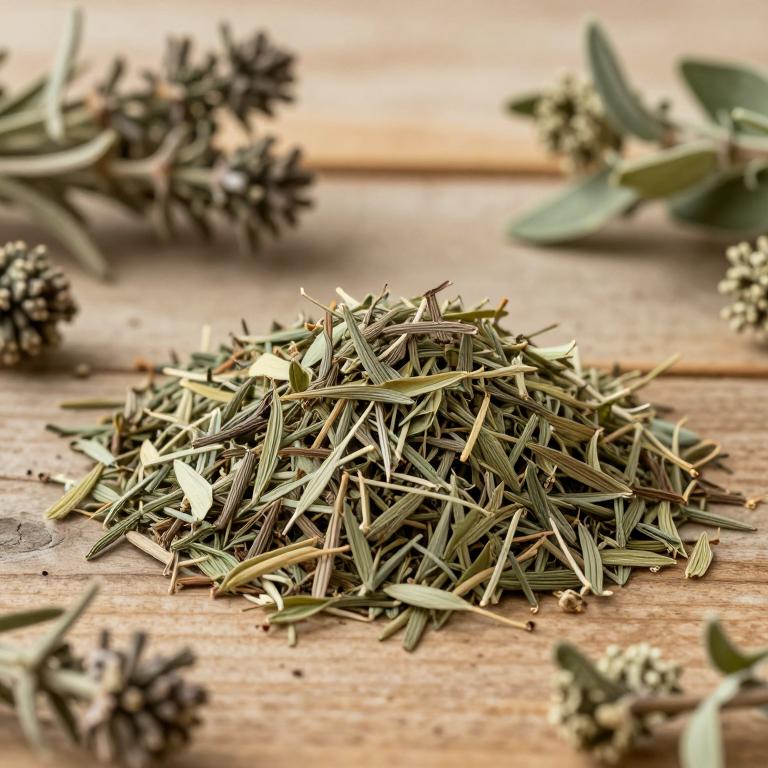
Names and Synonyms
Common Names
- Pashtun Sage
Scientific Names
Accepted name
Salvia cabulicaSynonyms
- Salvia cabulica var. scrotina
Sources: Wikidata, Catalogue of Life
Taxonomical Classification
This plant belongs to the kingdom Plantae and the phylum Streptophyta. Within the class Equisetopsida and subclass Magnoliidae, it is classified under the order Lamiales and the family Lamiaceae. Finally, it is identified by the genus Salvia.
| Rank | Classification |
|---|---|
| Kingdom | Plantae |
| Phylum | Streptophyta |
| Class | Equisetopsida |
| Subclass | Magnoliidae |
| Order | Lamiales |
| Family | Lamiaceae |
| Genus | Salvia |
Sources: The World Checklist of Vascular Plants (WCVP)
Distribution
This plant, known scientifically as Salvia cabuliica, exhibits a specific range of occurrence within certain regions. Its presence is notably documented across the landscape of Western Asia. Specifically, it can be found growing within the borders of Afghanistan. Furthermore, the species extends its reach into the Indian Subcontinent. Within this area, it is a recognized part of the local flora in Pakistan.
| Region | Area |
|---|---|
| Western Asia | Afghanistan |
| Indian Subcontinent | Pakistan |
Sources: The World Checklist of Vascular Plants (WCVP)
Botanical Identification
Ecology
The ecology of Salvia cabulica is characterized by its adaptation to specific montane environments, where it thrives within a distinct altitudinal band. This species is primarily found inhabiting landscapes situated between an elevation of 800 m AMSL and a maximum limit of 1400 m AMSL. Within this specific elevational range, the plant occupies ecological niches that support its growth requirements, typically interacting with the unique soil compositions and climatic conditions found in these mid-to-high altitude zones.
- Elevational range max:
- 1400 m AMSL
- Elevational range min:
- 800 m AMSL
Life history
The life history of Salvia cabuliica is characterized by its classification as a chamaephyte, a life form that dictates its survival strategy and growth habit within its natural habitat. As a chamaephyte, the plant maintains its perennating buds close to the ground surface, often just above the soil level, which allows it to withstand environmental stressors such as wind or temperature fluctuations. This specific life form, encompassing categories such as nanophanerophytes, phanerophytes, chamaephytes, hemicryptophytes, geophytes, hydrophytes, helophytes, therophytes, and lithophytes, defines its structural development and seasonal resilience. Specifically, being categorized as a chamaephyte signifies that its regenerative organs are situated near the soil surface, enabling the plant to re-emerge and thrive following periods of dormancy or harsh conditions.
- Life form :
- chamaephyte
Morphology
The morphology of Salvia cabuliica is characterized by its growth habit and ecological positioning, functioning as a self-supporting clamberer that relies on its own structural integrity rather than external hosts for verticality. It is an independent organism, exhibiting no parasitic behavior toward other plants, and maintains a strictly terrestrial existence rather than living as an epiphyte.
- Climber :
- self-supporting
- Epiphyte :
- terrestrial
- Parasite :
- independent
Sources: Global Inventory of Floras and Traits (GIFT)
Activities
Salvia cabulica has 4 reported activities identified across 0 scientific publications and several other databases. The most consistently reported activities include Analgesic, Antiasthmatic, Antioxidant, Antitumor.
| Activity | Supporting sources | Consensus |
|---|---|---|
| Analgesic | 1 supporting sources | ★☆☆☆☆ |
| Antiasthmatic | 1 supporting sources | ★☆☆☆☆ |
| Antioxidant | 1 supporting sources | ★☆☆☆☆ |
| Antitumor | 1 supporting sources | ★☆☆☆☆ |
Analgesic
- Combinatorial chemistry & high throughput screening
Antiasthmatic
- Combinatorial chemistry & high throughput screening
Antioxidant
- Combinatorial chemistry & high throughput screening
Antitumor
- Combinatorial chemistry & high throughput screening