Salvia beckeri
Salvia beckeri · Accepted scientific name
Scientific literature: Very Sparse (13 studies) · ★☆☆☆☆
Salvia beckeri, scientifically known as Salvia beckeri, is a notable medicinal plant native to specific subtropical regions. Renowned for its diverse bioactive compounds, it is traditionally utilized in folk medicine to treat various ailments. Exploring its pharmacological potential offers promising insights into its therapeutic applications for modern healthcare.
- Family
- Not available
- Native range
- Asia-Temperate
- Parts used
- Not available
- Common names
- Not available
- Scientific synonyms
- Not available
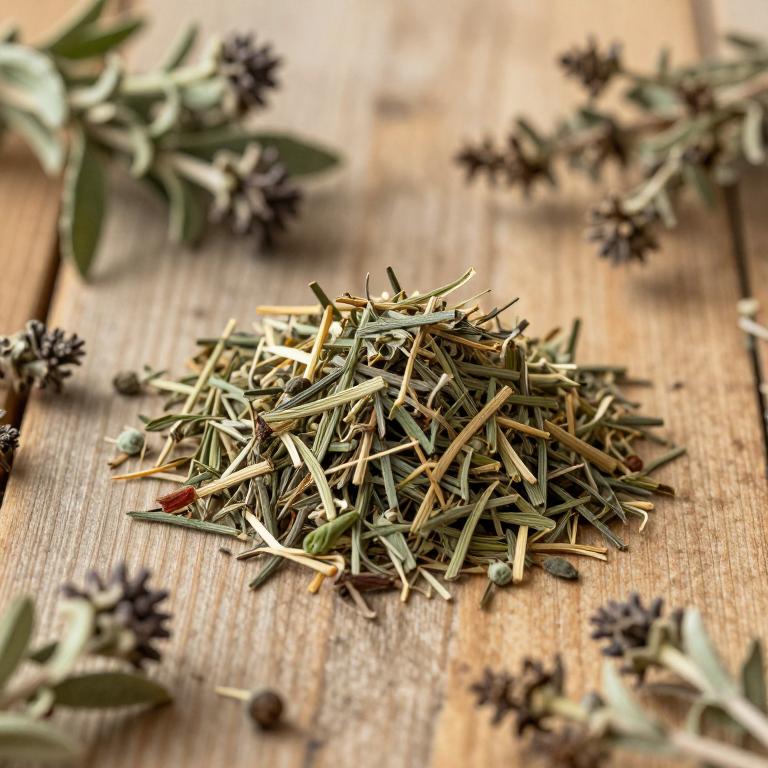
Names and Synonyms
Scientific Names
Accepted name
Salvia beckeriDistribution
This plant is found within a very specific and limited geographical range. Its presence is documented primarily in the Caucasus region. More specifically, its habitat is located within the North Caucasus area. This localized distribution suggests that it thrives under particular environmental conditions unique to this territory. Therefore, its occurrence remains highly concentrated in this single mountainous part of the world.
| Region | Area |
|---|---|
| Caucasus | North Caucasus |
Sources: The World Checklist of Vascular Plants (WCVP)
Botanical Identification
Ecology
The ecology of Salvia beckeri is defined by its preference for high-altitude environments, specifically thriving within rugged mountain landscapes. It is characteristically found colonizing stony places, where it adapts to the specialized conditions of rocky substrates and thin soils. This preference for montane terrain suggests a high degree of resilience to the environmental stressors typical of such regions, including intense solar radiation, fluctuating temperatures, and well-drained, mineral-rich ground.
- Habitat :
- mountains, stony places
Life history
The life history of Salvia beckeri is characterized by its classification as a perennial organism, allowing it to persist through multiple growing seasons. In terms of its structural growth strategy, the plant functions as a hemicryptophyte, meaning its perennial buds are located at or just below the soil surface, protected by leaf litter or surface substrate during unfavorable periods. This hemicryptophytic life form ensures its survival and ability to regenerate annually from these protected meristematic tissues.
- Life form :
- hemicryptophyte
- Lifecycle :
- perennial
Morphology
The morphology of Salvia beckeri is characterized by its growth form as a non-woody herb. This plant is a terrestrial species that grows independently, without any parasitic relationship to other organisms. It is a self-supporting plant, meaning it does not function as a climber, and it maintains a relatively compact stature with a height ranging from a minimum of 0.15 m to a maximum of 0.45 m.
- Climber :
- self-supporting
- Epiphyte :
- terrestrial
- Growth form :
- herb
- Parasite :
- independent
- Plant height max:
- 0.45 m
- Plant height min:
- 0.15 m
- Woodiness :
- non-woody
Reproduction
The reproduction of Salvia beckeri is characterized by a specific seasonal flowering window that facilitates its reproductive cycle. The flowering process typically commences in June, marking the beginning of its reproductive activity. This period of floral development continues through the summer months, reaching its conclusion in July. While the timing of these stages can be subject to environmental variations, this June-to-July interval serves as the primary timeframe for the plant's blooming phase.
- Flowering time :
- Jun
- Flowering time :
- Jul
Sources: Global Inventory of Floras and Traits (GIFT)
Chemicals
Salvia beckeri has 1 reported phytochemicals identified across 0 scientific publications and several other databases. The most consistently reported chemicals include Betulin.
| Chemical | Supporting sources | Consensus |
|---|---|---|
| Betulin | 1 supporting sources | ★☆☆☆☆ |
Betulin
- Dr. Duke
Activities
Salvia beckeri has 12 reported activities identified across 0 scientific publications and several other databases. The most consistently reported activities include AntiHIV, Anticarcinomic, Antifeedant, Antiflu, Antiinflammatory.
| Activity | Supporting sources | Consensus |
|---|---|---|
| AntiHIV | 1 supporting sources | ★☆☆☆☆ |
| Anticarcinomic | 1 supporting sources | ★☆☆☆☆ |
| Antifeedant | 1 supporting sources | ★☆☆☆☆ |
| Antiflu | 1 supporting sources | ★☆☆☆☆ |
| Antiinflammatory | 1 supporting sources | ★☆☆☆☆ |
| Antitumor | 1 supporting sources | ★☆☆☆☆ |
| Antiviral | 1 supporting sources | ★☆☆☆☆ |
| Aphidifuge | 1 supporting sources | ★☆☆☆☆ |
| Cytotoxic | 1 supporting sources | ★☆☆☆☆ |
| Hypolipemic | 1 supporting sources | ★☆☆☆☆ |
AntiHIV
- Dr. Duke
Anticarcinomic
- Dr. Duke
Antifeedant
- Dr. Duke
Antiflu
- Dr. Duke
Antiinflammatory
- Dr. Duke
Antitumor
- Dr. Duke
Antiviral
- Dr. Duke
Aphidifuge
- Dr. Duke
Cytotoxic
- Dr. Duke
Hypolipemic
- Dr. Duke