Salvia africana-lutea (informal name)
Salvia aurea · Accepted scientific name
Scientific literature: Very Sparse (32 studies) · ★☆☆☆☆
Salvia africana-lutea (informal name), scientifically known as Salvia aurea, is a striking medicinal shrub prized for its vibrant yellow blooms and therapeutic properties. Native to specific African regions, this resilient plant is traditionally utilized in holistic remedies to support respiratory health and alleviate inflammation through its potent bioactive compounds.
- Family
- Lamiaceae
- Native range
- Africa
- Parts used
- Not available
- Common names
- Brown Sage · Brown Salvia · 1 more
- Scientific synonyms
- Crolocos Aurea · Salvia Eckloniana
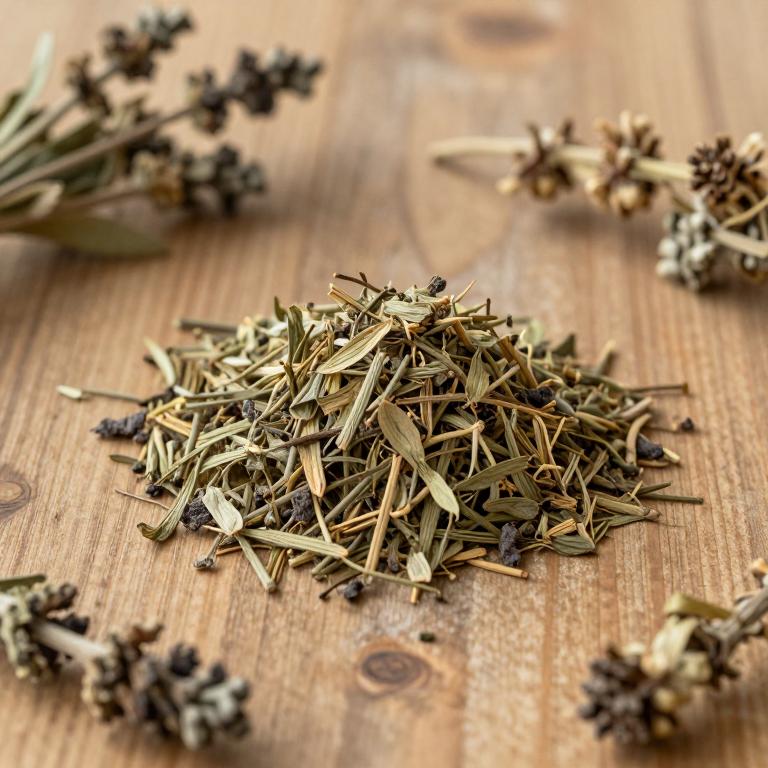
Names and Synonyms
Common Names
- Brown Sage
- Brown Salvia
- Gold Sage
Scientific Names
Accepted name
Salvia aureaSynonyms
- Crolocos aurea
- Salvia eckloniana
Regional and Traditional Names
Spanish:
- Salvia africana-lutea
- Salvia lutea
- Salvia eckloniana
- Crolocos aurea
German:
- Salvia africana lutea (nom. inval. )
French:
- Salvia africana-lutea
Sources: Wikidata, Catalogue of Life
Taxonomical Classification
This plant, Salvia aurea, belongs to the kingdom Plantae and the phylum Streptophyta. Within the class Equisetopsida and subclass Magnoliidae, it is categorized under the order Lamiales and the family Lamiaceae. Ultimately, it is classified under the genus Salvia.
| Rank | Classification |
|---|---|
| Kingdom | Plantae |
| Phylum | Streptophyta |
| Class | Equisetopsida |
| Subclass | Magnoliidae |
| Order | Lamiales |
| Family | Lamiaceae |
| Genus | Salvia |
Sources: The World Checklist of Vascular Plants (WCVP)
Distribution
This plant exhibits a unique and highly fragmented geographical distribution across different continents. In its native range, it is found within the Cape Provinces of Southern Africa. Interestingly, it also establishes itself in a much more distant part of the world. Specifically, it can be located in the North Island of New Zealand. This wide separation suggests that the species thrives in distinct, non-contiguous ecological zones.
| Region | Area |
|---|---|
| Southern Africa | Cape Provinces |
| New Zealand | New Zealand North |
Sources: The World Checklist of Vascular Plants (WCVP)
Botanical Identification
Ecology
The ecology of Salvia aurea is characterized by its presence across a broad altitudinal gradient, allowing it to inhabit diverse topographical settings. This species thrives within a significant elevational range, spanning from as low as 4 m AMSL to a maximum altitude of 755 m AMSL. This wide distribution suggests an ability to adapt to varying environmental pressures, ranging from coastal or lowland conditions to slightly more elevated terrain, which influences its distribution across different microclimates and soil types within its natural habitat.
- Elevational range max:
- 755 m AMSL
- Elevational range min:
- 4 m AMSL
Life history
The life history of Salvia aurea is characterized by its status as a perennial plant, allowing it to persist through multiple growing seasons. In terms of its structural growth habits, it exhibits a dual classification within various botanical life form systems; it is categorized as a phanerophyte, indicating that its buds are borne on aerial shoots, while it also demonstrates traits consistent with a nanophanerophyte, where the shoots remain relatively low to the ground. This combination of life history traits enables the species to maintain a stable presence in its habitat over extended periods.
- Life form :
- nanophanerophyte
- Life form :
- phanerophyte
- Lifecycle :
- perennial
Morphology
The morphology of Salvia aurea is characterized by a woody growth form, specifically categorized as a shrub. As a self-supporting plant, it does not function as a climber and lacks any parasitic or epiphytic tendencies, maintaining an independent and terrestrial existence. The plant exhibits a robust structure with woody stems and can reach a maximum plant height of 2 meters.
- Aquatic :
- terrestrial
- Climber :
- self-supporting
- Epiphyte :
- terrestrial
- Growth form :
- shrub
- Parasite :
- independent
- Plant height max:
- 2 m
- Woodiness :
- woody
Physiology
The physiology of Salvia aurea is characterized by specialized metabolic processes and specific morphological dimensions that support its growth and survival. A key aspect of its vegetative structure involves the development of foliage, where the leaf length typically averages around 2.2 cm, though it can reach a maximum leaf length of 2.2 cm depending on environmental conditions and nutrient availability. This dimension plays a critical role in the plant's photosynthetic capacity, as the surface area of the leaves dictates the efficiency of light interception and gas exchange. Beyond its structural dimensions, the plant's physiological functions are driven by the synthesis of secondary metabolites, which are often produced in response to environmental stressors. These metabolic pathways are closely linked to the plant's transpiration rates and water-use efficiency, ensuring that the cellular processes remain stable even as the leaf morphology scales within its defined parameters.
- Leaf length max:
- 2.2 cm
Reproduction
Reproduction in Salvia aurea occurs primarily through the production of seeds contained within specialized fruit structures known as nutlets. The flowering process involves the development of zygomorphic flowers that facilitate pollination, leading to the eventual formation of these small, dry fruits. The reproductive efficiency is characterized by specific morphological dimensions, where the fruit length exhibits a mean value of 0.3 cm. Once the fruits reach maturity, they are dispersed to facilitate the establishment of new seedlings, ensuring the continued propagation of the species within its natural habitat.
- Fruit length mean:
- 0.3 cm
Sources: Global Inventory of Floras and Traits (GIFT)
Chemicals
Salvia aurea has 6 reported phytochemicals identified across 0 scientific publications and several other databases. The most consistently reported chemicals include carnosol, Carnosic acid, Sesquiterpenes, Ursolic acid, caffeic acid.
| Chemical | Supporting sources | Consensus |
|---|---|---|
| carnosol | 2 supporting sources | ★☆☆☆☆ |
| Carnosic acid | 1 supporting sources | ★☆☆☆☆ |
| Sesquiterpenes | 1 supporting sources | ★☆☆☆☆ |
| Ursolic acid | 1 supporting sources | ★☆☆☆☆ |
| caffeic acid | 1 supporting sources | ★☆☆☆☆ |
| rosmarinic acid | 1 supporting sources | ★☆☆☆☆ |
carnosol
- Dr. Duke
- Fitoterapia
Carnosic acid
- Fitoterapia
Sesquiterpenes
- Molecules (Basel, Switzerland)
Ursolic acid
- Fitoterapia
caffeic acid
- Fitoterapia
rosmarinic acid
- Fitoterapia
Activities
Salvia aurea has 20 reported activities identified across 0 scientific publications and several other databases. The most consistently reported activities include 5-Lipoxygenase-Inhibitor, AntiHIV, Antibiotic, Antihepatotoxic, Antiinflammatory.
| Activity | Supporting sources | Consensus |
|---|---|---|
| 5-Lipoxygenase-Inhibitor | 1 supporting sources | ★☆☆☆☆ |
| AntiHIV | 1 supporting sources | ★☆☆☆☆ |
| Antibiotic | 1 supporting sources | ★☆☆☆☆ |
| Antihepatotoxic | 1 supporting sources | ★☆☆☆☆ |
| Antiinflammatory | 1 supporting sources | ★☆☆☆☆ |
| Antilipoperoxidant | 1 supporting sources | ★☆☆☆☆ |
| Antimutagenic | 1 supporting sources | ★☆☆☆☆ |
| Antioxidant | 1 supporting sources | ★☆☆☆☆ |
| Antiradicular | 1 supporting sources | ★☆☆☆☆ |
| Antitumor | 1 supporting sources | ★☆☆☆☆ |
5-Lipoxygenase-Inhibitor
- Dr. Duke
AntiHIV
- Dr. Duke
Antibiotic
- Dr. Duke
Antihepatotoxic
- Dr. Duke
Antiinflammatory
- Dr. Duke
Antilipoperoxidant
- Dr. Duke
Antimutagenic
- Dr. Duke
Antioxidant
- Dr. Duke
Antiradicular
- Dr. Duke
Antitumor
- Dr. Duke
Conditions
Salvia aurea has 5 reported investigations on conditions identified across 0 scientific publications and several other databases. The most consistently reported conditions include Aspergillus flavus, Aspergillus niger, Escherichia coli, H1N1 influenza virus, Staphylococcus aureus.
| Condition | Supporting sources | Consensus |
|---|---|---|
| Aspergillus flavus | 1 supporting sources | ★☆☆☆☆ |
| Aspergillus niger | 1 supporting sources | ★☆☆☆☆ |
| Escherichia coli | 1 supporting sources | ★☆☆☆☆ |
| H1n1 influenza virus | 1 supporting sources | ★☆☆☆☆ |
| Staphylococcus aureus | 1 supporting sources | ★☆☆☆☆ |
Aspergillus flavus
- Molecules (Basel, Switzerland)
Aspergillus niger
- Molecules (Basel, Switzerland)
Escherichia coli
- Molecules (Basel, Switzerland)
H1n1 influenza virus
- Molecules (Basel, Switzerland)
Staphylococcus aureus
- Molecules (Basel, Switzerland)
Preparations
Salvia aurea has 3 reported preparations identified across 0 scientific publications and several other databases. The most consistently reported preparations include ethanolic extract, methanol extracts, water extracts.
| Preparation | Supporting sources | Consensus |
|---|---|---|
| Ethanolic extract | 1 supporting sources | ★☆☆☆☆ |
| Methanol extracts | 1 supporting sources | ★☆☆☆☆ |
| Water extracts | 1 supporting sources | ★☆☆☆☆ |
Ethanolic extract
- Journal of natural products
Methanol extracts
- Fitoterapia
Water extracts
- Nanotechnology