Salvia aristata
Salvia aristata · Accepted scientific name
Scientific literature: Very Sparse (6 studies) · ★☆☆☆☆
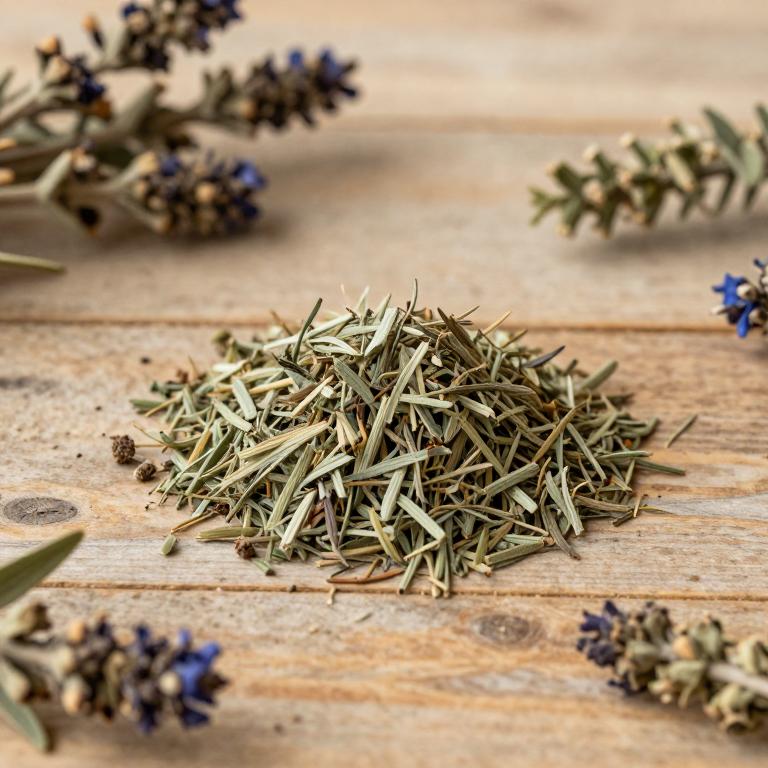
Salvia aristata, is a striking perennial herb belonging to the mint family, native to mountainous regions of North America. Characterized by its upright spikes of lavender-blue flowers and aromatic foliage, this medicinal plant has historically been valued for its diverse therapeutic properties and its role in traditional herbal remedies.
- Family
- Lamiaceae
- Native range
- Asia-Temperate
- Parts used
- Not available
- Common names
- Not available
- Scientific synonyms
- Polakia Paradoxa · Salvia Sulcata · 3 more
Names and Synonyms
Scientific Names
Accepted name
Salvia aristataSynonyms
- Polakia paradoxa
- Salvia sulcata
- Salvia garroussii
- Salvia anisodonta
- Salvia owerinii
Sources: Wikidata
Taxonomical Classification
This plant, known as Salvia aristata, belongs to the kingdom Plantae and the phylum Streptophyta. It is classified under the class Equisetopsida and subclass Magnoliidae, falling within the order Lamiales and the family Lamiaceae. Ultimately, it is identified by its genus, Salvia.
| Rank | Classification |
|---|---|
| Kingdom | Plantae |
| Phylum | Streptophyta |
| Class | Equisetopsida |
| Subclass | Magnoliidae |
| Order | Lamiales |
| Family | Lamiaceae |
| Genus | Salvia |
Sources: The World Checklist of Vascular Plants (WCVP)
Distribution
This plant, known as Salvia aristata, exhibits a specific and limited geographical range within the Western Asian region. Its natural distribution is primarily concentrated in the territories of Iran and Türkiye. Within these countries, it thrives in unique environmental conditions that support its growth. By occupying these particular landscapes, the species maintains its presence in the Middle Eastern flora. Consequently, its occurrence is strictly tied to these two specific nations in Western Asia.
| Region | Area |
|---|---|
| Western Asia | Iran |
| Western Asia | Türkiye |
Sources: The World Checklist of Vascular Plants (WCVP)
Botanical Identification
Life history
The life history of Salvia aristata is characterized by its specialized survival strategy as a perennial herb, specifically classified under the life forms of both hemicrypte and hemicryptophyte. This means that its perennating buds and overwintering organs are located at the soil surface or just below it, protected by a layer of leaf litter or soil during the dormant season. As a hemicrypte, the plant manages its seasonal cycle by retreating to these surface-level buds to withstand unfavorable environmental conditions, allowing it to re-emerge and resume vegetative growth once favorable temperatures and moisture levels return. This life history strategy enables the plant to maintain a persistent presence in its ecological niche, balancing seasonal dormancy with robust annual growth cycles.
- Life form :
- hemicryptophyte
Morphology
The morphology of Salvia aristata is characterized by its growth habit as a self-supporting plant, meaning it lacks the structures required to be a climber and instead maintains its own upright or spreading posture without the need for external support. It functions as an independent organism, showing no parasitic tendencies, as it does not rely on a host for nutrients or water. Furthermore, rather than being an epiphyte that grows upon other plants, this species is strictly terrestrial, developing its root system within the soil to secure its position and facilitate nutrient uptake.
- Climber :
- self-supporting
- Epiphyte :
- terrestrial
- Parasite :
- independent
Sources: Global Inventory of Floras and Traits (GIFT)
Chemicals
Salvia aristata has 3 reported phytochemicals identified across 0 scientific publications and several other databases. The most consistently reported chemicals include 5-O-Coumaroylquinic acid, Linariin, Pectolinarin.
| Chemical | Supporting sources | Consensus |
|---|---|---|
| 5-O-Coumaroylquinic acid | 1 supporting sources | ★☆☆☆☆ |
| Linariin | 1 supporting sources | ★☆☆☆☆ |
| Pectolinarin | 1 supporting sources | ★☆☆☆☆ |
5-O-Coumaroylquinic acid
- BMC complementary medicine and therapies
Linariin
- BMC complementary medicine and therapies
Pectolinarin
- BMC complementary medicine and therapies
Activities
Salvia aristata has 1 reported activities identified across 0 scientific publications and several other databases. The most consistently reported activities include Neuroprotective.
| Activity | Supporting sources | Consensus |
|---|---|---|
| Neuroprotective | 1 supporting sources | ★☆☆☆☆ |
Neuroprotective
- BMC complementary medicine and therapies
Conditions
Salvia aristata has 2 reported investigations on conditions identified across 0 scientific publications and several other databases. The most consistently reported conditions include neuroinflammation, oxidative stress.
| Condition | Supporting sources | Consensus |
|---|---|---|
| Neuroinflammation | 1 supporting sources | ★☆☆☆☆ |
| Oxidative stress | 1 supporting sources | ★☆☆☆☆ |
Neuroinflammation
- BMC complementary medicine and therapies
Oxidative stress
- BMC complementary medicine and therapies
Preparations
Salvia aristata has 2 reported preparations identified across 0 scientific publications and several other databases. The most consistently reported preparations include dichloromethane extract (SADE), hydroalcoholic extract (SAHE).
| Preparation | Supporting sources | Consensus |
|---|---|---|
| Dichloromethane extract (sade) | 1 supporting sources | ★☆☆☆☆ |
| Hydroalcoholic extract (sahe) | 1 supporting sources | ★☆☆☆☆ |
Dichloromethane extract (sade)
- BMC complementary medicine and therapies
Hydroalcoholic extract (sahe)
- BMC complementary medicine and therapies