African sage
Salvia aethiopis · Accepted scientific name
Scientific literature: Very Sparse (17 studies) · ★☆☆☆☆
African sage, scientifically known as Salvia aethiopis, is a resilient perennial shrub native to various regions of Africa. Renowned for its aromatic foliage and delicate flowers, this medicinal plant has been utilized traditionally to treat ailments ranging from digestive issues to inflammatory conditions, offering valuable insights into natural pharmacology.
- Family
- Lamiaceae
- Native range
- Europe
- Parts used
- Not available
- Common names
- African Sage · Mediterranean Sage
- Scientific synonyms
- Sclarea Aethiopis · Aethiopis Vera · 3 more
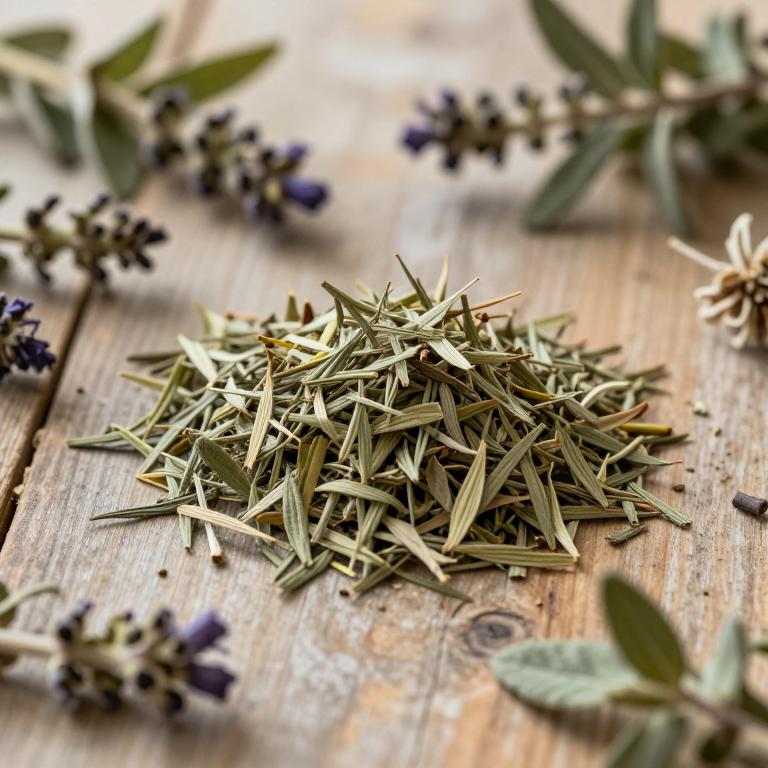
Names and Synonyms
Common Names
- African Sage
- Mediterranean sage
Scientific Names
Accepted name
Salvia aethiopisSynonyms
- Sclarea aethiopis
- Aethiopis vera
- Salvia leuconeura
- Salvia idanensis
- Salvia kochiana
Regional and Traditional Names
Spanish:
- Aethiopis vera
- Etiopsido
- Sclarea aethiopis
- Gordolobo de Guinea
- Sclarea lanata
- Etiópide
- Salvia etíope
- Vellosa
- Etiópsido
- Salvia kochiana
- Salvia leuconeura
- Salvia lanata
- Salvia etiope
- Salvia idanensis
- Etiopide
- salvia etíope
German:
- Ungarn-Salbei
- Ungarischer Salbei
- Mohren-Salbei
- Mohren-Salbei
- ungarischer Salbei
- Ungarn-Salbei
French:
- Sauge d'Ethiopie
- Sauge d'Ethiopie
- Sauge d'Éthiopie
Sources: Wikidata, Catalogue of Life
Taxonomical Classification
This plant belongs to the kingdom Plantae and the phylum Streptophyta, falling under the class Equisetopsida and subclass Magnoliidae. Within the order Lamiales and the family Lamiaceae, it is classified under the genus Salvia.
| Rank | Classification |
|---|---|
| Kingdom | Plantae |
| Phylum | Streptophyta |
| Class | Equisetopsida |
| Subclass | Magnoliidae |
| Order | Lamiales |
| Family | Lamiaceae |
| Genus | Salvia |
Sources: The World Checklist of Vascular Plants (WCVP)
Distribution
This plant exhibits a specific distribution pattern across several regions of the European continent. Within Middle Europe, it can be found growing in the landscapes of Austria and Germany. Its presence also extends through the territories of Czechia and Slovakia. Furthermore, the species is documented within the borders of Hungary. Finally, its geographical range reaches into Southwestern Europe, specifically within France.
| Region | Area |
|---|---|
| Middle Europe | Austria |
| Middle Europe | Czechia-Slovakia |
| Middle Europe | Germany |
| Middle Europe | Hungary |
| Southwestern Europe | France |
| Southwestern Europe | Portugal |
| Southwestern Europe | Spain |
| Southeastern Europe | Albania |
| Southeastern Europe | Bulgaria |
| Southeastern Europe | Greece |
Sources: The World Checklist of Vascular Plants (WCVP)
Botanical Identification
Ecology
The ecology of Salvia aethiopis is characterized by its ability to thrive in diverse and often challenging landscapes, demonstrating a broad environmental adaptability. This species is frequently found colonizing disturbed or open ground, such as crop fields and old fields, where it can take advantage of available space. It shows a strong affinity for well-drained, mineral-rich substrates, commonly inhabiting limestone formations and stony places. Furthermore, its distribution spans various altitudinal and vegetative zones, ranging from low-lying meadows and steppe environments to higher elevations in mountainous regions.
- Habitat :
- crop fields, limestone, meadows, mountains, old fields, steppe, stony places
Life history
The life history of Salvia aethiopis is characterized by a flexible developmental strategy, functioning primarily as a biennial, though its growth pattern can be categorized as variable depending on environmental conditions. In terms of its morphological survival strategies, the plant exhibits characteristics of both a hemicryptophyte, where perennating buds are located at the soil surface level, and a therophyte, indicating its ability to complete its life cycle through the production of seeds that endure unfavorable seasons.
- Life form :
- hemicryptophyte
- Life form :
- therophyte
- Lifecycle :
- biennial
Morphology
The morphology of Salvia aethiopis is characterized by its growth form as a non-woody herb and forb, typically functioning as a self-supporting plant rather than a climber or vine. It is an independent organism, neither acting as a parasite nor an epiphyte, as it maintains a terrestrial existence. The plant's stature is relatively modest, with a height ranging from a minimum of 0.3 m to a maximum of 1.2 m. While its habitat can encompass aquatic, semiaquatic, or terrestrial environments, its structural development remains consistent with a non-woody, herbaceous habit.
- Aquatic :
- terrestrial
- Climber :
- self-supporting
- Epiphyte :
- terrestrial
- Growth form :
- herb
- Growth form :
- forb
- Parasite :
- independent
- Plant height max:
- 1.2 m
- Plant height min:
- 0.3 m
- Woodiness :
- non-woody
Physiology
The physiology of Salvia aethiopis is characterized by its reliance on the C3 photosynthetic pathway, a mechanism wherein carbon dioxide is fixed directly into a three-carbon compound during the Calvin cycle. This metabolic process involves the enzyme RuBisCO facilitating the carboxylation of ribulose-1,5-bisphosphate, which is typical for many members of the Lamiaceae family inhabiting temperate to subtropical environments. As a C3 plant, its gas exchange and water-use efficiency are closely tied to stomatal conductance, where the plant must balance the intake of CO2 for glucose production against the transpirational loss of water. This physiological framework dictates its growth patterns and resource allocation, making its metabolic rate highly sensitive to ambient light intensity, temperature fluctuations, and moisture availability in its natural habitat.
- Photosynthetic pathway :
- C3
Reproduction
The reproduction of Salvia aethiopis is characterized by a specific seasonal flowering period and the production of minute seeds. The plant enters its flowering phase starting in May and continues through its peak reproductive activity until the season concludes in August. During this period, it produces seeds with a highly specialized mass profile; the seed mass is remarkably small, with a mean weight of approximately 0.0017045 g. Individual seeds within a population exhibit slight variations in size, ranging from a minimum mass of 0.0013 g to a maximum mass of 0.0025 g.
- Flowering time :
- May
- Flowering time :
- Aug
- Seed mass max:
- 0.0025 g
- Seed mass mean:
- 0.0017045 g
- Seed mass min:
- 0.0013 g
Sources: Global Inventory of Floras and Traits (GIFT)
Chemicals
Salvia aethiopis has 6 reported phytochemicals identified across 0 scientific publications and several other databases. The most consistently reported chemicals include Flavonoid, Salvianolic acid K, Spathulenol, protocatechuic acid, rosmarinic acid.
| Chemical | Supporting sources | Consensus |
|---|---|---|
| Flavonoid | 1 supporting sources | ★☆☆☆☆ |
| Salvianolic acid K | 1 supporting sources | ★☆☆☆☆ |
| Spathulenol | 1 supporting sources | ★☆☆☆☆ |
| protocatechuic acid | 1 supporting sources | ★☆☆☆☆ |
| rosmarinic acid | 1 supporting sources | ★☆☆☆☆ |
| salvianic acid C | 1 supporting sources | ★☆☆☆☆ |
Flavonoid
- Molecules (Basel, Switzerland)
Salvianolic acid K
- Molecules (Basel, Switzerland)
Spathulenol
- Natural product research
protocatechuic acid
- Chemistry & biodiversity
rosmarinic acid
- Molecules (Basel, Switzerland)
salvianic acid C
- Molecules (Basel, Switzerland)
Activities
Salvia aethiopis has 7 reported activities identified across 0 scientific publications and several other databases. The most consistently reported activities include Antioxidant, Analgesic, Antiasthmatic, Anticancer, Antitumor.
| Activity | Supporting sources | Consensus |
|---|---|---|
| Antioxidant | 2 supporting sources | ★☆☆☆☆ |
| Analgesic | 1 supporting sources | ★☆☆☆☆ |
| Antiasthmatic | 1 supporting sources | ★☆☆☆☆ |
| Anticancer | 1 supporting sources | ★☆☆☆☆ |
| Antitumor | 1 supporting sources | ★☆☆☆☆ |
| Carminative | 1 supporting sources | ★☆☆☆☆ |
| Tonic | 1 supporting sources | ★☆☆☆☆ |
Antioxidant
- Molecules (Basel, Switzerland)
- Combinatorial chemistry & high throughput screening
Analgesic
- Combinatorial chemistry & high throughput screening
Antiasthmatic
- Combinatorial chemistry & high throughput screening
Anticancer
- Molecules (Basel, Switzerland)
Antitumor
- Combinatorial chemistry & high throughput screening
Carminative
- Natural product research
Tonic
- Natural product research
Conditions
Salvia aethiopis has 2 reported investigations on conditions identified across 0 scientific publications and several other databases. The most consistently reported conditions include cancer, hepatocellular carcinoma.
| Condition | Supporting sources | Consensus |
|---|---|---|
| Cancer | 1 supporting sources | ★☆☆☆☆ |
| Hepatocellular carcinoma | 1 supporting sources | ★☆☆☆☆ |
Cancer
- Molecules (Basel, Switzerland)
Hepatocellular carcinoma
- Molecules (Basel, Switzerland)
Preparations
Salvia aethiopis has 1 reported preparations identified across 0 scientific publications and several other databases. The most consistently reported preparations include ethanolic extract of aerial part of S. aethiopis.
| Preparation | Supporting sources | Consensus |
|---|---|---|
| Ethanolic extract of aerial part of s. aethiopis | 1 supporting sources | ★☆☆☆☆ |
Ethanolic extract of aerial part of s. aethiopis
- Natural product research