Salvadora oleoides
Salvadora oleoides · Accepted scientific name
Scientific literature: Very Sparse (21 studies) · ★☆☆☆☆
Salvadora oleoides, scientifically known as Salvadora oleoides, is a resilient, deciduous shrub native to the arid regions of India and Pakistan. Often called the "Desert Toothbrush," this medicinal plant is highly valued in traditional medicine for its antimicrobial, anti-inflammatory, and antioxidant properties, particularly in treating oral and digestive ailments.
- Family
- Salvadoraceae
- Native range
- Asia-Temperate
- Parts used
- Fruit · Leaf
- Common names
- Not available
- Scientific synonyms
- Salvadora Stocksii
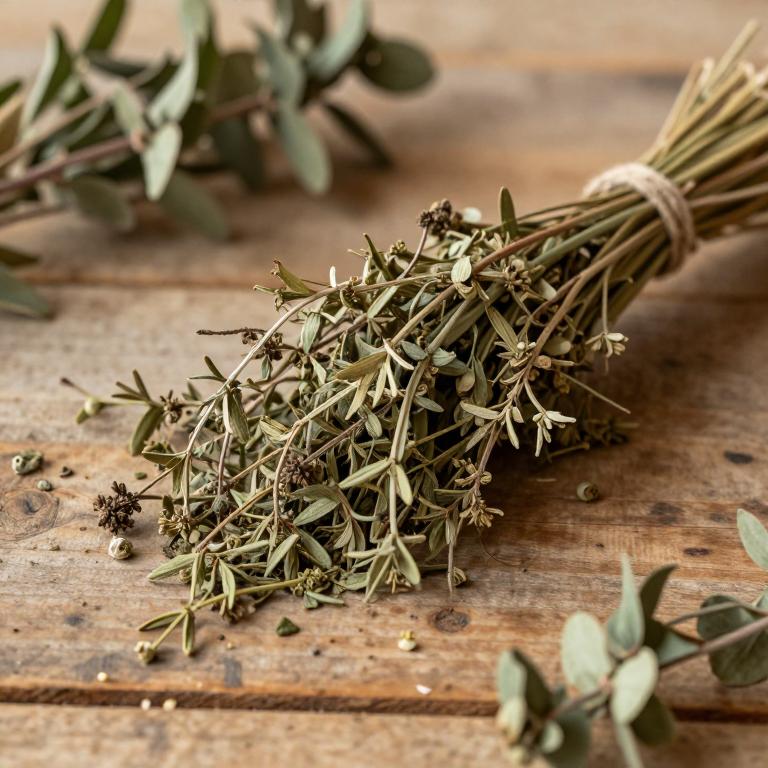
Names and Synonyms
Scientific Names
Accepted name
Salvadora oleoidesSynonyms
- Salvadora stocksii
Regional and Traditional Names
German:
- Salvadora oleiodes
French:
- Salvadora oleiodes
Sources: Wikidata, Catalogue of Life
Taxonomical Classification
This plant belongs to the kingdom Plantae and is classified under the phylum Streptophyta and the class Equisetopsida. Within the subclass Magnoliidae, it is organized under the order Brassicales and the family Salvadoraceae. Finally, its specific taxonomic identity is defined by the genus Salvadora.
| Rank | Classification |
|---|---|
| Kingdom | Plantae |
| Phylum | Streptophyta |
| Class | Equisetopsida |
| Subclass | Magnoliidae |
| Order | Brassicales |
| Family | Salvadoraceae |
| Genus | Salvadora |
Sources: The World Checklist of Vascular Plants (WCVP)
Distribution
This plant, Salvadora oleoides, exhibits a broad geographical distribution across several key regions. In Western Asia, it can be found growing within the country of Iran. Its range extends into the Arabian Peninsula, specifically inhabiting parts of Yemen. Within the Indian Subcontinent, the species is widely distributed throughout India. Additionally, the plant is well-established in the neighboring territory of Pakistan.
| Region | Area |
|---|---|
| Western Asia | Iran |
| Arabian Peninsula | Yemen |
| Indian Subcontinent | India |
| Indian Subcontinent | Pakistan |
Sources: The World Checklist of Vascular Plants (WCVP)
Botanical Identification
Life history
The life history of Salvadora oleoides is characterized by its long-lived perennial lifecycle, allowing it to persist in arid environments over many years. As a phanerophyte, the plant develops significant woody structures with buds located well above the ground, though it can also exhibit traits associated with a nanophanerophyte depending on its specific growth stage and environmental stressors. Throughout its existence, the species maintains an evergreen deciduousness, ensuring that it retains its foliage year-round to maximize photosynthetic potential in its native habitat.
- Deciduousness :
- evergreen
- Life form :
- nanophanerophyte
- Life form :
- phanerophyte
- Lifecycle :
- perennial
Morphology
The morphology of Salvadora oleoides is characterized by its growth form as a woody tree, typically reaching a mean height of approximately 7.5 m. As a terrestrial species, it grows as an independent organism rather than as a parasite or an epiphyte. The plant is strictly self-supporting in its structure, lacking any climbing or vine-like tendencies, and maintains a robust, woody composition throughout its physical form.
- Aquatic :
- terrestrial
- Climber :
- self-supporting
- Epiphyte :
- terrestrial
- Growth form :
- tree
- Parasite :
- independent
- Plant height mean:
- 7.5 m
- Woodiness :
- woody
Physiology
The physiology of Salvadora oleoides is characterized by a specific metabolic framework adapted to its environmental conditions, primarily utilizing a C3 photosynthetic pathway for carbon fixation. This metabolic strategy dictates how the plant captures sunlight and converts atmospheric carbon dioxide into chemical energy, distinguishing it from more specialized C4 or CAM species. Furthermore, in terms of nutrient acquisition and symbiotic relationships, the plant does not function as a nitrogen fixer, meaning it lacks the specialized biological mechanisms or symbiotic associations required to convert atmospheric nitrogen into a usable form for its growth.
- Nitrogen fixer :
- no
- Photosynthetic pathway :
- C3
Reproduction
The reproduction of Salvadora oleoides is centered around its seed production, which exhibits a highly consistent morphological profile regarding mass. The seeds produced by this species are remarkably uniform in weight, with a recorded seed mass mean of 0.07692 g. This consistency is further reflected in the lack of variance within the population, as both the maximum and minimum seed mass values are identical at 0.07692 g. Such precise uniformity in seed mass suggests a stabilized reproductive strategy, ensuring that each seed carries a standardized amount of resources to support early seedling development.
- Seed mass mean:
- 0.07692 g
Sources: Global Inventory of Floras and Traits (GIFT)
Plant Parts
Salvadora oleoides has 3 reported plant parts identified across 3 scientific publications and several other databases that are studied for medicinal purposes. The most consistently reported plant part include fruit, leaf, stem.
| Plant part | Supporting sources | Consensus |
|---|---|---|
| Fruit | 1 supporting sources | ★☆☆☆☆ |
| Leaf | 1 supporting sources | ★☆☆☆☆ |
| Stem | 1 supporting sources | ★☆☆☆☆ |
Fruit
- BioMed research international
Leaf
- SpringerPlus
Stem
- SpringerPlus
Chemicals
Salvadora oleoides has 14 reported phytochemicals identified across 3 scientific publications and several other databases. The most consistently reported chemicals include Antioxidants, Ash, Calcium (Ca), Carotenoid, Carotenoids.
| Chemical | Supporting sources | Consensus |
|---|---|---|
| Antioxidants | 1 supporting sources | ★☆☆☆☆ |
| Ash | 1 supporting sources | ★☆☆☆☆ |
| Calcium (Ca) | 1 supporting sources | ★☆☆☆☆ |
| Carotenoid | 1 supporting sources | ★☆☆☆☆ |
| Carotenoids | 1 supporting sources | ★☆☆☆☆ |
| Copper (Cu) | 1 supporting sources | ★☆☆☆☆ |
| Coumarins | 1 supporting sources | ★☆☆☆☆ |
| Flavonoids | 1 supporting sources | ★☆☆☆☆ |
| Iron (Fe) | 1 supporting sources | ★☆☆☆☆ |
| Tannins | 1 supporting sources | ★☆☆☆☆ |
Antioxidants
- BioMed research international
Ash
- BioMed research international
Calcium (Ca)
- BioMed research international
Carotenoid
- BioMed research international
Carotenoids
- BioMed research international
Copper (Cu)
- BioMed research international
Coumarins
- BioMed research international
Flavonoids
- BioMed research international
Iron (Fe)
- BioMed research international
Tannins
- BioMed research international
Conditions
Salvadora oleoides has 3 reported investigations on conditions identified across 3 scientific publications and several other databases. The most consistently reported conditions include coronary heart diseases, hyperlipidemia, toothache.
| Condition | Supporting sources | Consensus |
|---|---|---|
| Coronary heart diseases | 1 supporting sources | ★☆☆☆☆ |
| Hyperlipidemia | 1 supporting sources | ★☆☆☆☆ |
| Toothache | 1 supporting sources | ★☆☆☆☆ |
Coronary heart diseases
- Pharmacognosy magazine
Hyperlipidemia
- Pharmacognosy magazine
Toothache
- International dental journal