Salsola kali
Salsola kali · Accepted scientific name
Scientific literature: Very Sparse (2 studies) · ★☆☆☆☆
Salsola kali, scientifically known as Salsola kali, is a resilient, salt-tolerant shrub native to arid regions. Often referred to as tumbleweed, this plant plays a vital role in desert ecosystems. Traditionally, it has been studied for its diverse medicinal properties, including its potential applications in treating various inflammatory conditions.
- Family
- Not available
- Native range
- Europe
- Parts used
- Leaf · Stem
- Common names
- Not available
- Scientific synonyms
- Not available
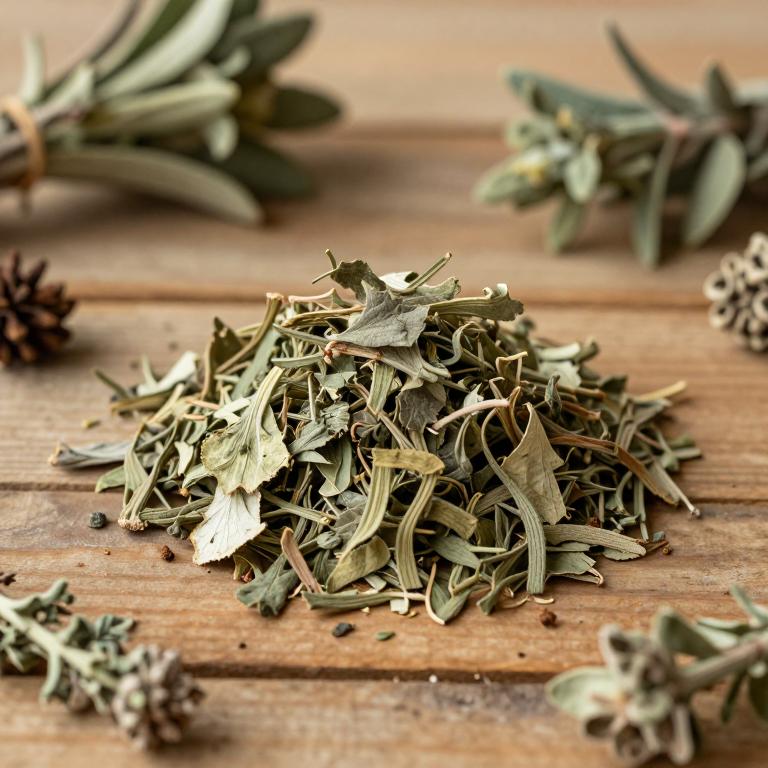
Names and Synonyms
Scientific Names
Accepted name
Salsola kaliDistribution
This plant exhibits a specific distribution pattern across the northern reaches of the European continent. In the region of Northern Europe, it can be found growing in the coastal or inland areas of Denmark. Its presence extends further north into the territories of Finland and Norway. Additionally, the species is documented within the islands of Great Britain and Ireland. These locations highlight its ability to thrive within the particular climates found in these northernmost territories.
| Region | Area |
|---|---|
| Northern Europe | Denmark |
| Northern Europe | Finland |
| Northern Europe | Great Britain |
| Northern Europe | Ireland |
| Northern Europe | Norway |
| Northern Europe | Sweden |
| Middle Europe | Belgium |
| Middle Europe | Germany |
| Middle Europe | Netherlands |
| Middle Europe | Poland |
Sources: The World Checklist of Vascular Plants (WCVP)
Botanical Identification
Ecology
The ecology of Salsola kali is characterized by its ability to thrive across a broad altitudinal gradient, ranging from sea level (0 m AMSL) up to a maximum elevation of 1200 m AMSL. This species demonstrates significant adaptability to disturbed environments, frequently colonizing anthropogenic areas (Área Antrópica) where human activity has modified the natural landscape. Furthermore, the plant possesses biological defense mechanisms, as indicated by its positive status for defense traits, which aids in its survival within these varied and often challenging ecological niches.
- Defense :
- yes
- Elevational range max:
- 1200 m AMSL
- Elevational range min:
- 0 m AMSL
- Habitat :
- Área Antrópica
Life history
The life history of Salsola kali is characterized by its existence as an annual plant, completing its entire reproductive cycle within a single growing season. Functioning as a therophyte, it survives the unfavorable periods of its environment through specialized seed dispersal rather than maintaining persistent above-ground structures. This species is distinctly deciduous, shedding its foliage as it completes its life cycle, which is a common adaptation to the arid or seasonal habitats it inhabits. As a therophyte, its life strategy focuses on rapid growth and prolific seed production to ensure the continuation of the species before the onset of environmental stress.
- Deciduousness :
- deciduous
- Life form :
- therophyte
- Lifecycle :
- annual
Morphology
The morphology of Salsola kali is characterized by its growth form as a woody herb and forb, which functions as a self-supporting plant rather than a climber or vine. It is an independent species, neither acting as a parasite nor an epiphyte, and is strictly terrestrial in its habitat. The plant exhibits an ascending shoot orientation and reaches varying heights, with a minimum height of 0.02 m, a mean height of 0.512 m, and a maximum height of 1 m.
- Aquatic :
- terrestrial
- Climber :
- self-supporting
- Epiphyte :
- terrestrial
- Growth form :
- herb
- Growth form :
- forb
- Parasite :
- independent
- Plant height max:
- 1 m
- Plant height mean:
- 0.512 m
- Plant height min:
- 0.02 m
- Shoot orientation :
- ascending
- Woodiness :
- woody
Physiology
The physiology of Salsola kali is characterized by specialized adaptations for efficiency in arid environments, most notably through its C4 photosynthetic pathway, which allows for enhanced carbon fixation under high temperature and light intensity. The plant exhibits a non-carnivorous nutritional strategy and does not function as a nitrogen fixer. Morphologically, its leaves are arranged in an alternate pattern, with dimensions ranging from a minimum length of 1 cm to a maximum length of 4 cm. The average leaf size is recorded at 0.625 cm², and the plant maintains a mean Specific Leaf Area (SLA) of 95.5 cm²/g, reflecting its structural leaf density and resource allocation strategies.
- Carnivory :
- non-carnivorous
- Leaf arrangement :
- alternate
- Leaf length max:
- 4 cm
- Leaf length min:
- 1 cm
- Leaf size mean:
- 0.625 cm²
- Nitrogen fixer :
- no
- Photosynthetic pathway :
- C4
- Specific Leaf Area (SLA) mean:
- 95.5 cm²/g
Reproduction
The reproduction of Salsola kali is characterized by a sexual process involving bisexual flowers that typically feature a yellow coloration. The flowering period is relatively concentrated, beginning in July and concluding in August, with individual flowers measuring between 0.4 cm and 0.6 cm in width. The plant utilizes both abiotic and biotic pollination syndromes, specifically relying on wind and insects to facilitate fertilization; notably, self-fertilization is absent. Following successful pollination, the plant produces dry, indehiscent fruits categorized as achenes. These fruits are highly prolific, containing between 101 and 1000 seeds per fruit. The seeds are quite small, with a mean mass of approximately 0.008058875 g (ranging from a minimum of 0.0015 g to a maximum of 0.01545 g), a consistent width of 1.75 mm, and a uniform volume of 1.7 mm³. Dispersal is primarily an anemochorous process, meaning the seeds are spread by the wind. There is no evidence of asexual reproduction in this species.
- Dehiscence :
- indehiscent
- Dispersal syndrome :
- anemochorous
- Flower colour :
- yellow
- Flower width max:
- 0.6 cm
- Flower width min:
- 0.4 cm
- Flowering time :
- Jul
- Flowering time :
- Aug
- Fruit dryness :
- dry
- Fruit type :
- achene
- Pollination syndrome :
- wind
- Pollination syndrome :
- insect
- Pollination syndrome :
- abiotic
- Reproduction asexual :
- absent
- Reproduction sexual :
- bisexual
- Seed mass max:
- 0.01545 g
- Seed mass mean:
- 0.008058875 g
- Seed mass min:
- 0.0015 g
- Seed volume max:
- 1.7 mm³
- Seed width mean:
- 1.75 mm
- Seeds_per_fruit :
- 101-1000
- Self fertilization :
- absent
Sources: Global Inventory of Floras and Traits (GIFT)
Plant Parts
Salsola kali has 2 reported plant parts identified across 2 scientific publications and several other databases that are studied for medicinal purposes. The most consistently reported plant part include leaf, stem.
| Plant part | Supporting sources | Consensus |
|---|---|---|
| Leaf | 1 supporting sources | ★☆☆☆☆ |
| Stem | 1 supporting sources | ★☆☆☆☆ |
Leaf
- Microscopy research and technique
Stem
- Microscopy research and technique