Salpichroa origanifolia
Salpichroa origanifolia · Accepted scientific name
Scientific literature: Very Sparse (1 studies) · ★☆☆☆☆
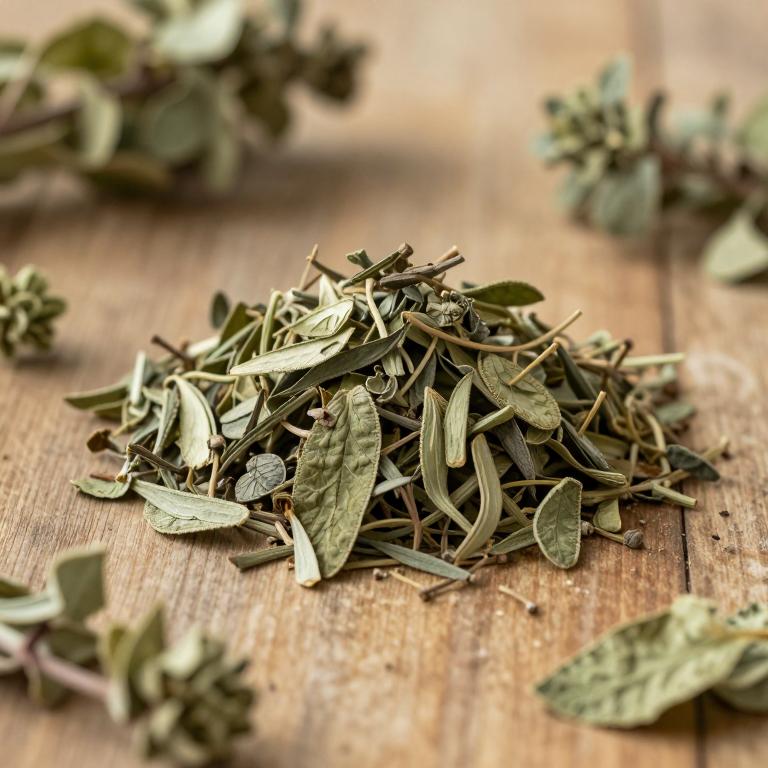
Salpichroa origanifolia, is a distinctive medicinal plant renowned for its aromatic properties and therapeutic potential. Characterized by its unique leaf structure reminiscent of oregano, this species is utilized in traditional medicine to address various ailments. Its bioactive compounds offer promising insights into natural healing and pharmacological research applications.
- Family
- Not available
- Native range
- Europe
- Parts used
- Leaf
- Common names
- Not available
- Scientific synonyms
- Not available
Names and Synonyms
Scientific Names
Accepted name
Salpichroa origanifoliaDistribution
This plant exhibits a diverse range of habitats across several European regions. In Northern Europe, its presence can be noted within the territories of Great Britain and Ireland. Moving toward the Mediterranean, the species is also found throughout Southwestern Europe. Specifically, it inhabits the island of Corse and large portions of mainland France. Finally, its distribution extends further south into the coastal and inland regions of Portugal.
| Region | Area |
|---|---|
| Northern Europe | Great Britain |
| Northern Europe | Ireland |
| Southwestern Europe | Corse |
| Southwestern Europe | France |
| Southwestern Europe | Portugal |
| Southwestern Europe | Spain |
| Southeastern Europe | Italy |
| Northern Africa | Algeria |
| Northern Africa | Morocco |
| Northern Africa | Tunisia |
Sources: The World Checklist of Vascular Plants (WCVP)
Botanical Identification
Ecology
The ecology of Salpichroa origaniifolia is characterized by a broad altitudinal distribution, ranging from sea level up to an elevation of 2500 m AMSL. While the species is capable of colonizing high-altitude environments, it is frequently found inhabiting lowland habitats. This wide elevational range allows the plant to adapt to diverse ecological niches, transitioning from low-lying plains to mountainous terrains within its established vertical gradient.
- Elevational range max:
- 2500 m AMSL
- Elevational range min:
- 0 m AMSL
- Habitat :
- Lowland
Life history
The life history of Salpichroa origaniifolia is characterized by its perennial lifecycle, allowing the plant to persist through multiple growing seasons. As a chamaephyte, its physiological structure is adapted to maintain its growth points near or just above the soil surface, a trait reflected in its classification under both chamaephyte life form categories. Furthermore, the plant exhibits an evergreen deciduousness, ensuring that its foliage remains functional and provides continuous cover throughout its life cycle.
- Deciduousness :
- evergreen
- Life form :
- chamaephyte
- Lifecycle :
- perennial
Morphology
The morphology of Salpichroa origanifolia is characterized by its growth form as a non-woody herb and forb, which functions as an independent organism rather than a parasite. This terrestrial plant exhibits a scandent shoot orientation and is categorized as a self-supporting climber. In terms of physical dimensions, the plant typically reaches a maximum height of 1.5 m, though it can range from a minimum of 0.3 m to a mean height of approximately 5 m depending on environmental conditions and specific growth stages. As a terrestrial species, it does not function as an epiphyte or an aquatic plant, maintaining a stable, non-woody structure.
- Aquatic :
- terrestrial
- Climber :
- self-supporting
- Epiphyte :
- terrestrial
- Growth form :
- herb
- Growth form :
- forb
- Parasite :
- independent
- Plant height max:
- 1.5 m
- Plant height mean:
- 5 m
- Plant height min:
- 0.3 m
- Shoot orientation :
- scandent
- Woodiness :
- non-woody
Physiology
The physiology of Salicornia origanifolia is characterized by a C3 photosynthetic pathway, indicating a carbon fixation process typical of plants that thrive in environments where water availability allows for standard stomatal conductance. Its vegetative structure features elliptic leaf forms that serve as the primary site for gas exchange and light absorption. The leaves exhibit specific dimensional variations, with a mean width of 2 cm, a minimum width of 2 cm, and a maximum width reaching up to 3.5 cm, while the leaf length reaches a maximum of 5 cm. Furthermore, this species does not function as a nitrogen fixer, relying instead on the uptake of available nitrogen from its substrate to support its metabolic and developmental processes.
- Leaf form :
- elliptic
- Leaf length max:
- 5 cm
- Leaf width max:
- 3.5 cm
- Leaf width mean:
- 2 cm
- Nitrogen fixer :
- no
- Photosynthetic pathway :
- C3
Reproduction
The reproduction of Salpichroa origanifolia involves both sexual and asexual mechanisms, with its sexual reproduction being characterized by bisexual flowers. The flowering period typically begins in April and continues through September, featuring small white flowers that measure between 0.45 cm and 0.5 cm in length. These flowers rely on biotic pollination syndromes, specifically involving insects such as bees. To ensure genetic diversity, self-fertilization is noted as absent. Following successful pollination, the plant produces black, indehiscent berry-type fruits. These fruits vary in size, with a mean length of 1.5 cm (ranging from 1 cm to 1.5 cm) and a width ranging from 0.8 cm to 1.2 cm. Each fruit is highly prolific, containing more than 1000 seeds. The seeds themselves are quite small, with a mean mass of 0.0011 g, and possess dimensions ranging from 1.5 mm to 2.3 mm in length and 1.5 mm to 2 mm in width. Dispersal is achieved through a zoochorous strategy, specifically via endozoochory, where seeds are dispersed through the digestive tracts of animals.
- Dehiscence :
- indehiscent
- Dispersal syndrome :
- zoochorous
- Dispersal syndrome :
- endozoochorous
- Flower colour :
- white
- Flower length max:
- 0.5 cm
- Flower length min:
- 0.45 cm
- Flowering time :
- Apr
- Flowering time :
- Sep
- Fruit colour :
- black
- Fruit length max:
- 1.5 cm
- Fruit length min:
- 1 cm
- Fruit type :
- berry
- Fruit width max:
- 1.2 cm
- Fruit width min:
- 0.8 cm
- Pollination syndrome :
- insect
- Pollination syndrome :
- bee
- Pollination syndrome :
- biotic
- Reproduction asexual :
- present
- Reproduction sexual :
- bisexual
- Seed length max:
- 2.3 mm
- Seed length min:
- 1.5 mm
- Seed mass mean:
- 0.0011 g
- Seed width max:
- 2 mm
- Seed width min:
- 1.5 mm
- Seeds_per_fruit :
- >1000
- Self fertilization :
- absent
Sources: Global Inventory of Floras and Traits (GIFT)
Plant Parts
Salpichroa origanifolia has 1 reported plant parts identified across 1 scientific publications and several other databases that are studied for medicinal purposes. The most consistently reported plant part include leaf.
| Plant part | Supporting sources | Consensus |
|---|---|---|
| Leaf | 1 supporting sources | ★☆☆☆☆ |
Leaf
- Journal of natural products
Preparations
Salpichroa origanifolia has 2 reported preparations identified across 1 scientific publications and several other databases. The most consistently reported preparations include crude extracts, leaves.
| Preparation | Supporting sources | Consensus |
|---|---|---|
| Crude extracts | 1 supporting sources | ★☆☆☆☆ |
| Leaves | 1 supporting sources | ★☆☆☆☆ |
Crude extracts
- Journal of ethnopharmacology
Leaves
- Journal of natural products