almond willow
Salix triandra · Accepted scientific name
Scientific literature: Very Sparse (5 studies) · ★☆☆☆☆
Almond willow, scientifically known as Salix triandra, is a versatile deciduous shrub native to Europe and Asia. Renowned for its medicinal properties, it contains salicin, a precursor to aspirin. Traditionally used to alleviate pain and reduce inflammation, this resilient plant offers significant botanical value in natural pharmacology and herbalism.
- Family
- Salicaceae
- Native range
- Europe
- Parts used
- Not available
- Common names
- French Willow · Almond Willow · 2 more
- Scientific synonyms
- Pleiarina Triandra
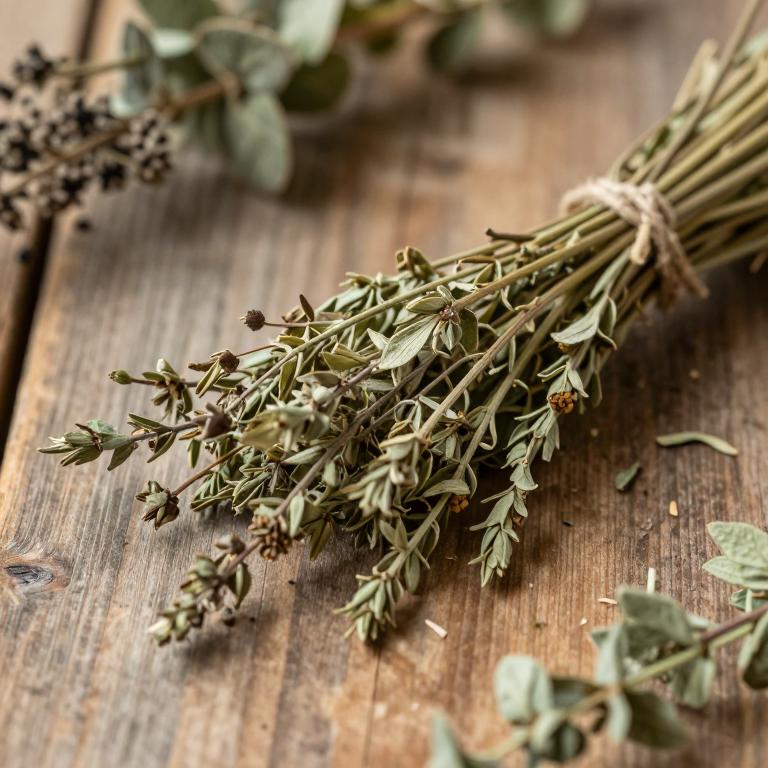
Names and Synonyms
Common Names
- French willow
- almond willow
- almond-leaved willow
- almond-leaf willow
Scientific Names
Accepted name
Salix triandraSynonyms
- Pleiarina triandra
Regional and Traditional Names
Spanish:
- Salix triandra var viridis
- Mimbre silvestre
- Sauce almendro
- Salix amygdalina f ligustrina
- Salix triandra ssp. amygdalina
- Salix amygdalina
- Mimbre negro
- Salix amygdalina var. discolor
- Salix triandra var. glaucophylla
- Salix triandra f vulgaris
- Salix amygdalina var concolor
- Salix triandra ssp amygdalina
- Salix triandra var amygdalina
- Sauce almendruño
- Sargatilla negra
- Salix triandra var. amygdalina
German:
- Mandel-Weide
- Mandelweide
- Mandel-Weide
French:
- Saule à trois étamines
- Saule a trois etamines
- Noir de villaines
- Saule-amandier
- Osier brun
- saule à trois étamines
- osier brun
- saule à trois étamines
- saule-amandier
- Saule a trois etamines
Sources: Wikidata, Catalogue of Life
Taxonomical Classification
This plant belongs to the kingdom Plantae within the phylum Streptophyta and the class Equisetopsida. It is further classified under the subclass Magnoliidae and the order Malpighiales, falling within the family Salicaceae. Finally, its taxonomic identity is defined by the genus Salix.
| Rank | Classification |
|---|---|
| Kingdom | Plantae |
| Phylum | Streptophyta |
| Class | Equisetopsida |
| Subclass | Magnoliidae |
| Order | Malpighiales |
| Family | Salicaceae |
| Genus | Salix |
Sources: The World Checklist of Vascular Plants (WCVP)
Distribution
This plant, known as Salix triandra, exhibits a specific distribution across several regions in Northern Europe. It can be found growing within the natural landscapes of Finland. Additionally, its presence extends to the islands of Great Britain and Ireland. The species is also documented throughout the territories of Norway. Finally, its geographical range includes the country of Sweden.
| Region | Area |
|---|---|
| Northern Europe | Finland |
| Northern Europe | Great Britain |
| Northern Europe | Ireland |
| Northern Europe | Norway |
| Northern Europe | Sweden |
| Middle Europe | Austria |
| Middle Europe | Belgium |
| Middle Europe | Czechia-Slovakia |
| Middle Europe | Germany |
| Middle Europe | Hungary |
Sources: The World Checklist of Vascular Plants (WCVP)
Botanical Identification
Ecology
The ecology of Salix triandra is characterized by its presence across diverse and contrasting environments, including desert, forest, and steppe ecosystems. This adaptability allows the species to thrive in varying landscape structures, ranging from more arid open shrublands to more sheltered wooded areas. In terms of altitudinal distribution, the plant is specifically adapted to high-altitude environments, occupying an elevational range that begins at 1700 m AMSL and extends up to a maximum of 2900 m AMSL.
- Elevational range max:
- 2900 m AMSL
- Elevational range min:
- 1700 m AMSL
- Habitat :
- desert, forest, steppe
Life history
The life history of Salix triandra is characterized by a perennial lifecycle, allowing the plant to persist through multiple growing seasons. As a phanerophyte, it maintains its buds well above the ground, exhibiting a growth form that typically involves woody stems or shrubs. This species is distinctly deciduous, shedding its foliage annually in response to seasonal changes. Its biological strategy as a phanerophyte ensures its structural longevity and ability to dominate its specific ecological niche over many years.
- Deciduousness :
- deciduous
- Life form :
- phanerophyte
- Lifecycle :
- perennial
Morphology
The morphology of Salix triandra is characterized by its growth form as a woody shrub, exhibiting a self-supporting structure rather than acting as a climber, liana, or vine. As a terrestrial species, it does not function as an epiphyte or an aquatic plant, and it grows as an independent organism without parasitic tendencies. In terms of stature, the plant displays significant vertical development, with a minimum height of 1 meter and a maximum height reaching up to 6 meters, resulting in a mean plant height of approximately 7.2915 meters.
- Aquatic :
- terrestrial
- Climber :
- self-supporting
- Epiphyte :
- terrestrial
- Growth form :
- shrub
- Parasite :
- independent
- Plant height max:
- 6 m
- Plant height mean:
- 7.2915 m
- Plant height min:
- 1 m
- Woodiness :
- woody
Physiology
The physiology of Salix triandra is characterized by a C3 photosynthetic pathway, a standard metabolic strategy for many temperate woody species that allows for efficient carbon fixation under moderate light and temperature conditions. The plant exhibits a non-carnivorous nutritional strategy, relying on traditional soil-based nutrient uptake rather than the digestion of prey. Morphologically, its foliage is defined by a mean leaf size of approximately 6.28333 cm², which contributes to its overall light interception capabilities. Furthermore, the species maintains a mean Specific Leaf Area (SLA) of 116.14 cm²/g, reflecting a specific leaf mass distribution that balances leaf thickness with surface area to optimize gas exchange and resource management within its ecological niche.
- Carnivory :
- non-carnivorous
- Leaf size mean:
- 6.28333 cm²
- Photosynthetic pathway :
- C3
- Specific Leaf Area (SLA) mean:
- 116.14 cm²/g
Reproduction
The reproduction of Salix triandra is characterized by a dioecious sexual reproduction system, meaning individual plants are either male or female, and self-fertilization is notably absent. The flowering period typically commences in April and concludes in May. The plant utilizes a biotic pollination syndrome, specifically relying on insects to facilitate the transfer of pollen. Following successful pollination, the plant develops fruit in the form of a capsule, which is dehiscent, allowing for the release of seeds. These seeds are extremely lightweight, with a consistent seed mass of approximately 2e-05 g (minimum, mean, and maximum). Dispersal is achieved through an anemochorous syndrome, where the seeds are dispersed by the wind. There is no recorded evidence of asexual reproduction for this species.
- Dehiscence :
- dehiscent
- Dispersal syndrome :
- anemochorous
- Flowering time :
- Apr
- Flowering time :
- May
- Fruit type :
- capsule
- Pollination syndrome :
- insect
- Pollination syndrome :
- biotic
- Reproduction asexual :
- absent
- Reproduction sexual :
- dioecious
- Seed mass mean:
- 2e-05 g
- Self fertilization :
- absent
Sources: Global Inventory of Floras and Traits (GIFT)
Chemicals
Salix triandra has 4 reported phytochemicals identified across 0 scientific publications and several other databases. The most consistently reported chemicals include Dihydromyricetin, Picein, isograndidentatin B, salicin.
| Chemical | Supporting sources | Consensus |
|---|---|---|
| Dihydromyricetin | 1 supporting sources | ★☆☆☆☆ |
| Picein | 1 supporting sources | ★☆☆☆☆ |
| isograndidentatin B | 1 supporting sources | ★☆☆☆☆ |
| salicin | 1 supporting sources | ★☆☆☆☆ |
Dihydromyricetin
- Plants (Basel, Switzerland)
Picein
- Plants (Basel, Switzerland)
isograndidentatin B
- Plants (Basel, Switzerland)
salicin
- Plants (Basel, Switzerland)
Conditions
Salix triandra has 1 reported investigations on conditions identified across 0 scientific publications and several other databases. The most consistently reported conditions include pain.
| Condition | Supporting sources | Consensus |
|---|---|---|
| Pain | 1 supporting sources | ★☆☆☆☆ |
Pain
- Plants (Basel, Switzerland)
Preparations
Salix triandra has 1 reported preparations identified across 0 scientific publications and several other databases. The most consistently reported preparations include ethanolic extract.
| Preparation | Supporting sources | Consensus |
|---|---|---|
| Ethanolic extract | 1 supporting sources | ★☆☆☆☆ |
Ethanolic extract
- Plants (Basel, Switzerland)