Coin-leaf willow
Salix nummularia · Accepted scientific name
Scientific literature: Very Sparse (2 studies) · ★☆☆☆☆
Coin-leaf willow, scientifically known as Salix nummularia, is a resilient, low-growing shrub native to northern Europe and Asia. Characterized by its distinctive, rounded leaves, this hardy plant thrives in damp habitats. Historically valued in traditional medicine, it contains salicin, offering natural anti-inflammatory and analgesic properties for various ailments.
- Family
- Salicaceae
- Native range
- Europe
- Parts used
- Not available
- Common names
- Coin-Leaf Willow
- Scientific synonyms
- Salix Nummularia Subsp. Pauciflora · Salix Nummularia Var. Stenophylla · 14 more
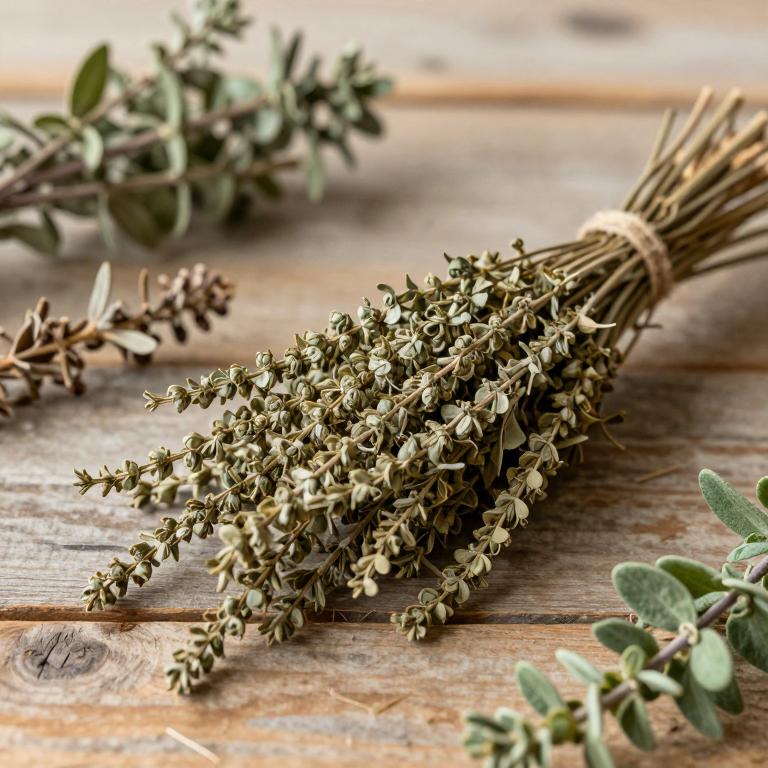
Names and Synonyms
Common Names
- Coin-leaf willow
Scientific Names
Accepted name
Salix nummulariaSynonyms
- Salix nummularia subsp. pauciflora
- Salix nummularia var. stenophylla
- Salix nummularia f. hebecarpa
- Salix pauciflora
- Salix nummularia subsp. tundricola
- Salix polyadenia
- Salix herbacea var. flabellaris
- Salix polyadenia var. tschanbaischanica
- Salix pauciflora var. cyclophylla
- Salix tschanbaischanica
- Salix pauciflora var. stenophylla
- Salix tundricola
- Salix pauciflora var. hebecarpa
- Salix nummularia var. cyclophylla
- Salix pauciflora f. hebecarpa
- Salix vulcani
Sources: Wikidata, Catalogue of Life
Taxonomical Classification
This plant belongs to the kingdom Plantae and the phylum Streptophyta, falling under the class Equisetopsida and subclass Magnoliidae. Within the order Malpighiales and the family Salicaceae, it is classified under the genus Salix. Consequently, Salix nummularia represents a specific medicinal species within this organized taxonomic hierarchy.
| Rank | Classification |
|---|---|
| Kingdom | Plantae |
| Phylum | Streptophyta |
| Class | Equisetopsida |
| Subclass | Magnoliidae |
| Order | Malpighiales |
| Family | Salicaceae |
| Genus | Salix |
Sources: The World Checklist of Vascular Plants (WCVP)
Distribution
This plant exhibits a wide geographical presence across several key regions of Northern and Eastern Eurasia. In Eastern Europe, its range extends through both North European Russia and East European Russia. Moving eastward, the species is well-established within the vast landscapes of Siberia. Specifically, it can be found inhabiting the regions of Altay, Buryatiya, and Chitа. Consequently, its distribution spans a diverse longitudinal stretch of the Russian wilderness.
| Region | Area |
|---|---|
| Eastern Europe | East European Russia |
| Eastern Europe | North European Russia |
| Siberia | Altay |
| Siberia | Buryatiya |
| Siberia | Chita |
| Siberia | Irkutsk |
| Siberia | Krasnoyarsk |
| Siberia | Tuva |
| Siberia | West Siberia |
| Siberia | Yakutiya |
Sources: The World Checklist of Vascular Plants (WCVP)
Botanical Identification
Ecology
The ecology of Salix nummularia is defined by its specialization in harsh, high-latitude environments, where it thrives primarily in arctic regions and across various tundra landscapes. It is specifically adapted to stony places, often colonizing rocky substrates, scree slopes, and gravelly terrains where competition from larger woody vegetation is limited by climatic constraints. Within these ecosystems, the plant occupies niches characterized by extreme temperature fluctuations, short growing seasons, and nutrient-poor soils. Its ability to persist in such rugged, lithic habitats allows it to play a structural role in the stabilization of tundra soils and provides a foundational component of the local biotic community in cold, wind-swept environments.
- Habitat :
- arctic, stony places, tundra
Life history
The life history of Salix nummularia is characterized by its status as a perennial species, allowing it to establish long-term presence within its ecological niche. As a perennial, the plant does not complete its life cycle within a single growing season but instead undergoes repeated cycles of vegetative growth and seasonal dormancy. Its development involves the establishment of a robust root system that supports its multi-year survival, enabling it to endure varying environmental conditions over many seasons. Throughout its life cycle, the plant focuses on continuous structural development, often exhibiting woody growth that matures over several years, while its reproductive phases occur periodically to ensure species persistence through seed production.
- Lifecycle :
- perennial
Morphology
The morphology of Salix nummularia is characterized by a low-growing, woody shrub form that functions as a self-supporting plant. It typically reaches a modest plant height, ranging from a minimum of 0.3 m to a maximum of 0.5 m. As an independent species, it does not exhibit parasitic or epiphytic behavior, maintaining a terrestrial lifestyle rather than being aquatic or semiaquatic. Its structural development is defined by its woody nature, allowing it to maintain a compact, shrubby growth habit without the need for climbing or vining mechanisms.
- Aquatic :
- terrestrial
- Climber :
- self-supporting
- Epiphyte :
- terrestrial
- Growth form :
- shrub
- Parasite :
- independent
- Plant height max:
- 0.5 m
- Plant height min:
- 0.3 m
- Woodiness :
- woody
Reproduction
The reproduction of Salix nummularia is characterized by a dioecious sexual reproduction system, meaning that individual plants are either male or female. The flowering period for this species typically commences in June and concludes in July. Following the pollination process, the plant utilizes an anemochorous dispersal syndrome, relying on the wind to transport its seeds to new locations.
- Dispersal syndrome :
- anemochorous
- Flowering time :
- Jun
- Flowering time :
- Jul
- Reproduction sexual :
- dioecious
Sources: Global Inventory of Floras and Traits (GIFT)
Chemicals
Salix nummularia has 1 reported phytochemicals identified across 0 scientific publications and several other databases. The most consistently reported chemicals include CATECHIN.
| Chemical | Supporting sources | Consensus |
|---|---|---|
| CATECHIN | 1 supporting sources | ★☆☆☆☆ |
CATECHIN
- Plants (Basel, Switzerland)
Preparations
Salix nummularia has 1 reported preparations identified across 0 scientific publications and several other databases. The most consistently reported preparations include ethanolic extracts.
| Preparation | Supporting sources | Consensus |
|---|---|---|
| Ethanolic extracts | 1 supporting sources | ★☆☆☆☆ |
Ethanolic extracts
- Plants (Basel, Switzerland)