Humboldt's willow
Salix humboldtiana · Accepted scientific name
Scientific literature: Very Sparse (8 studies) · ★☆☆☆☆
Humboldt's willow, scientifically known as Salix humboldtiana, is a versatile riparian shrub native to North America. Renowned for its medicinal properties, its bark contains salicin, a precursor to aspirin. Historically used to alleviate pain and reduce inflammation, this resilient willow remains a significant subject in ethnobotanical studies today.
- Family
- Salicaceae
- Native range
- Pacific
- Parts used
- Not available
- Common names
- Humboldt'S Willow
- Scientific synonyms
- Pleiarina Humboldtiana
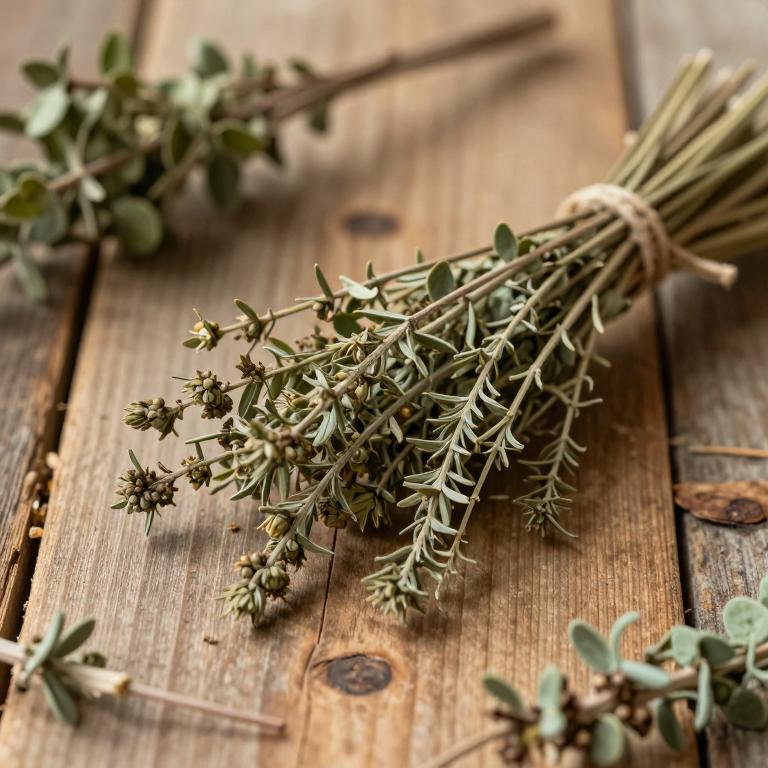
Names and Synonyms
Common Names
- Humboldt's Willow
Scientific Names
Accepted name
Salix humboldtianaSynonyms
- Pleiarina humboldtiana
Regional and Traditional Names
Spanish:
- sauce
- Sauce blanco
- Sauce colorado
- Sauce columnar
- Sauce criollo
French:
- saule peuplier
- saule chilien
Sources: Wikidata, Catalogue of Life
Taxonomical Classification
This plant belongs to the kingdom Plantae and is classified under the phylum Streptophyta and the class Equisetopsida. Within the subclass Magnoliidae, it falls under the order Malpighiales and the family Salicaceae. Finally, it is categorized under the genus Salix.
| Rank | Classification |
|---|---|
| Kingdom | Plantae |
| Phylum | Streptophyta |
| Class | Equisetopsida |
| Subclass | Magnoliidae |
| Order | Malpighiales |
| Family | Salicaceae |
| Genus | Salix |
Sources: The World Checklist of Vascular Plants (WCVP)
Distribution
This plant, Salix humboldtiana, exhibits a diverse geographical range spanning across North America and the South Pacific. Within Mexico, its distribution is quite extensive, covering the Central, Northeast, Gulf, and Northwest regions of the country. These various Mexican territories provide the specific habitats necessary for the species to flourish across different climates. Additionally, the plant's reach extends far beyond the mainland to the South-Central Pacific. Specifically, it can be found localized on the island of Tubuaï.
| Region | Area |
|---|---|
| South-Central Pacific | Tubuai Is. |
| Mexico | Mexico Central |
| Mexico | Mexico Northeast |
| Mexico | Mexico Gulf |
| Mexico | Mexico Northwest |
| Mexico | Mexico Southwest |
| Mexico | Mexico Southeast |
| Central America | Belize |
| Central America | Costa Rica |
| Central America | El Salvador |
Sources: The World Checklist of Vascular Plants (WCVP)
Botanical Identification
Ecology
The ecology of Salix humboldtiana is characterized by its broad adaptability to diverse forest ecosystems and a significant altitudinal distribution. This species can be found inhabiting a variety of forest types, including Floresta Estacional Semidecidual, Floresta Ombrófila (also known as Floresta Pluvial), and Floresta Ombrófila Mista. Its vertical range is remarkably expansive, spanning from sea level (0 m AMSL) up to high-altitude environments reaching a maximum of 3900 m AMSL.
- Elevational range max:
- 3900 m AMSL
- Elevational range min:
- 0 m AMSL
- Habitat :
- Floresta Estacional Semidecidual, Floresta Ombrófila (= Floresta Pluvial), Floresta Ombrófila Mista
Life history
The life history of Salix humboldtiaana is characterized by its existence as a perennial species, allowing it to persist through multiple growing seasons and establish a stable presence within its habitat. As a deciduous plant, it undergoes a seasonal transformation where it sheds its foliage annually, typically in response to changes in temperature or moisture availability, entering a period of dormancy before regenerating new leaves in the subsequent growing season.
- Deciduousness :
- deciduous
- Lifecycle :
- perennial
Morphology
The morphology of Salix humboldtiana is characterized by its stature as a woody tree, exhibiting a robust and self-supporting growth form. This species typically reaches an average plant height of 15 m, though it is capable of growing up to a maximum height of 25 m. As an independent organism, it does not function as a parasite, and it maintains a strictly terrestrial existence, lacking any aquatic, semiaquatic, or epiphytic tendencies. Its structural integrity is defined by its woody nature, allowing it to stand firmly as a self-supporting tree rather than acting as a climber, liana, or vine.
- Aquatic :
- terrestrial
- Climber :
- self-supporting
- Epiphyte :
- terrestrial
- Growth form :
- tree
- Parasite :
- independent
- Plant height max:
- 25 m
- Plant height mean:
- 15 m
- Woodiness :
- woody
Physiology
The physiology of Salix humboldtiana is characterized by a C3 photosynthetic pathway, which governs its carbon fixation processes and metabolic efficiency. Morphologically, the plant's foliage displays specific dimensions, with leaves typically measuring between 9 cm and 15 cm in length, while the width of these leaves remains relatively narrow, ranging from a minimum of 0.6 cm to a maximum of 1 cm. Furthermore, the plant does not function as a nitrogen fixer, meaning it relies on soil nitrogen availability rather than symbiotic nitrogen-fixing bacteria to meet its nutritional requirements.
- Leaf length max:
- 15 cm
- Leaf length min:
- 9 cm
- Leaf width max:
- 1 cm
- Leaf width min:
- 0.6 cm
- Nitrogen fixer :
- no
- Photosynthetic pathway :
- C3
Reproduction
The reproduction of Salix humboldtiana is characterized by a specialized pollination syndrome primarily driven by insects. The species does not exhibit self-fertilization, meaning it relies on cross-pollination to ensure genetic diversity. The seeds produced are notably small, with a minimum mass of 0.00009 g and a maximum mass of 0.002 g, resulting in an average seed mass of approximately 0.001045 g.
- Pollination syndrome :
- insect
- Seed mass max:
- 0.002 g
- Seed mass mean:
- 0.001045 g
- Seed mass min:
- 9e-05 g
- Self fertilization :
- absent
Sources: Global Inventory of Floras and Traits (GIFT)
Activities
Salix humboldtiana has 4 reported activities identified across 0 scientific publications and several other databases. The most consistently reported activities include Antipyretic, Antispasmodic, Astringent, Sedative.
| Activity | Supporting sources | Consensus |
|---|---|---|
| Antipyretic | 1 supporting sources | ★☆☆☆☆ |
| Antispasmodic | 1 supporting sources | ★☆☆☆☆ |
| Astringent | 1 supporting sources | ★☆☆☆☆ |
| Sedative | 1 supporting sources | ★☆☆☆☆ |
Antipyretic
- Natural product communications
Antispasmodic
- Natural product communications
Astringent
- Natural product communications
Sedative
- Natural product communications
Conditions
Salix humboldtiana has 4 reported investigations on conditions identified across 0 scientific publications and several other databases. The most consistently reported conditions include antipyretic, antispasmodic, astringent, sedative.
| Condition | Supporting sources | Consensus |
|---|---|---|
| Antipyretic | 1 supporting sources | ★☆☆☆☆ |
| Antispasmodic | 1 supporting sources | ★☆☆☆☆ |
| Astringent | 1 supporting sources | ★☆☆☆☆ |
| Sedative | 1 supporting sources | ★☆☆☆☆ |
Antipyretic
- Natural product communications
Antispasmodic
- Natural product communications
Astringent
- Natural product communications
Sedative
- Natural product communications