Salix chaenomeloides
Salix chaenomeloides · Accepted scientific name
Scientific literature: Very Sparse (16 studies) · ★☆☆☆☆
Salix chaenomeloides, is a distinctive willow species native to specific regions, valued for its unique botanical characteristics. Beyond its ecological role, this plant holds significant medicinal potential. Its bioactive compounds are studied for therapeutic properties, offering promising insights into traditional herbal remedies and modern pharmacological applications for holistic wellness.
- Family
- Salicaceae
- Native range
- Asia-Temperate
- Parts used
- Leaf
- Common names
- Not available
- Scientific synonyms
- Not available
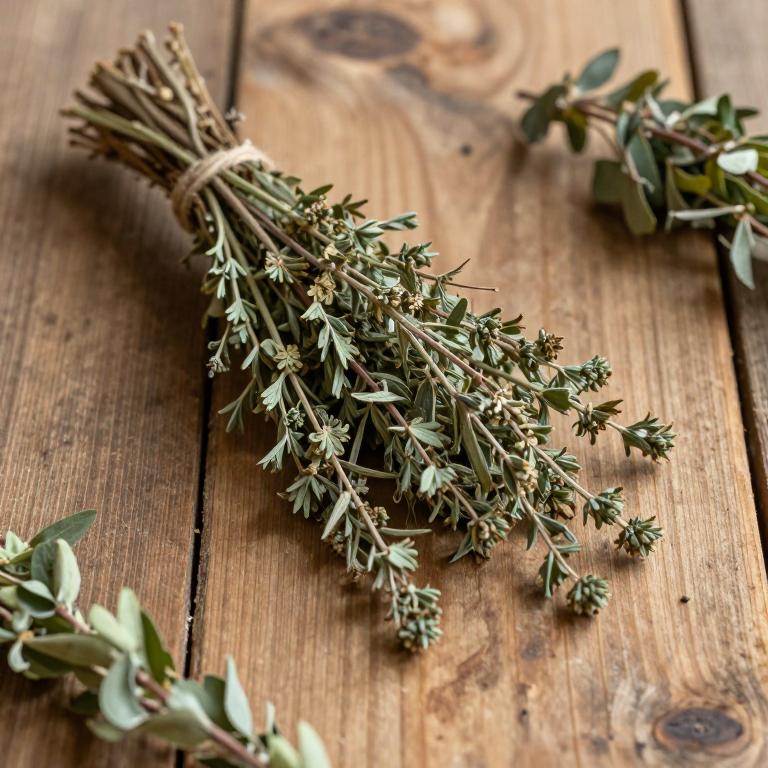
Names and Synonyms
Scientific Names
Accepted name
Salix chaenomeloidesSources: Wikidata, Catalogue of Life
Taxonomical Classification
This plant belongs to the kingdom Plantae and the phylum Streptophyta, falling under the class Equisetopsida and subclass Magnoliidae. Within the order Malpighiales, it is classified under the family Salicaceae. Finally, its taxonomic identity is defined by the genus Salix.
| Rank | Classification |
|---|---|
| Kingdom | Plantae |
| Phylum | Streptophyta |
| Class | Equisetopsida |
| Subclass | Magnoliidae |
| Order | Malpighiales |
| Family | Salicaceae |
| Genus | Salix |
Sources: The World Checklist of Vascular Plants (WCVP)
Distribution
This plant is native to several distinct regions across East Asia. Within China, its distribution spans from the Manchuria region to the North-Central areas. It is also commonly found throughout the Southeast portion of the country. Moving beyond mainland China, the species extends into the island nation of Japan. Finally, its geographical range includes the Korean Peninsula.
| Region | Area |
|---|---|
| China | Manchuria |
| China | China North-Central |
| China | China Southeast |
| Eastern Asia | Japan |
| Eastern Asia | Korea |
Sources: The World Checklist of Vascular Plants (WCVP)
Botanical Identification
Ecology
The ecology of Salix chaenomeloides is closely tied to specific altitudinal gradients, typically manifesting in montane or sub-montane environments. This species is characterized by a distinct elevational range that reaches a maximum of 1000 m AMSL, with its presence being most consistent around a mean elevation of 1000 m AMSL. Within these specific height parameters, the plant thrives in habitats where moisture levels and soil compositions support its growth patterns, often occupying niches that are stabilized by this particular altitude. The concentration of its occurrence near the 1000 m threshold suggests a specialized adaptation to the climatic conditions and pressure levels found at this specific elevation.
- Elevational range max:
- 1000 m AMSL
Life history
The life history of Salix chaenomeloides is characterized by its status as a perennial species, meaning it maintains its existence and physiological functions through multiple growing seasons rather than completing its cycle in a single year. As a perennial shrub, it follows a long-term developmental trajectory that involves establishing a robust root system to support sustained growth and seasonal regeneration. Its life cycle is marked by annual rhythms of vegetative expansion and reproductive phases, where it undergoes periodic dormancy during unfavorable conditions followed by vigorous regrowth when environmental factors become optimal. This perennial nature allows the plant to accumulate biomass over several years, contributing to its structural complexity and its ability to persist within its specific ecological niche.
- Lifecycle :
- perennial
Morphology
The morphology of Salix chaenomeloides is characterized by its robust, woody growth form, primarily manifesting as a tree. This species typically reaches a plant height ranging from a minimum of 4 meters to a maximum of 6 meters. In terms of its structural habit, it is classified as a self-supporting plant, maintaining its upright stature without the need for external climbing structures.
- Climber :
- self-supporting
- Growth form :
- tree
- Plant height max:
- 6 m
- Plant height min:
- 4 m
- Woodiness :
- woody
Physiology
The physiology of Salix chaenomeloides is characterized by a C3 photosynthetic pathway, which dictates its metabolic processes and carbon fixation efficiency. Morphologically, the foliage exhibits significant variability in dimensions, with leaf lengths typically averaging 6 cm (ranging from a minimum of 4 cm to a maximum of 8 cm) and leaf widths averaging 2.65 cm (ranging from a minimum of 1.8 cm to a maximum of 3.5 cm). Structural integrity and biomass distribution are further defined by the stem's physical properties, specifically a mean stem specific density (SSD) of 546 mg/cm³, which reflects the plant's internal tissue density and support mechanisms.
- Leaf length max:
- 8 cm
- Leaf length mean:
- 6 cm
- Leaf length min:
- 4 cm
- Leaf width max:
- 3.5 cm
- Leaf width mean:
- 2.65 cm
- Leaf width min:
- 1.8 cm
- Photosynthetic pathway :
- C3
- Stem specific density (SSD) mean:
- 546 mg/cm³
Reproduction
The reproduction of Salix chaenomeloides is characterized by the production of small, specialized fruits that follow a distinct size distribution. These fruits exhibit measurable morphological variations, with lengths ranging from a minimum of 0.3 cm to a maximum of 0.7 cm. On average, the fruit length typically measures approximately 0.5 cm, facilitating the dispersal process essential for the establishment of new generations within its ecological niche.
- Fruit length max:
- 0.7 cm
- Fruit length mean:
- 0.5 cm
- Fruit length min:
- 0.3 cm
Sources: Global Inventory of Floras and Traits (GIFT)
Plant Parts
Salix chaenomeloides has 1 reported plant parts identified across 1 scientific publications and several other databases that are studied for medicinal purposes. The most consistently reported plant part include leaf.
| Plant part | Supporting sources | Consensus |
|---|---|---|
| Leaf | 1 supporting sources | ★☆☆☆☆ |
Leaf
- Plants (Basel, Switzerland)
Chemicals
Salix chaenomeloides has 13 reported phytochemicals identified across 1 scientific publications and several other databases. The most consistently reported chemicals include 4-hydroxybenzaldehyde, Arbutin cinnamate, Citrusin C, Dihydromyricetin, Kaempferol-3-rutinoside.
| Chemical | Supporting sources | Consensus |
|---|---|---|
| 4-hydroxybenzaldehyde | 1 supporting sources | ★☆☆☆☆ |
| Arbutin cinnamate | 1 supporting sources | ★☆☆☆☆ |
| Citrusin C | 1 supporting sources | ★☆☆☆☆ |
| Dihydromyricetin | 1 supporting sources | ★☆☆☆☆ |
| Kaempferol-3-rutinoside | 1 supporting sources | ★☆☆☆☆ |
| Narcissin | 1 supporting sources | ★☆☆☆☆ |
| Picein | 1 supporting sources | ★☆☆☆☆ |
| Tremulacin | 1 supporting sources | ★☆☆☆☆ |
| Tremuloidin | 1 supporting sources | ★☆☆☆☆ |
| catechol | 1 supporting sources | ★☆☆☆☆ |
4-hydroxybenzaldehyde
- Plants (Basel, Switzerland)
Arbutin cinnamate
- Plants (Basel, Switzerland)
Citrusin C
- Plants (Basel, Switzerland)
Dihydromyricetin
- Plants (Basel, Switzerland)
Kaempferol-3-rutinoside
- Plants (Basel, Switzerland)
Narcissin
- Plants (Basel, Switzerland)
Picein
- Plants (Basel, Switzerland)
Tremulacin
- Plants (Basel, Switzerland)
Tremuloidin
- Plants (Basel, Switzerland)
catechol
- Plants (Basel, Switzerland)
Conditions
Salix chaenomeloides has 2 reported investigations on conditions identified across 1 scientific publications and several other databases. The most consistently reported conditions include Helicobacter pylori, pain.
| Condition | Supporting sources | Consensus |
|---|---|---|
| Helicobacter pylori | 1 supporting sources | ★☆☆☆☆ |
| Pain | 1 supporting sources | ★☆☆☆☆ |
Helicobacter pylori
- Plants (Basel, Switzerland)
Pain
- Plants (Basel, Switzerland)