Lippia integrifolia
Salimenaea integrifolia · Accepted scientific name
Scientific literature: Very Sparse (15 studies) · ★☆☆☆☆
Lippia integrifolia, scientifically known as Salimenaea integrifolia, is a versatile medicinal shrub native to various tropical regions. Renowned for its aromatic properties, this plant is traditionally utilized in folk medicine to treat digestive issues, respiratory ailments, and skin inflammations, offering significant pharmacological potential for modern therapeutic research and development.
- Family
- Verbenaceae
- Native range
- Southern America
- Parts used
- Leaf
- Common names
- Not available
- Scientific synonyms
- Lippia Integrifolia · Lippia Integrifolia Var. Beckii · 4 more
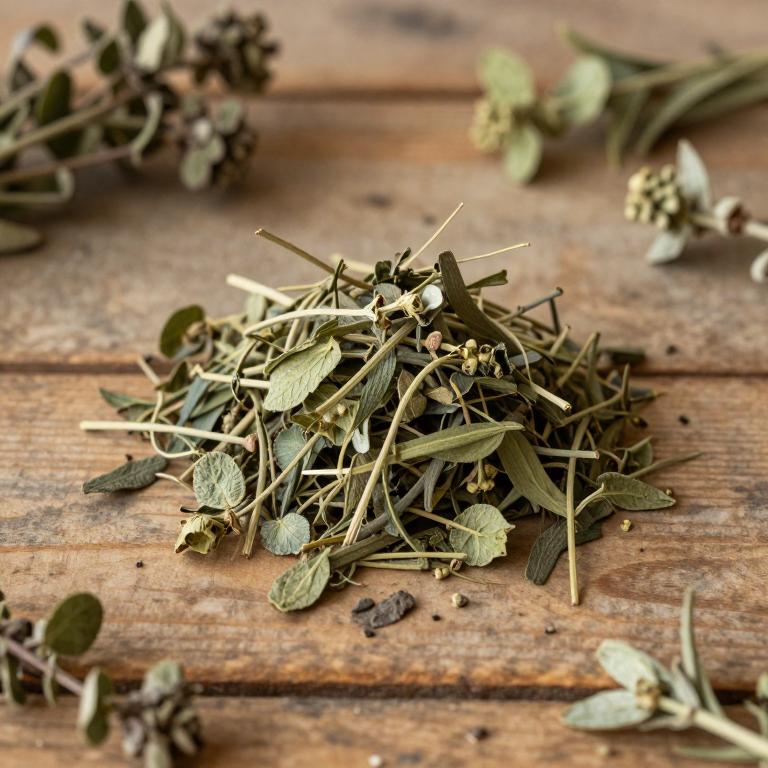
Names and Synonyms
Scientific Names
Accepted name
Salimenaea integrifoliaSynonyms
- Lippia integrifolia
- Lippia integrifolia var. beckii
- Lippia turbinata var. integrifolia
- Lippia boliviana
- Lippia boliviana var. angusta
- Lippia boliviana var. integrifolia
Regional and Traditional Names
Spanish:
- Inca yerba
- Incayuyo
- Poleo
- Pulco
- Té del inca
- Lippia integrifolia
- Lippia turbinata var. integrifolia
- Incayuyo
Sources: Wikidata, Catalogue of Life
Taxonomical Classification
This plant belongs to the kingdom Plantae and the phylum Streptophyta, falling under the class Equisetopsida and subclass Magnoliidae. Within the order Lamiales, it is classified under the family Verbenaceae. Finally, it is identified by the genus Salimenaea and the species Salimenaea integrifolia.
| Rank | Classification |
|---|---|
| Kingdom | Plantae |
| Phylum | Streptophyta |
| Class | Equisetopsida |
| Subclass | Magnoliidae |
| Order | Lamiales |
| Family | Verbenaceae |
| Genus | Salimenaea |
Sources: The World Checklist of Vascular Plants (WCVP)
Distribution
This plant exhibits a diverse range of habitats across several regions of South America. In the western part of the continent, its presence is documented within Bolivia. Moving toward the southern regions, it can be found in the northeast of Argentina. The species also extends into the northwest territories of Argentina. Finally, its distribution reaches the northern areas of Chile.
| Region | Area |
|---|---|
| Western South America | Bolivia |
| Southern South America | Argentina Northeast |
| Southern South America | Argentina Northwest |
| Southern South America | Chile North |
Sources: The World Checklist of Vascular Plants (WCVP)
Plant Parts
Salimenaea integrifolia has 1 reported plant parts identified across 1 scientific publications and several other databases that are studied for medicinal purposes. The most consistently reported plant part include leaf.
| Plant part | Supporting sources | Consensus |
|---|---|---|
| Leaf | 1 supporting sources | ★☆☆☆☆ |
Leaf
- Chemistry & biodiversity
Chemicals
Salimenaea integrifolia has 8 reported phytochemicals identified across 1 scientific publications and several other databases. The most consistently reported chemicals include (4R,9S,10R)-Lippifoli-1(6)-en-5-one, Borneol, Flavonoid, Lippifoli-1(6)-en-5-one, Terpenoid.
| Chemical | Supporting sources | Consensus |
|---|---|---|
| (4R,9S,10R)-Lippifoli-1(6)-en-5-one | 1 supporting sources | ★☆☆☆☆ |
| Borneol | 1 supporting sources | ★☆☆☆☆ |
| Flavonoid | 1 supporting sources | ★☆☆☆☆ |
| Lippifoli-1(6)-en-5-one | 1 supporting sources | ★☆☆☆☆ |
| Terpenoid | 1 supporting sources | ★☆☆☆☆ |
| Terpenoids | 1 supporting sources | ★☆☆☆☆ |
| Terpinen-4-ol | 1 supporting sources | ★☆☆☆☆ |
| trans-Davanone | 1 supporting sources | ★☆☆☆☆ |
(4R,9S,10R)-Lippifoli-1(6)-en-5-one
- Journal of natural products
Borneol
- Chemistry & biodiversity
Flavonoid
- Chemistry & biodiversity
Lippifoli-1(6)-en-5-one
- Chemistry & biodiversity
Terpenoid
- Chemistry & biodiversity
Terpenoids
- Phytochemistry
Terpinen-4-ol
- Chemistry & biodiversity
trans-Davanone
- Phytochemistry
Activities
Salimenaea integrifolia has 3 reported activities identified across 1 scientific publications and several other databases. The most consistently reported activities include Antibacterial, Antifungal, Insect-Repellent.
| Activity | Supporting sources | Consensus |
|---|---|---|
| Antibacterial | 1 supporting sources | ★☆☆☆☆ |
| Antifungal | 1 supporting sources | ★☆☆☆☆ |
| Insect-Repellent | 1 supporting sources | ★☆☆☆☆ |
Antibacterial
- Chemistry & biodiversity
Antifungal
- Chemistry & biodiversity
Insect-Repellent
- Chemistry & biodiversity
Preparations
Salimenaea integrifolia has 2 reported preparations identified across 1 scientific publications and several other databases. The most consistently reported preparations include essential oils, organic extracts.
| Preparation | Supporting sources | Consensus |
|---|---|---|
| Essential oils | 1 supporting sources | ★☆☆☆☆ |
| Organic extracts | 1 supporting sources | ★☆☆☆☆ |
Essential oils
- Chemistry & biodiversity
Organic extracts
- Parasitology research