Kothala himbutu
Salacia reticulata · Accepted scientific name
Scientific literature: Very Sparse (35 studies) · ★☆☆☆☆
Kothala himbutu, scientifically known as Salaacia reticulata, is a climbing shrub native to the tropical forests of Sri Lanka. Renowned in traditional Ayurveda, this potent medicinal plant is widely utilized for its remarkable anti-diabetic properties, aiding in blood sugar regulation and supporting overall metabolic health and vitality.
- Family
- Celastraceae
- Native range
- Asia-Tropical
- Parts used
- Leaf · Root
- Common names
- Kothala Himbutu · Kothala Himbutu
- Scientific synonyms
- Not available
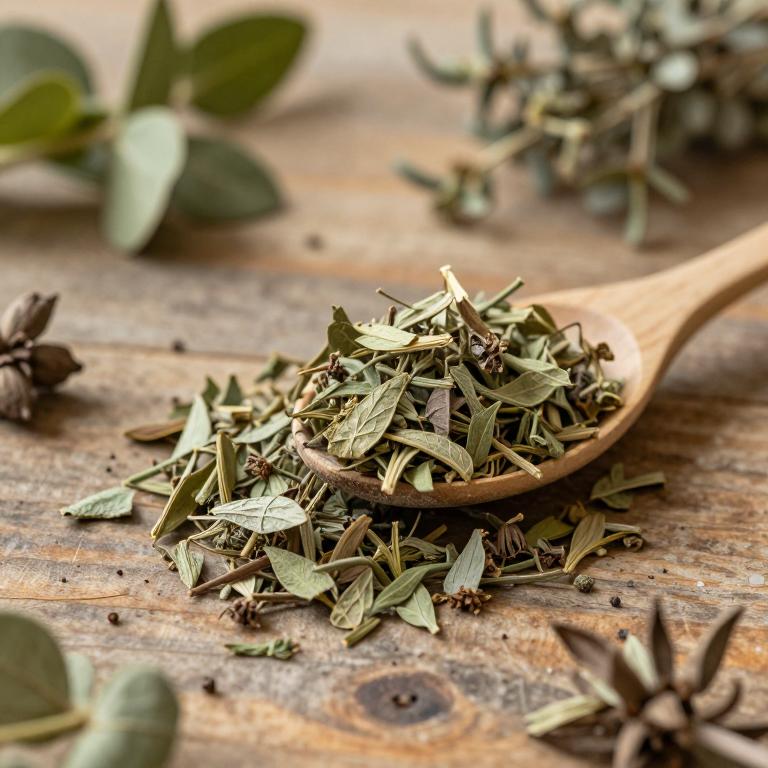
Names and Synonyms
Common Names
- Kothala himbutu
- Kothala himbutu
Scientific Names
Accepted name
Salacia reticulataSources: Wikidata, Catalogue of Life
Taxonomical Classification
This plant belongs to the kingdom Plantae and the phylum Streptophyta, falling under the class Equisetopsida and subclass Magnoliidae. Within the order Celastrales and the family Celastraceae, it is classified under the genus Salacia. Specifically, the species is identified as Salacia reticulata.
| Rank | Classification |
|---|---|
| Kingdom | Plantae |
| Phylum | Streptophyta |
| Class | Equisetopsida |
| Subclass | Magnoliidae |
| Order | Celastrales |
| Family | Celastraceae |
| Genus | Salacia |
Sources: The World Checklist of Vascular Plants (WCVP)
Distribution
This plant exhibits a specific geographical distribution concentrated within certain tropical regions. In the Indian Subcontinent, it is notably found growing in Sri Lanka. Furthermore, its range extends into the Indo-China region. Within this area, the plant can be located on the Andaman Islands. These locations define the primary natural habitats where the species thrives.
| Region | Area |
|---|---|
| Indian Subcontinent | Sri Lanka |
| Indo-China | Andaman Is. |
Sources: The World Checklist of Vascular Plants (WCVP)
Botanical Identification
Morphology
The morphology of Salacia reticulata is characterized by its growth habit as a vigorous climber, specifically functioning as a liana. As a woody plant, it possesses a robust, lignified structure that allows it to ascend and navigate through surrounding vegetation, utilizing its woody stems to provide the necessary support for its sprawling vine-like extension. This combination of a woody constitution and a climbing life form enables the species to effectively compete for light within its ecological niche.
- Climber :
- liana
- Woodiness :
- woody
Sources: Global Inventory of Floras and Traits (GIFT)
Plant Parts
Salacia reticulata has 3 reported plant parts identified across 7 scientific publications and several other databases that are studied for medicinal purposes. The most consistently reported plant part include leaf, root, stem.
| Plant part | Supporting sources | Consensus |
|---|---|---|
| Leaf | 3 supporting sources | ★★☆☆☆ |
| Root | 2 supporting sources | ★☆☆☆☆ |
| Stem | 2 supporting sources | ★☆☆☆☆ |
Leaf
- BMC research notes
- BMC complementary medicine and therapies
- Genes & nutrition
Root
- Biological & pharmaceutical bulletin
- BMC complementary medicine and therapies
Stem
- Biological & pharmaceutical bulletin
- BMC complementary medicine and therapies
Chemicals
Salacia reticulata has 10 reported phytochemicals identified across 7 scientific publications and several other databases. The most consistently reported chemicals include Mangiferin, SALACINOL, (-)-4'-O-methylepigallocatechin, (-)-Epicatechin, (-)-Epigallocatechin.
| Chemical | Supporting sources | Consensus |
|---|---|---|
| Mangiferin | 3 supporting sources | ★★☆☆☆ |
| SALACINOL | 2 supporting sources | ★☆☆☆☆ |
| (-)-4'-O-methylepigallocatechin | 1 supporting sources | ★☆☆☆☆ |
| (-)-Epicatechin | 1 supporting sources | ★☆☆☆☆ |
| (-)-Epigallocatechin | 1 supporting sources | ★☆☆☆☆ |
| Kotalagenin 16-acetate | 1 supporting sources | ★☆☆☆☆ |
| Kotalanol | 1 supporting sources | ★☆☆☆☆ |
| Maytenfolic acid | 1 supporting sources | ★☆☆☆☆ |
| Neokotalanol | 1 supporting sources | ★☆☆☆☆ |
| polyphenols | 1 supporting sources | ★☆☆☆☆ |
Mangiferin
- Life sciences
- Journal of ethnopharmacology
- The Journal of nutrition
SALACINOL
- Life sciences
- The Journal of nutrition
(-)-4'-O-methylepigallocatechin
- The Journal of nutrition
(-)-Epicatechin
- The Journal of nutrition
(-)-Epigallocatechin
- The Journal of nutrition
Kotalagenin 16-acetate
- Life sciences
Kotalanol
- Life sciences
Maytenfolic acid
- The Journal of nutrition
Neokotalanol
- Chinese journal of natural medicines
polyphenols
- The Journal of nutrition
Activities
Salacia reticulata has 1 reported activities identified across 7 scientific publications and several other databases. The most consistently reported activities include Hypoglycemic.
| Activity | Supporting sources | Consensus |
|---|---|---|
| Hypoglycemic | 1 supporting sources | ★☆☆☆☆ |
Hypoglycemic
- Ancient science of life
Conditions
Salacia reticulata has 7 reported investigations on conditions identified across 7 scientific publications and several other databases. The most consistently reported conditions include rheumatism, Diabetes Mellitus, Diabetes mellitus, gonorrhea, hypoglycemic.
| Condition | Supporting sources | Consensus |
|---|---|---|
| Rheumatism | 2 supporting sources | ★☆☆☆☆ |
| Diabetes mellitus | 1 supporting sources | ★☆☆☆☆ |
| Diabetes mellitus | 1 supporting sources | ★☆☆☆☆ |
| Gonorrhea | 1 supporting sources | ★☆☆☆☆ |
| Hypoglycemic | 1 supporting sources | ★☆☆☆☆ |
| Obesity | 1 supporting sources | ★☆☆☆☆ |
| Skin disease | 1 supporting sources | ★☆☆☆☆ |
Rheumatism
- BMC research notes
- Genes & nutrition
Diabetes mellitus
- Ancient science of life
Diabetes mellitus
- Ancient science of life
Gonorrhea
- Genes & nutrition
Hypoglycemic
- Ancient science of life
Obesity
- The Journal of nutrition
Skin disease
- Genes & nutrition
Preparations
Salacia reticulata has 8 reported preparations identified across 7 scientific publications and several other databases. The most consistently reported preparations include Decoctions of the root and stem, Kadalazhinjil powder, SR bark preparations, bark, hot water (SRHW) extract.
| Preparation | Supporting sources | Consensus |
|---|---|---|
| Decoctions of the root and stem | 1 supporting sources | ★☆☆☆☆ |
| Kadalazhinjil powder | 1 supporting sources | ★☆☆☆☆ |
| Sr bark preparations | 1 supporting sources | ★☆☆☆☆ |
| Bark | 1 supporting sources | ★☆☆☆☆ |
| Hot water (srhw) extract | 1 supporting sources | ★☆☆☆☆ |
| Leaf | 1 supporting sources | ★☆☆☆☆ |
| Methanolic (srm) extract | 1 supporting sources | ★☆☆☆☆ |
| Water-soluble extract | 1 supporting sources | ★☆☆☆☆ |
Decoctions of the root and stem
- BMC complementary medicine and therapies
Kadalazhinjil powder
- Ancient science of life
Sr bark preparations
- BMC research notes
Bark
- Genes & nutrition
Hot water (srhw) extract
- Biological & pharmaceutical bulletin
Leaf
- Genes & nutrition
Methanolic (srm) extract
- Biological & pharmaceutical bulletin
Water-soluble extract
- Shokuhin eiseigaku zasshi. Journal of the Food Hygienic Society of Japan