Salacia cordata
Salacia cordata · Accepted scientific name
Scientific literature: Very Sparse (13 studies) · ★☆☆☆☆
Salaacia cordata, scientifically known as Salaacia cordata, is a climbing shrub native to the tropical forests of India and Sri Lanka. Renowned in Ayurvedic medicine, this potent plant is traditionally utilized for its anti-diabetic properties and its ability to support reproductive health and overall metabolic wellness.
- Family
- Not available
- Native range
- Northern America
- Parts used
- Not available
- Common names
- Not available
- Scientific synonyms
- Not available
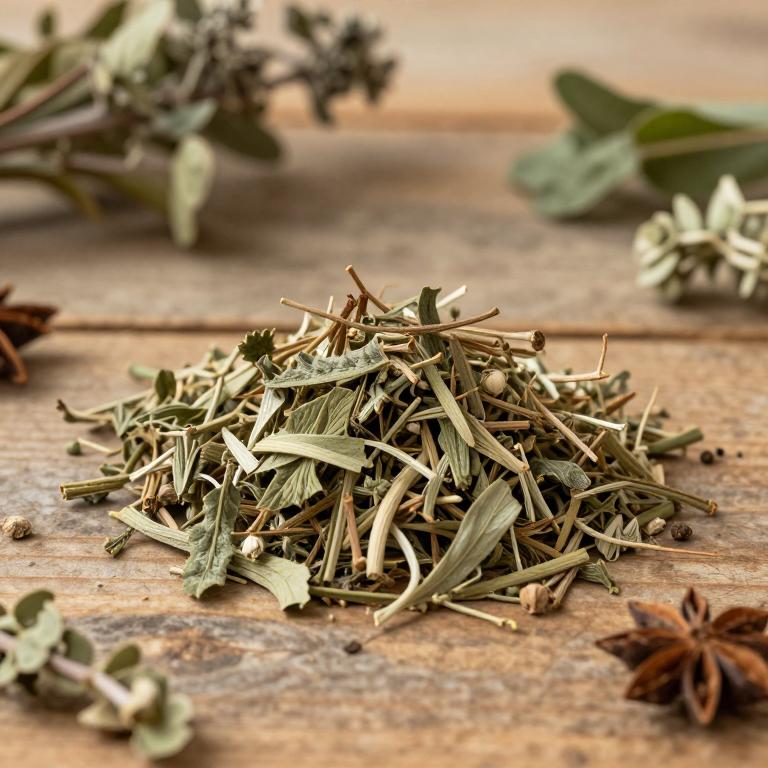
Names and Synonyms
Scientific Names
Accepted name
Salacia cordataDistribution
This plant exhibits a diverse range of locations throughout the tropical regions of North and Central America. In Mexico, its presence is noted across the Gulf coast, the Southwest, and the Southeast. Moving southward into Central America, the species can also be found within the borders of Costa Rica. Additionally, it is distributed throughout the territory of Honduras. These various regions highlight the plant's ability to thrive in different parts of the Neotropical landscape.
| Region | Area |
|---|---|
| Mexico | Mexico Gulf |
| Mexico | Mexico Southwest |
| Mexico | Mexico Southeast |
| Central America | Costa Rica |
| Central America | Honduras |
| Central America | Nicaragua |
| Central America | Panamá |
| Northern South America | Suriname |
| Northern South America | Venezuela |
| Western South America | Bolivia |
Sources: The World Checklist of Vascular Plants (WCVP)
Botanical Identification
Ecology
The ecology of Salacia cordata is characterized by its presence in diverse forest environments, specifically thriving within riparian forests (Floresta Ciliar ou Galeria) as well as in terra firme forests. This species exhibits a broad altitudinal distribution, occupying ecological niches from sea level up to a maximum elevation of 1350 m AMSL.
- Elevational range max:
- 1350 m AMSL
- Elevational range min:
- 0 m AMSL
- Habitat :
- Floresta Ciliar ou Galeria, Floresta de Terra Firme
Morphology
The morphology of Salacia cordata is characterized by its woody growth form, functioning as a tree-like structure that exhibits liana climbing habits. As a facultative climber, it utilizes other structures for support rather than being strictly obligatory or self-supporting. The plant is terrestrial in nature, neither aquatic nor epiphytic, and maintains an independent existence without parasitic tendencies. In terms of dimensions, the plant reaches a maximum height of approximately 7 meters, with an observed mean height of 17.5 meters depending on environmental conditions and developmental stage.
- Aquatic :
- terrestrial
- Climber :
- liana
- Climber :
- facultative
- Epiphyte :
- terrestrial
- Growth form :
- tree
- Parasite :
- independent
- Plant height max:
- 7 m
- Plant height mean:
- 17.5 m
- Woodiness :
- woody
Physiology
The physiology of Salacia cordata is characterized by its specialized metabolic processes as a woody climbing shrub, focusing on the efficient synthesis of secondary metabolites within its tissues. The plant engages in complex carbohydrate metabolism to support its climbing growth habit, utilizing photosynthesis to drive the production of bioactive compounds such as polyphenols and glycosides. Regarding its nutrient acquisition and soil interaction, the plant does not exhibit the physiological capacity for symbiotic nitrogen fixation; specifically, it is not a nitrogen fixer, as indicated by the trait value of "no" for nitrogen fixation capability. Instead, it relies on the uptake of mineral nitrogen, such as nitrates and ammonium, directly from the soil through its root system to support protein synthesis and cellular growth.
- Nitrogen fixer :
- no
Reproduction
The reproduction of Salacia cordata is characterized by the development of fleshy fruits that serve as the primary vessel for seed dispersal. These fruits exhibit a fleshy consistency, providing a nutrient-rich medium that likely facilitates interaction with various dispersal agents. Within these fruits, the seeds maintain a highly consistent size profile; the seed volume is measured at a mean of 6300 mm³, with both the minimum and maximum observed values remaining constant at 6300 mm³. This uniformity in seed volume suggests a stabilized reproductive strategy where the energy investment per offspring is precisely regulated to ensure optimal germination and survival within its natural habitat.
- Fruit dryness :
- fleshy
- Seed volume max:
- 6300 mm³
Sources: Global Inventory of Floras and Traits (GIFT)
Chemicals
Salacia cordata has 1 reported phytochemicals identified across 0 scientific publications and several other databases. The most consistently reported chemicals include Betulin.
| Chemical | Supporting sources | Consensus |
|---|---|---|
| Betulin | 1 supporting sources | ★☆☆☆☆ |
Betulin
- Dr. Duke
Activities
Salacia cordata has 12 reported activities identified across 0 scientific publications and several other databases. The most consistently reported activities include AntiHIV, Anticarcinomic, Antifeedant, Antiflu, Antiinflammatory.
| Activity | Supporting sources | Consensus |
|---|---|---|
| AntiHIV | 1 supporting sources | ★☆☆☆☆ |
| Anticarcinomic | 1 supporting sources | ★☆☆☆☆ |
| Antifeedant | 1 supporting sources | ★☆☆☆☆ |
| Antiflu | 1 supporting sources | ★☆☆☆☆ |
| Antiinflammatory | 1 supporting sources | ★☆☆☆☆ |
| Antitumor | 1 supporting sources | ★☆☆☆☆ |
| Antiviral | 1 supporting sources | ★☆☆☆☆ |
| Aphidifuge | 1 supporting sources | ★☆☆☆☆ |
| Cytotoxic | 1 supporting sources | ★☆☆☆☆ |
| Hypolipemic | 1 supporting sources | ★☆☆☆☆ |
AntiHIV
- Dr. Duke
Anticarcinomic
- Dr. Duke
Antifeedant
- Dr. Duke
Antiflu
- Dr. Duke
Antiinflammatory
- Dr. Duke
Antitumor
- Dr. Duke
Antiviral
- Dr. Duke
Aphidifuge
- Dr. Duke
Cytotoxic
- Dr. Duke
Hypolipemic
- Dr. Duke