Golder Tinjute
Rydingia persica · Accepted scientific name
Scientific literature: Very Sparse (23 studies) · ★☆☆☆☆
Golder Tinjute, scientifically known as Rydingia persica, is a significant medicinal shrub native to various tropical regions. Renowned for its diverse therapeutic properties, it is frequently utilized in traditional medicine to treat ailments ranging from skin infections to inflammatory conditions, offering valuable phytochemical benefits for holistic health and healing.
- Family
- Lamiaceae
- Native range
- Asia-Temperate
- Parts used
- Flower
- Common names
- Golder Tinjute
- Scientific synonyms
- Ballota Persica · Otostegia Persica · 3 more
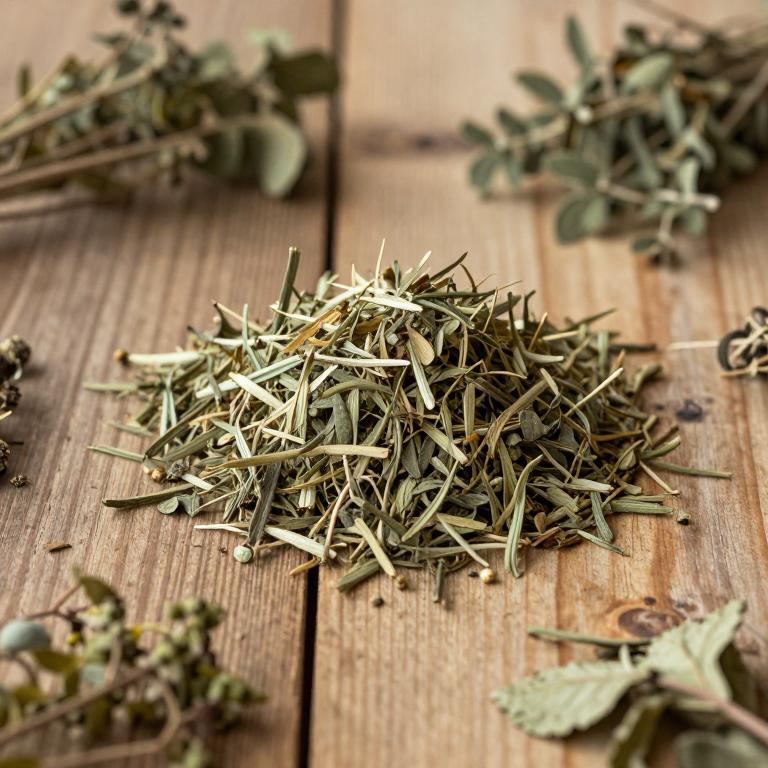
Names and Synonyms
Common Names
- Golder Tinjute
Scientific Names
Accepted name
Rydingia persicaSynonyms
- Ballota persica
- Otostegia persica
- Otostegia microphylla
- Moluccella persica
- Otostegia kotschyi
Sources: Wikidata, Catalogue of Life
Taxonomical Classification
This plant, Rydingia persica, belongs to the kingdom Plantae and the phylum Streptophyta. It is classified under the class Equisetopsida and subclass Magnoliidae, falling within the order Lamiales and the family Lamiaceae. Ultimately, it is categorized under the genus Rydingia.
| Rank | Classification |
|---|---|
| Kingdom | Plantae |
| Phylum | Streptophyta |
| Class | Equisetopsida |
| Subclass | Magnoliidae |
| Order | Lamiales |
| Family | Lamiaceae |
| Genus | Rydingia |
Sources: The World Checklist of Vascular Plants (WCVP)
Distribution
This plant exhibits a specific geographical distribution across several key regions in Asia. In Western Asia, it can be found growing within the borders of Iran. Its range extends into the Arabian Peninsula, specifically inhabiting the territory of Oman. Furthermore, the species is present in the Indian Subcontinent, where it is documented in Pakistan. These locations highlight the diverse arid and semi-arid environments where the species thrives.
| Region | Area |
|---|---|
| Western Asia | Iran |
| Arabian Peninsula | Oman |
| Indian Subcontinent | Pakistan |
Sources: The World Checklist of Vascular Plants (WCVP)
Botanical Identification
Life history
The life history of Rydingia persica is characterized by its distinct growth strategies and structural classifications within its ecosystem. Based on its biological development, the species exhibits a life form primarily classified as a phanerophyte, indicating that its stem or permanent woody structures are elevated well above the ground level to sustain its growth. Additionally, it displays characteristics consistent with being a nanophanerophyte, a subset of phanerophyte life forms where the plant maintains its photosynthetic organs on relatively short, visible stems. This combination of traits allows the plant to navigate its environmental niche by maintaining visible, above-ground structural integrity while managing its stature relative to surrounding vegetation.
- Life form :
- nanophanerophyte
- Life form :
- phanerophyte
Morphology
The morphology of Rydingia persica is characterized by its growth habit as a self-supporting climber, utilizing its structural form to ascend within its habitat. It functions as an independent organism, lacking parasitic tendencies toward host plants. Although it is categorized within a botanical context that distinguishes between various growth niches, this species is primarily terrestrial rather than epiphytic. Furthermore, the plant exhibits distinct woodiness, possessing a woody structure that provides the necessary rigidity for its climbing life cycle.
- Climber :
- self-supporting
- Epiphyte :
- terrestrial
- Parasite :
- independent
- Woodiness :
- woody
Sources: Global Inventory of Floras and Traits (GIFT)
Plant Parts
Rydingia persica has 1 reported plant parts identified across 1 scientific publications and several other databases that are studied for medicinal purposes. The most consistently reported plant part include flower.
| Plant part | Supporting sources | Consensus |
|---|---|---|
| Flower | 1 supporting sources | ★☆☆☆☆ |
Flower
- Pharmaceutical biology
Chemicals
Rydingia persica has 8 reported phytochemicals identified across 1 scientific publications and several other databases. The most consistently reported chemicals include 6-Methylapigenin, Apigenin 7-O-glucoside, Chrysoeriol, THYMOL, flavonols.
| Chemical | Supporting sources | Consensus |
|---|---|---|
| 6-Methylapigenin | 1 supporting sources | ★☆☆☆☆ |
| Apigenin 7-O-glucoside | 1 supporting sources | ★☆☆☆☆ |
| Chrysoeriol | 1 supporting sources | ★☆☆☆☆ |
| THYMOL | 1 supporting sources | ★☆☆☆☆ |
| flavonols | 1 supporting sources | ★☆☆☆☆ |
| kaempferol | 1 supporting sources | ★☆☆☆☆ |
| morin | 1 supporting sources | ★☆☆☆☆ |
| quercetin | 1 supporting sources | ★☆☆☆☆ |
6-Methylapigenin
- Pharmaceutical biology
Apigenin 7-O-glucoside
- Pharmaceutical biology
Chrysoeriol
- Pharmaceutical biology
THYMOL
- Pharmaceutical biology
flavonols
- Avicenna journal of phytomedicine
kaempferol
- Avicenna journal of phytomedicine
morin
- Avicenna journal of phytomedicine
quercetin
- Avicenna journal of phytomedicine
Activities
Rydingia persica has 6 reported activities identified across 1 scientific publications and several other databases. The most consistently reported activities include Antioxidant, Antidiabetic, Antihyperglycemic, Antimicrobial, Hepatoprotective.
| Activity | Supporting sources | Consensus |
|---|---|---|
| Antioxidant | 3 supporting sources | ★★☆☆☆ |
| Antidiabetic | 2 supporting sources | ★☆☆☆☆ |
| Antihyperglycemic | 1 supporting sources | ★☆☆☆☆ |
| Antimicrobial | 1 supporting sources | ★☆☆☆☆ |
| Hepatoprotective | 1 supporting sources | ★☆☆☆☆ |
| Hypoglycemic | 1 supporting sources | ★☆☆☆☆ |
Antioxidant
- Pharmaceutical biology
- BioMed research international
- Avicenna journal of phytomedicine
Antidiabetic
- BioMed research international
- Pharmaceutical biology
Antihyperglycemic
- Pharmaceutical biology
Antimicrobial
- Avicenna journal of phytomedicine
Hepatoprotective
- Avicenna journal of phytomedicine
Hypoglycemic
- Pharmaceutical biology
Preparations
Rydingia persica has 6 reported preparations identified across 1 scientific publications and several other databases. The most consistently reported preparations include aqueous infusion (AI), combination form, ethanol extracts, ethyl acetate fraction, methanol extract of O. persica aerial parts.
| Preparation | Supporting sources | Consensus |
|---|---|---|
| Aqueous infusion (ai) | 1 supporting sources | ★☆☆☆☆ |
| Combination form | 1 supporting sources | ★☆☆☆☆ |
| Ethanol extracts | 1 supporting sources | ★☆☆☆☆ |
| Ethyl acetate fraction | 1 supporting sources | ★☆☆☆☆ |
| Methanol extract of o. persica aerial parts | 1 supporting sources | ★☆☆☆☆ |
| Shoot extract | 1 supporting sources | ★☆☆☆☆ |
Aqueous infusion (ai)
- Pharmaceutical biology
Combination form
- Iranian journal of pharmaceutical research : IJPR
Ethanol extracts
- BioMed research international
Ethyl acetate fraction
- BioMed research international
Methanol extract of o. persica aerial parts
- Pharmaceutical biology
Shoot extract
- Pharmaceutical biology