Pashtun Tinjute
Rydingia limbata · Accepted scientific name
Scientific literature: Very Sparse (13 studies) · ★☆☆☆☆
Pashtun Tinjute, scientifically known as Rydingia limbata, is a significant medicinal shrub found in tropical regions. Valued in traditional ethnobotany, it possesses diverse therapeutic properties. Local communities utilize its various parts to treat diverse ailments, highlighting its vital role in folk medicine and its potential for pharmacological research.
- Family
- Lamiaceae
- Native range
- Asia-Tropical
- Parts used
- Flower · Leaf
- Common names
- Pashtun Tinjute
- Scientific synonyms
- Otostegia Limbata · Ballota Limbata
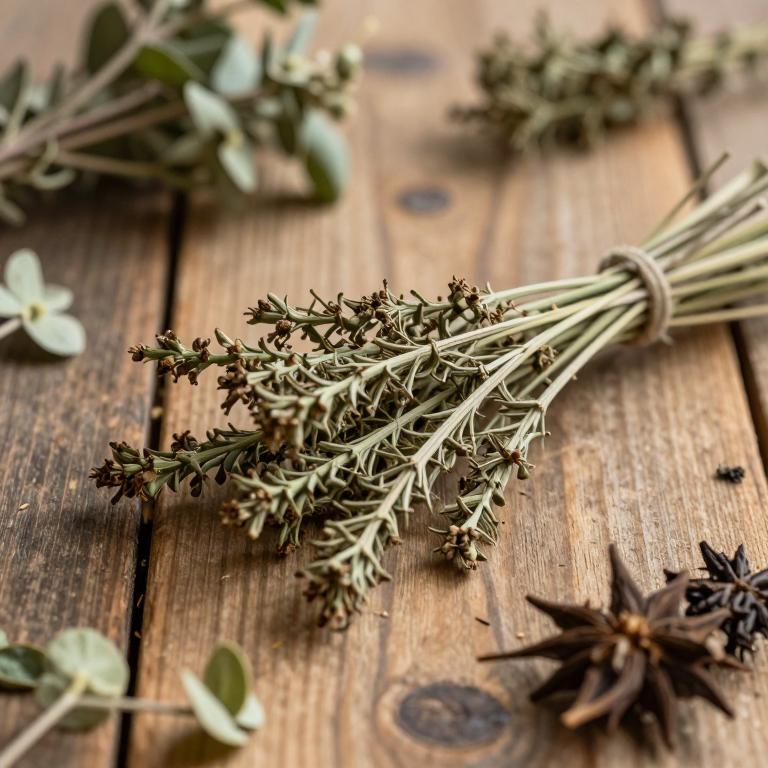
Names and Synonyms
Common Names
- Pashtun Tinjute
Scientific Names
Accepted name
Rydingia limbataSynonyms
- Otostegia limbata
- Ballota limbata
Sources: Wikidata, Catalogue of Life
Taxonomical Classification
This plant belongs to the kingdom Plantae and is classified under the phylum Streptophyta and the class Equisetopsida. Within the subclass Magnoliidae, it is organized under the order Lamiales and the family Lamiaceae. Finally, its specific taxonomic placement is within the genus Rydingia.
| Rank | Classification |
|---|---|
| Kingdom | Plantae |
| Phylum | Streptophyta |
| Class | Equisetopsida |
| Subclass | Magnoliidae |
| Order | Lamiales |
| Family | Lamiaceae |
| Genus | Rydingia |
Sources: The World Checklist of Vascular Plants (WCVP)
Distribution
This plant exhibits a specific geographical distribution primarily centered within the Indian Subcontinent. It can be found growing in the diverse landscapes of Pakistan. Furthermore, its natural habitat extends into the West Himalaya region. These locations represent the key areas where the species is known to occur. Consequently, its range is relatively localized to these particular South Asian territories.
| Region | Area |
|---|---|
| Indian Subcontinent | Pakistan |
| Indian Subcontinent | West Himalaya |
Sources: The World Checklist of Vascular Plants (WCVP)
Botanical Identification
Life history
The life history of Rydingia limbata is characterized by its structural classification within specific growth forms, manifesting primarily as a phanerophyte. As a phanerophyte, the plant maintains its regenerative buds well above the soil surface, typically supported by woody stems that allow it to occupy specific ecological niches. Depending on the environmental stressors and microhabitat conditions it encounters, its life strategy may also exhibit characteristics of a nanophanerophyte, where the height of the visible stems remains relatively low compared to larger woody species. This combination of life forms dictates its survival strategy, enabling the plant to navigate seasonal changes and resource availability through its elevated bud positioning and structural complexity.
- Life form :
- nanophanerophyte
- Life form :
- phanerophyte
Morphology
The morphology of Rydingiia limbata is characterized by a shrub-like growth form that exhibits a woody structure. This plant typically reaches a height ranging from a minimum of 0.4 m to a maximum of 0.6 m. It is a terrestrial species that functions as an independent organism, meaning it does not act as a parasite. Furthermore, while it possesses a self-supporting climbing habit, it maintains its structural integrity within its habitat.
- Climber :
- self-supporting
- Epiphyte :
- terrestrial
- Growth form :
- shrub
- Parasite :
- independent
- Plant height max:
- 0.6 m
- Plant height min:
- 0.4 m
- Woodiness :
- woody
Reproduction
Reproduction in Rydingia limbata is characterized by the production of seeds that exhibit highly uniform physical dimensions. Based on available data, the seed mass is remarkably consistent, with a mean value of 0.0045 g. This uniformity is further evidenced by the fact that both the maximum and minimum recorded seed masses are identical at 0.0045 g, indicating a lack of variance in the weight of the reproductive units produced by the plant.
- Seed mass mean:
- 0.0045 g
Sources: Global Inventory of Floras and Traits (GIFT)
Plant Parts
Rydingia limbata has 3 reported plant parts identified across 3 scientific publications and several other databases that are studied for medicinal purposes. The most consistently reported plant part include flower, leaf, root.
| Plant part | Supporting sources | Consensus |
|---|---|---|
| Flower | 1 supporting sources | ★☆☆☆☆ |
| Leaf | 1 supporting sources | ★☆☆☆☆ |
| Root | 1 supporting sources | ★☆☆☆☆ |
Flower
- Spectrochimica acta. Part A, Molecular and biomolecular spectroscopy
Leaf
- Spectrochimica acta. Part A, Molecular and biomolecular spectroscopy
Root
- Spectrochimica acta. Part A, Molecular and biomolecular spectroscopy
Chemicals
Rydingia limbata has 4 reported phytochemicals identified across 3 scientific publications and several other databases. The most consistently reported chemicals include BARIUM, CALCIUM, IRON, POTASSIUM.
| Chemical | Supporting sources | Consensus |
|---|---|---|
| BARIUM | 1 supporting sources | ★☆☆☆☆ |
| CALCIUM | 1 supporting sources | ★☆☆☆☆ |
| IRON | 1 supporting sources | ★☆☆☆☆ |
| POTASSIUM | 1 supporting sources | ★☆☆☆☆ |
BARIUM
- Spectrochimica acta. Part A, Molecular and biomolecular spectroscopy
CALCIUM
- Spectrochimica acta. Part A, Molecular and biomolecular spectroscopy
IRON
- Spectrochimica acta. Part A, Molecular and biomolecular spectroscopy
POTASSIUM
- Spectrochimica acta. Part A, Molecular and biomolecular spectroscopy
Activities
Rydingia limbata has 1 reported activities identified across 3 scientific publications and several other databases. The most consistently reported activities include Antioxidant.
| Activity | Supporting sources | Consensus |
|---|---|---|
| Antioxidant | 1 supporting sources | ★☆☆☆☆ |
Antioxidant
- Scientific reports
Preparations
Rydingia limbata has 3 reported preparations identified across 3 scientific publications and several other databases. The most consistently reported preparations include Methanol extract, conventional heat-assisted extraction (HA), microwave-assisted extraction (MA).
| Preparation | Supporting sources | Consensus |
|---|---|---|
| Methanol extract | 1 supporting sources | ★☆☆☆☆ |
| Conventional heat-assisted extraction (ha) | 1 supporting sources | ★☆☆☆☆ |
| Microwave-assisted extraction (ma) | 1 supporting sources | ★☆☆☆☆ |
Methanol extract
- Plants (Basel, Switzerland)
Conventional heat-assisted extraction (ha)
- Scientific reports
Microwave-assisted extraction (ma)
- Scientific reports