Abyssinian Rose
Rydingia integrifolia · Accepted scientific name
Scientific literature: Very Sparse (7 studies) · ★☆☆☆☆
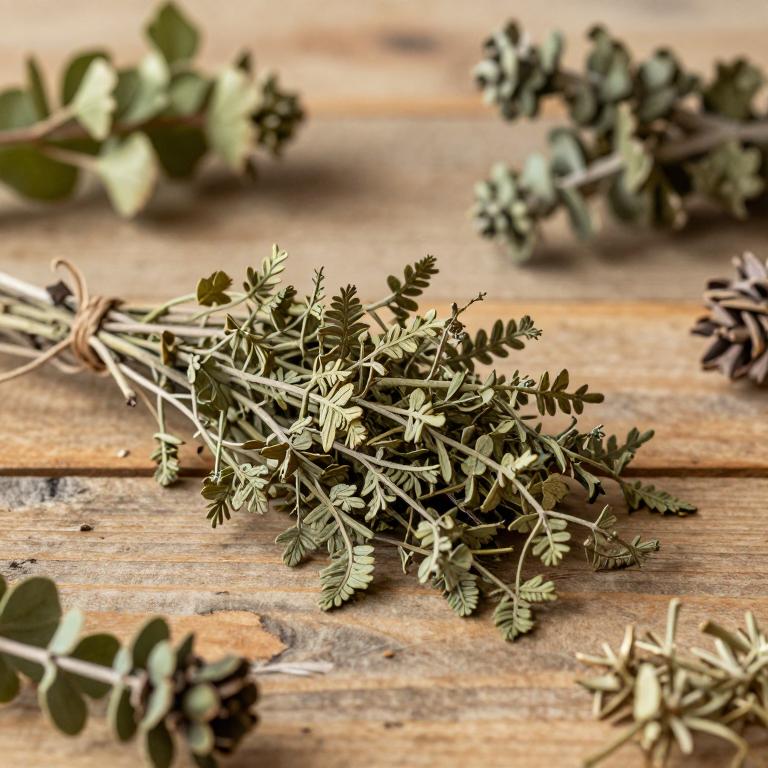
Abyssinian Rose, scientifically known as Rydingia integrifolia, is a captivating shrub native to tropical Africa. Renowned for its striking, vibrant red tubular flowers, this resilient plant thrives in diverse ecosystems. Beyond its ornamental beauty, it holds significant ethnobotanical value, often utilized in traditional medicine to treat various ailments.
- Family
- Lamiaceae
- Native range
- Africa
- Parts used
- Leaf
- Common names
- Abyssinian Rose · Tinjute
- Scientific synonyms
- Otostegia Integrifolia
Names and Synonyms
Common Names
- Abyssinian Rose
- Tinjute
Scientific Names
Accepted name
Rydingia integrifoliaSynonyms
- Otostegia integrifolia
Sources: Wikidata, Catalogue of Life
Taxonomical Classification
This plant belongs to the kingdom Plantae within the phylum Streptophyta and the class Equisetopsida. It is further classified under the subclass Magnoliidae, the order Lamiales, and the family Lamiaceae. Finally, its taxonomic placement is completed within the genus Rydingia.
| Rank | Classification |
|---|---|
| Kingdom | Plantae |
| Phylum | Streptophyta |
| Class | Equisetopsida |
| Subclass | Magnoliidae |
| Order | Lamiales |
| Family | Lamiaceae |
| Genus | Rydingia |
Sources: The World Checklist of Vascular Plants (WCVP)
Distribution
This plant exhibits a specific geographical distribution across several key regions in Northeast Tropical Africa and the Arabian Peninsula. In the northeastern portion of the African continent, its presence is documented in Eritrea. It is also found within the borders of Ethiopia, extending its range across this East African nation. Moving across the Red Sea, the species can be located within the Arabian Peninsula. Specifically, its habitat includes the territory of Yemen, completing its recorded distribution pattern.
| Region | Area |
|---|---|
| Northeast Tropical Africa | Eritrea |
| Northeast Tropical Africa | Ethiopia |
| Arabian Peninsula | Yemen |
Sources: The World Checklist of Vascular Plants (WCVP)
Botanical Identification
Life history
The life history of Rydingia integrifolia is characterized by its distinct growth strategies, primarily functioning as a phanerophyte, where its perennating buds are located well above the ground level on aerial shoots. Depending on the specific environmental conditions and structural development of the individual, its life form can also be categorized under the nanophanerophyte spectrum, indicating a smaller stature of woody or semi-woody growth compared to larger phanerophytes. This life history allows the plant to persist through seasonal variations by maintaining its regenerative structures in elevated positions, facilitating its survival and competitive presence within its natural habitat.
- Life form :
- nanophanerophyte
- Life form :
- phanerophyte
Morphology
The morphology of Rydingia integrifolia is characterized by its growth form as a non-woody herb. It functions as a self-supporting climber, meaning it possesses the structural integrity to ascend or spread without being strictly dependent on external hosts for mechanical support. This species is an independent organism that does not exhibit parasitic behavior, and it maintains a terrestrial lifestyle rather than growing as an epiphyte.
- Climber :
- self-supporting
- Epiphyte :
- terrestrial
- Growth form :
- herb
- Parasite :
- independent
- Woodiness :
- non-woody
Sources: Global Inventory of Floras and Traits (GIFT)
Plant Parts
Rydingia integrifolia has 1 reported plant parts identified across 1 scientific publications and several other databases that are studied for medicinal purposes. The most consistently reported plant part include leaf.
| Plant part | Supporting sources | Consensus |
|---|---|---|
| Leaf | 1 supporting sources | ★☆☆☆☆ |
Leaf
- Metabolism open
Chemicals
Rydingia integrifolia has 6 reported phytochemicals identified across 1 scientific publications and several other databases. The most consistently reported chemicals include Flavonoids, Otostegindiol, Saponins, Tannins, Terpenoids.
| Chemical | Supporting sources | Consensus |
|---|---|---|
| Flavonoids | 1 supporting sources | ★☆☆☆☆ |
| Otostegindiol | 1 supporting sources | ★☆☆☆☆ |
| Saponins | 1 supporting sources | ★☆☆☆☆ |
| Tannins | 1 supporting sources | ★☆☆☆☆ |
| Terpenoids | 1 supporting sources | ★☆☆☆☆ |
| phenol | 1 supporting sources | ★☆☆☆☆ |
Flavonoids
- Journal of experimental pharmacology
Otostegindiol
- Phytotherapy research : PTR
Saponins
- Journal of experimental pharmacology
Tannins
- Journal of experimental pharmacology
Terpenoids
- Journal of experimental pharmacology
phenol
- Journal of experimental pharmacology
Preparations
Rydingia integrifolia has 3 reported preparations identified across 1 scientific publications and several other databases. The most consistently reported preparations include crude extract, crude extracts, hydromethanol extract.
| Preparation | Supporting sources | Consensus |
|---|---|---|
| Crude extract | 1 supporting sources | ★☆☆☆☆ |
| Crude extracts | 1 supporting sources | ★☆☆☆☆ |
| Hydromethanol extract | 1 supporting sources | ★☆☆☆☆ |
Crude extract
- BMC complementary and alternative medicine
Crude extracts
- Journal of experimental pharmacology
Hydromethanol extract
- Metabolism open