fringed rue
Ruta chalepensis · Accepted scientific name
Scientific literature: Extensive (160 studies) · ★★★★☆
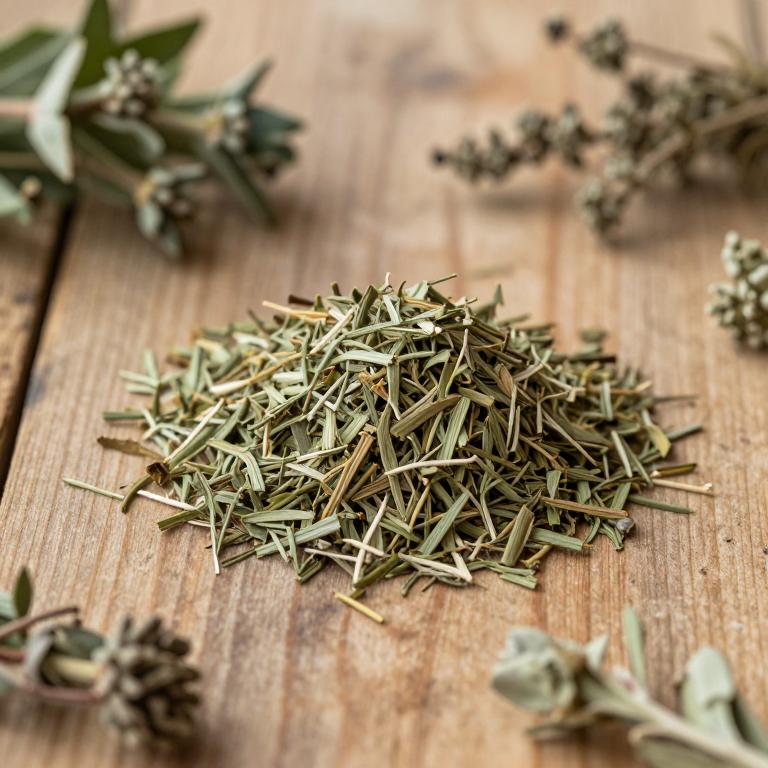
Fringed rue, scientifically known as Ruta chalepensis, is a perennial herb belonging to the Rutaceae family. Characterized by its distinctive feathery foliage and bright yellow flowers, this medicinal plant is traditionally valued in various cultures for its therapeutic properties, often utilized in herbal remedies to support digestive and inflammatory health.
- Family
- Rutaceae
- Native range
- Europe
- Parts used
- Leaf · Fruit
- Common names
- Fringed Rue
- Scientific synonyms
- Ruta Graveolens Var. Chalepensis
Names and Synonyms
Common Names
- fringed rue
Scientific Names
Accepted name
Ruta chalepensisSynonyms
- Ruta graveolens var. chalepensis
Regional and Traditional Names
Spanish:
- Ruda
German:
- Gefranste Raute
- Gefranste Raute
French:
- Rue de Chalep
Sources: Wikidata, Catalogue of Life
Taxonomical Classification
This plant belongs to the kingdom Plantae and the phylum Streptophyta, falling under the class Equisetopsida and subclass Magnoliidae. Within the order Sapindales, it is classified under the family Rutaceae. Ultimately, its taxonomic designation is placed within the genus Ruta.
| Rank | Classification |
|---|---|
| Kingdom | Plantae |
| Phylum | Streptophyta |
| Class | Equisetopsida |
| Subclass | Magnoliidae |
| Order | Sapindales |
| Family | Rutaceae |
| Genus | Ruta |
Sources: The World Checklist of Vascular Plants (WCVP)
Distribution
This plant, Ruta chalepensis, is primarily distributed across several regions within Southwestern Europe. Its presence can be specifically noted in the Balearic Islands, known as Baleares. Additionally, this species is found inhabiting the island of Corsica. The plant's range extends to the coastal and inland areas of France. Finally, it is also documented growing in Portugal and on the island of Sardinia.
| Region | Area |
|---|---|
| Southwestern Europe | Baleares |
| Southwestern Europe | Corse |
| Southwestern Europe | France |
| Southwestern Europe | Portugal |
| Southwestern Europe | Sardegna |
| Southwestern Europe | Spain |
| Southeastern Europe | Albania |
| Southeastern Europe | Greece |
| Southeastern Europe | Italy |
| Southeastern Europe | Kriti |
Sources: The World Checklist of Vascular Plants (WCVP)
Botanical Identification
Ecology
The ecology of Ruta chalepensis is characterized by a broad altitudinal distribution that allows it to inhabit a diverse array of topographical landscapes. The species exhibits significant adaptability to varying heights, with an elevational range that begins at sea level (0 m AMSL) and extends to a maximum altitude of 3000 m AMSL. Within this extensive vertical gradient, the plant maintains a mean elevational range of approximately 1890 m AMSL, suggesting a primary ecological preference for mid-to-high altitude montane environments while remaining capable of colonizing lowland habitats.
- Elevational range max:
- 3000 m AMSL
- Elevational range mean:
- 1890 m AMSL
- Elevational range min:
- 0 m AMSL
Life history
The life history of Ruta chalepensis is characterized by its status as a perennial plant, allowing it to persist through multiple growing seasons. In terms of its structural growth habit and ecological strategy, the species is classified as a chamaephyte, a life form where the majority of the plant's regenerative buds are located close to or just above the soil surface. This classification is consistently identified through both its life form designations as a chamaephyte, ensuring its ability to endure various environmental conditions by maintaining its vital organs near the ground level.
- Life form :
- chamaephyte
- Lifecycle :
- perennial
Morphology
The morphology of Ruta chalepensis is characterized by a woody growth form, specifically functioning as a shrub. This plant is a terrestrial species, existing as an independent organism rather than an epiphyte or a parasite. It is a self-supporting plant that does not exhibit climbing or vine-like tendencies. In terms of stature, it maintains a relatively low profile with a plant height ranging from a minimum of 0.3 m to a maximum of 1 m.
- Aquatic :
- terrestrial
- Climber :
- self-supporting
- Epiphyte :
- terrestrial
- Growth form :
- shrub
- Parasite :
- independent
- Plant height max:
- 1 m
- Plant height min:
- 0.3 m
- Woodiness :
- woody
Physiology
The physiology of Ruta chalepensis is characterized by a C3 photosynthetic pathway, a common mechanism in many woody shrubs that involves the direct fixation of carbon dioxide through the Calvin cycle. Morphologically, its physiological efficiency is supported by its leaf form, which is distinctly oblong. This leaf structure facilitates optimal surface area exposure for gas exchange and light absorption, supporting the metabolic processes necessary for the plant's growth and the synthesis of its characteristic secondary metabolites.
- Leaf form :
- oblong
- Photosynthetic pathway :
- C3
Reproduction
The reproduction of Ruta chalepensis is characterized by bisexual flowers that exhibit a green coloration. The flowering period typically begins in February and concludes in July, though the timing can be variable. These flowers are relatively small, ranging in length from a minimum of 0.39 cm to a maximum of 0.72 cm. The plant utilizes a biotic pollination syndrome, specifically relying on insects to facilitate the reproductive process, while self-fertilization is noted as absent. Following successful pollination, the plant develops fruit in the form of a capsule. These capsules vary in size, with a minimum length of 0.46 cm up to a maximum of 0.69 cm, and a width ranging from 0.4 cm to 0.9 cm. The reproductive output is prolific, with each fruit containing more than 1000 seeds. These seeds are remarkably lightweight, with a mean mass of 0.001381 g, ranging from a minimum of 0.00126 g to a maximum of 0.00156 g. Dispersal of the seeds is characterized by an unspecialized syndrome, though it also demonstrates anthropochorous tendencies, indicating dispersal through human activity.
- Dispersal syndrome :
- unspecialized
- Dispersal syndrome :
- anthropochorous
- Flower colour :
- green
- Flower length max:
- 0.72 cm
- Flower length min:
- 0.39 cm
- Flowering time :
- Feb
- Flowering time :
- Jul
- Fruit length max:
- 0.69 cm
- Fruit length min:
- 0.46 cm
- Fruit type :
- capsule
- Fruit width max:
- 0.9 cm
- Fruit width min:
- 0.4 cm
- Pollination syndrome :
- insect
- Pollination syndrome :
- biotic
- Reproduction sexual :
- bisexual
- Seed mass max:
- 0.00156 g
- Seed mass mean:
- 0.001381 g
- Seed mass min:
- 0.00126 g
- Seeds_per_fruit :
- >1000
- Self fertilization :
- absent
Sources: Global Inventory of Floras and Traits (GIFT)
Plant Parts
Ruta chalepensis has 3 reported plant parts identified across 5 scientific publications and several other databases that are studied for medicinal purposes. The most consistently reported plant part include leaf, fruit, root.
| Plant part | Supporting sources | Consensus |
|---|---|---|
| Leaf | 3 supporting sources | ★★☆☆☆ |
| Fruit | 1 supporting sources | ★☆☆☆☆ |
| Root | 1 supporting sources | ★☆☆☆☆ |
Leaf
- Journal of ethnobiology and ethnomedicine
- Archives de l'Institut Pasteur de Tunis
- Evidence-based complementary and alternative medicine : eCAM
Fruit
- Journal of experimental pharmacology
Root
- Journal of natural products
Chemicals
Ruta chalepensis has 45 reported phytochemicals identified across 5 scientific publications and several other databases. The most consistently reported chemicals include Flavonoids, Skimmianine, Bergapten, Chalepensin, Chalepin.
| Chemical | Supporting sources | Consensus |
|---|---|---|
| Flavonoids | 3 supporting sources | ★★☆☆☆ |
| Skimmianine | 3 supporting sources | ★★☆☆☆ |
| Bergapten | 2 supporting sources | ★☆☆☆☆ |
| Chalepensin | 2 supporting sources | ★☆☆☆☆ |
| Chalepin | 2 supporting sources | ★☆☆☆☆ |
| Coumarins | 2 supporting sources | ★☆☆☆☆ |
| Furanocoumarins | 2 supporting sources | ★☆☆☆☆ |
| Monoterpenes | 2 supporting sources | ★☆☆☆☆ |
| Psoralen | 2 supporting sources | ★☆☆☆☆ |
| RUTIN | 2 supporting sources | ★☆☆☆☆ |
Flavonoids
- Chemistry & biodiversity
- Journal of ethnopharmacology
- Plants (Basel, Switzerland)
Skimmianine
- Journal of natural products
- Chemistry & biodiversity
- Life (Basel, Switzerland)
Bergapten
- Photochemistry and photobiology
- Life (Basel, Switzerland)
Chalepensin
- Molecules (Basel, Switzerland)
- Journal of natural products
Chalepin
- Molecules (Basel, Switzerland)
- Plants (Basel, Switzerland)
Coumarins
- Plants (Basel, Switzerland)
- Journal of ethnopharmacology
Furanocoumarins
- Natural product research
- Molecules (Basel, Switzerland)
Monoterpenes
- Chemistry & biodiversity
- Phytochemical analysis : PCA
Psoralen
- Photochemistry and photobiology
- Life (Basel, Switzerland)
RUTIN
- Journal of biotechnology
- Plants (Basel, Switzerland)
Activities
Ruta chalepensis has 22 reported activities identified across 5 scientific publications and several other databases. The most consistently reported activities include Analgesic, Antimicrobial, Abortifacient, Antiacetylcholinesterase, Anticancer.
| Activity | Supporting sources | Consensus |
|---|---|---|
| Analgesic | 2 supporting sources | ★☆☆☆☆ |
| Antimicrobial | 2 supporting sources | ★☆☆☆☆ |
| Abortifacient | 1 supporting sources | ★☆☆☆☆ |
| Antiacetylcholinesterase | 1 supporting sources | ★☆☆☆☆ |
| Anticancer | 1 supporting sources | ★☆☆☆☆ |
| Antidiabetic | 1 supporting sources | ★☆☆☆☆ |
| Antiepileptic | 1 supporting sources | ★☆☆☆☆ |
| Antifertility | 1 supporting sources | ★☆☆☆☆ |
| Antifungal | 1 supporting sources | ★☆☆☆☆ |
| Antiinflammatory | 1 supporting sources | ★☆☆☆☆ |
Analgesic
- Journal of ethnopharmacology
- Archives de l'Institut Pasteur de Tunis
Antimicrobial
- Molecules (Basel, Switzerland)
- Archives de l'Institut Pasteur de Tunis
Abortifacient
- Archives de l'Institut Pasteur de Tunis
Antiacetylcholinesterase
- Pharmaceutical biology
Anticancer
- Molecules (Basel, Switzerland)
Antidiabetic
- Molecules (Basel, Switzerland)
Antiepileptic
- Archives de l'Institut Pasteur de Tunis
Antifertility
- Molecules (Basel, Switzerland)
Antifungal
- Archives de l'Institut Pasteur de Tunis
Antiinflammatory
- Archives de l'Institut Pasteur de Tunis
Conditions
Ruta chalepensis has 43 reported investigations on conditions identified across 5 scientific publications and several other databases. The most consistently reported conditions include inflammation, Escherichia coli, Pseudomonas aeruginosa, Staphylococcus aureus, Trichinella spiralis.
| Condition | Supporting sources | Consensus |
|---|---|---|
| Inflammation | 3 supporting sources | ★★☆☆☆ |
| Escherichia coli | 2 supporting sources | ★☆☆☆☆ |
| Pseudomonas aeruginosa | 2 supporting sources | ★☆☆☆☆ |
| Staphylococcus aureus | 2 supporting sources | ★☆☆☆☆ |
| Trichinella spiralis | 2 supporting sources | ★☆☆☆☆ |
| Cancer | 2 supporting sources | ★☆☆☆☆ |
| Mental disorders | 2 supporting sources | ★☆☆☆☆ |
| Rheumatism | 2 supporting sources | ★☆☆☆☆ |
| Aspergillus flavus | 1 supporting sources | ★☆☆☆☆ |
| Aspergillus niger | 1 supporting sources | ★☆☆☆☆ |
Inflammation
- Journal of ethnopharmacology
- Drugs under experimental and clinical research
- In vitro cellular & developmental biology. Animal
Escherichia coli
- Journal of experimental pharmacology
- Journal of microbiological methods
Pseudomonas aeruginosa
- Journal of experimental pharmacology
- Journal of microbiological methods
Staphylococcus aureus
- Journal of experimental pharmacology
- Journal of microbiological methods
Trichinella spiralis
- Plants (Basel, Switzerland)
- Acta tropica
Cancer
- Molecules (Basel, Switzerland)
- Plants (Basel, Switzerland)
Mental disorders
- Frontiers in pharmacology
- Journal of ethnopharmacology
Rheumatism
- Journal of ethnopharmacology
- Drugs under experimental and clinical research
Aspergillus flavus
- Archives de l'Institut Pasteur de Tunis
Aspergillus niger
- Archives de l'Institut Pasteur de Tunis
Preparations
Ruta chalepensis has 21 reported preparations identified across 5 scientific publications and several other databases. The most consistently reported preparations include methanolic extracts, methanol extracts, Hydromethanol Crude Extracts, Methanolic extracts, callus cultures.
| Preparation | Supporting sources | Consensus |
|---|---|---|
| Methanolic extracts | 4 supporting sources | ★★☆☆☆ |
| Methanol extracts | 2 supporting sources | ★☆☆☆☆ |
| Hydromethanol crude extracts | 1 supporting sources | ★☆☆☆☆ |
| Methanolic extracts | 1 supporting sources | ★☆☆☆☆ |
| Callus cultures | 1 supporting sources | ★☆☆☆☆ |
| Common rue extract | 1 supporting sources | ★☆☆☆☆ |
| Crude extract | 1 supporting sources | ★☆☆☆☆ |
| Crude leaves extract | 1 supporting sources | ★☆☆☆☆ |
| Crude plant extracts | 1 supporting sources | ★☆☆☆☆ |
| Dried extract | 1 supporting sources | ★☆☆☆☆ |
Methanolic extracts
- Acta tropica
- Veterinary and animal science
- Journal of the Egyptian Society of Parasitology
- Life (Basel, Switzerland)
Methanol extracts
- Journal of experimental pharmacology
- Plants (Basel, Switzerland)
Hydromethanol crude extracts
- Evidence-based complementary and alternative medicine : eCAM
Methanolic extracts
- Journal of ethnopharmacology
Callus cultures
- Photochemistry and photobiology
Common rue extract
- Revista de biologia tropical
Crude extract
- Evidence-based complementary and alternative medicine : eCAM
Crude leaves extract
- Evidence-based complementary and alternative medicine : eCAM
Crude plant extracts
- Journal of experimental pharmacology
Dried extract
- Drugs under experimental and clinical research