butcher's-brooms
Ruscus · Accepted scientific name
Scientific literature: Very Sparse (4 studies) · ★☆☆☆☆
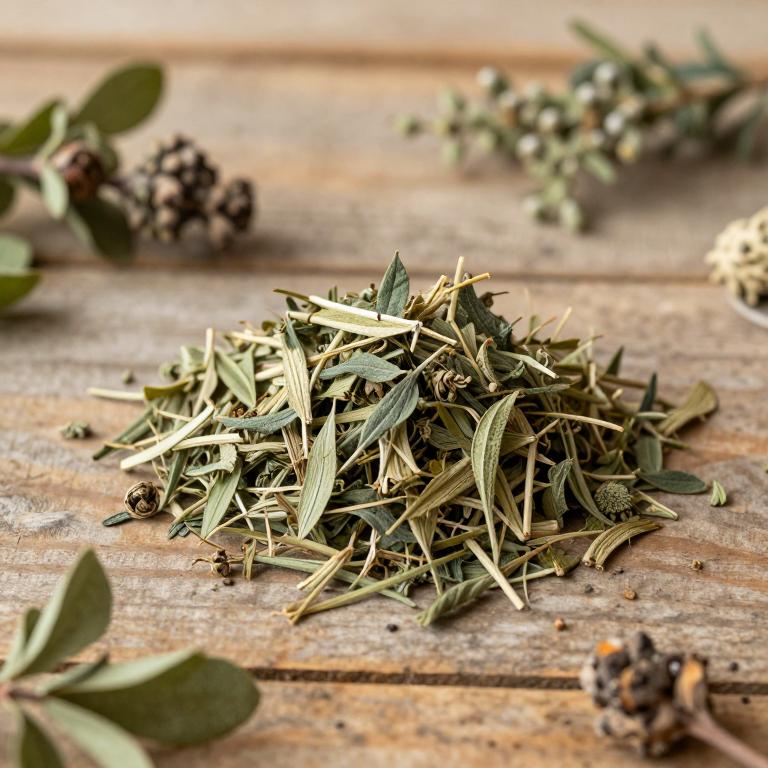
Butcher's-broom, scientifically known as Ruscus, is a genus of evergreen shrubs prized in herbal medicine for centuries. Renowned for their unique, leaf-like stems called cladodes, these resilient plants offer potent therapeutic benefits. They are primarily utilized to support venous circulation, alleviate leg heaviness, and reduce swelling effectively.
- Family
- Asparagaceae
- Native range
- Europe
- Parts used
- Not available
- Common names
- Butcher'S-Brooms · Butcher'S-Broom
- Scientific synonyms
- Hippoglossum · Oxymyrsine · 1 more
Names and Synonyms
Common Names
- butcher's-brooms
- Butcher's-broom
Scientific Names
Accepted name
RuscusSynonyms
- Hippoglossum
- Oxymyrsine
- Platyruscus
Regional and Traditional Names
Spanish:
- Platyruscus
- Hippoglossum
- Oxymyrsine
German:
- Mäusedorne
- Mäusedorn
- Mäusedorne
Sources: Wikidata, Catalogue of Life
Taxonomical Classification
This plant belongs to the kingdom Plantae within the phylum Streptophyta and the class Equisetopsida. It is further classified under the subclass Magnoliidae and the order Asparagales, falling within the family Asparagaceae. Ultimately, its specific taxonomic designation is placed in the genus Ruscus.
| Rank | Classification |
|---|---|
| Kingdom | Plantae |
| Phylum | Streptophyta |
| Class | Equisetopsida |
| Subclass | Magnoliidae |
| Order | Asparagales |
| Family | Asparagaceae |
| Genus | Ruscus |
Sources: The World Checklist of Vascular Plants (WCVP)
Distribution
This plant exhibits a specific distribution pattern across several regions of Europe. In Northern Europe, its presence can be documented in both Great Britain and Ireland. Moving toward Middle Europe, the species is also found within the borders of Germany. Its range extends further into the territories of Austria and the Czechia-Slovakia region. Together, these locations define the primary geographical spread of the Ruscus species in these areas.
| Region | Area |
|---|---|
| Northern Europe | Great Britain |
| Northern Europe | Ireland |
| Middle Europe | Austria |
| Middle Europe | Czechia-Slovakia |
| Middle Europe | Germany |
| Middle Europe | Hungary |
| Middle Europe | Switzerland |
| Southwestern Europe | Baleares |
| Southwestern Europe | Corse |
| Southwestern Europe | France |
Sources: The World Checklist of Vascular Plants (WCVP)
Chemicals
Ruscus has 2 reported phytochemicals identified across 0 scientific publications and several other databases. The most consistently reported chemicals include Neoruscogenin, Ruscogenin.
| Chemical | Supporting sources | Consensus |
|---|---|---|
| Neoruscogenin | 1 supporting sources | ★☆☆☆☆ |
| Ruscogenin | 1 supporting sources | ★☆☆☆☆ |
Neoruscogenin
- Planta medica
Ruscogenin
- Planta medica
Preparations
Ruscus has 1 reported preparations identified across 0 scientific publications and several other databases. The most consistently reported preparations include Ruscus extract.
| Preparation | Supporting sources | Consensus |
|---|---|---|
| Ruscus extract | 1 supporting sources | ★☆☆☆☆ |
Ruscus extract
- Microvascular research