East African Dock
Rumex usambarensis · Accepted scientific name
Scientific literature: Very Sparse (11 studies) · ★☆☆☆☆
East African Dock, scientifically known as Rumex usambarensis, is a distinctive medicinal herb native to the lush landscapes of East Africa. Renowned for its diverse therapeutic properties, this plant is traditionally utilized in folk medicine to treat various ailments, offering valuable bioactive compounds essential to regional ethnobotanical practices.
- Family
- Polygonaceae
- Native range
- Africa
- Parts used
- Flower · Leaf
- Common names
- East African Dock · Usambara Dock
- Scientific synonyms
- Rumex Nervosus Var. Usambarensis · Acetosa Trinervia · 2 more
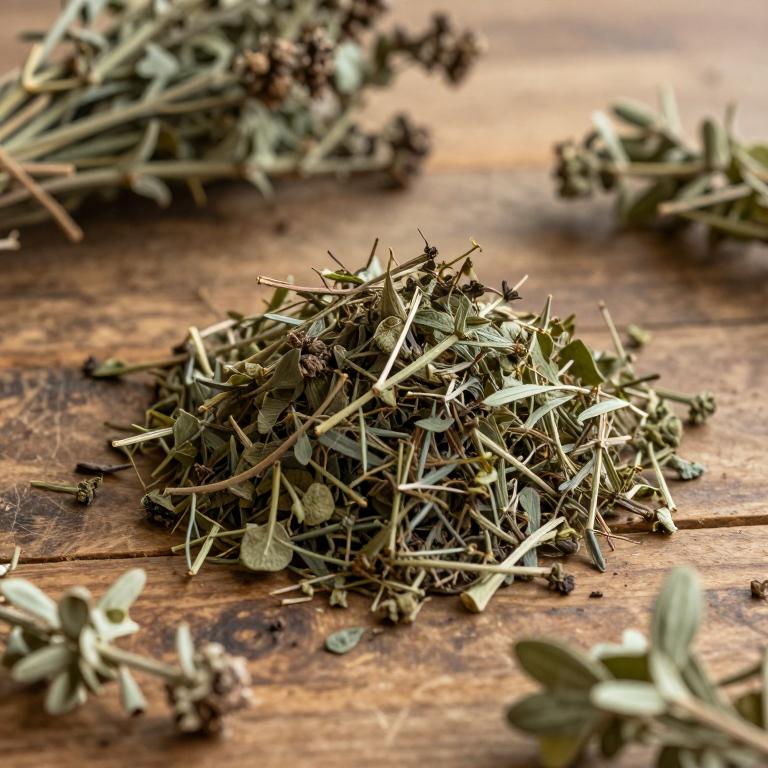
Names and Synonyms
Common Names
- East African Dock
- Usambara Dock
Scientific Names
Accepted name
Rumex usambarensisSynonyms
- Rumex nervosus var. usambarensis
- Acetosa trinervia
- Rumex trinervius
- Acetosa usambarensis
Sources: Wikidata, Catalogue of Life
Taxonomical Classification
This plant belongs to the kingdom Plantae and the phylum Streptophyta, falling under the class Equisetopsida and subclass Magnoliidae. Within the order Caryophyllales, it is classified under the family Polygonaceae. Ultimately, it is identified by the genus Rumex as the species Rumex usaம்பarensis.
| Rank | Classification |
|---|---|
| Kingdom | Plantae |
| Phylum | Streptophyta |
| Class | Equisetopsida |
| Subclass | Magnoliidae |
| Order | Caryophyllales |
| Family | Polygonaceae |
| Genus | Rumex |
Sources: The World Checklist of Vascular Plants (WCVP)
Distribution
This plant exhibits a specific distribution pattern across several regions of the African continent. In West-Central Tropical Africa, it can be found within the borders of Burundi, Congo, and Rwanda. Its presence is also documented extensively throughout the Democratic Republic of the Congo. Additionally, the species extends its range into East Tropical Africa. Specifically, the plant is known to inhabit parts of Kenya.
| Region | Area |
|---|---|
| West-Central Tropical Africa | Burundi |
| West-Central Tropical Africa | Congo |
| West-Central Tropical Africa | Rwanda |
| West-Central Tropical Africa | DR Congo |
| East Tropical Africa | Kenya |
| East Tropical Africa | Tanzania |
| East Tropical Africa | Uganda |
| South Tropical Africa | Malawi |
| South Tropical Africa | Zambia |
Sources: The World Checklist of Vascular Plants (WCVP)
Botanical Identification
Life history
The life history of Rumex usaம்பarensis is characterized by a perennial lifecycle, allowing the plant to persist in its habitat over multiple growing seasons. Morphologically, it exhibits a chamaephyte life form, specifically categorized under the chamaephyte classification, which indicates that its perennating buds are located close to or just above the soil surface. This growth strategy enables the species to endure varying environmental conditions while maintaining its structural presence within its ecological niche.
- Life form :
- chamaephyte
- Lifecycle :
- perennial
Morphology
The morphology of Rumex usaம்பarensis is characterized by a growth form classified as both a herb and a subshrub, reaching an average plant height of approximately 2 meters. This species is a non-woody, terrestrial plant that functions as an independent organism rather than a parasite or an epiphyte. In terms of its structural habit, the plant is self-supporting rather than acting as an obligatory or facultative climber, maintaining a stable upright posture within its terrestrial habitat.
- Aquatic :
- terrestrial
- Climber :
- self-supporting
- Climber :
- obligatory
- Epiphyte :
- terrestrial
- Growth form :
- herb
- Growth form :
- subshrub
- Parasite :
- independent
- Plant height mean:
- 2 m
- Woodiness :
- non-woody
Physiology
The physiology of Rumex usambarensis is characterized by specialized metabolic processes adapted to its specific ecological niche, involving complex nutrient acquisition and resource management strategies. In terms of its nitrogen metabolism, the plant does not possess the biological machinery required for symbiotic nitrogen fixation, meaning it is not a nitrogen fixer and must rely on the uptake of available nitrates and ammonium from the soil through its root system. Its physiological framework focuses on efficient photosynthetic pathways to support biomass production and the synthesis of secondary metabolites, which are essential for its chemical defense mechanisms. The plant's water regulation and osmotic adjustment are critical for maintaining cellular turgor and metabolic stability within its native environment, ensuring that nutrient transport and enzymatic activities remain optimized despite fluctuations in external environmental conditions.
- Nitrogen fixer :
- no
Reproduction
The reproduction of Rumex usaம்பarensis is characterized by a biotic pollination syndrome, primarily facilitated by insects, with bees playing a significant role in the pollination process. The plant produces very small seeds, with a highly consistent seed mass where the minimum, mean, and maximum values are all recorded at 0.001 g. Following fertilization, the dispersal of these seeds follows an anemochorous syndrome, meaning they are primarily dispersed by the wind.
- Dispersal syndrome :
- anemochorous
- Pollination syndrome :
- insect
- Pollination syndrome :
- bee
- Pollination syndrome :
- biotic
- Seed mass mean:
- 0.001 g
Sources: Global Inventory of Floras and Traits (GIFT)
Plant Parts
Rumex usambarensis has 3 reported plant parts identified across 3 scientific publications and several other databases that are studied for medicinal purposes. The most consistently reported plant part include flower, leaf, stem.
| Plant part | Supporting sources | Consensus |
|---|---|---|
| Flower | 1 supporting sources | ★☆☆☆☆ |
| Leaf | 1 supporting sources | ★☆☆☆☆ |
| Stem | 1 supporting sources | ★☆☆☆☆ |
Flower
- Plants (Basel, Switzerland)
Leaf
- Plants (Basel, Switzerland)
Stem
- Plants (Basel, Switzerland)
Chemicals
Rumex usambarensis has 2 reported phytochemicals identified across 3 scientific publications and several other databases. The most consistently reported chemicals include Chromones, Flavonoids.
| Chemical | Supporting sources | Consensus |
|---|---|---|
| Chromones | 1 supporting sources | ★☆☆☆☆ |
| Flavonoids | 1 supporting sources | ★☆☆☆☆ |
Chromones
- Plants (Basel, Switzerland)
Flavonoids
- Plants (Basel, Switzerland)
Activities
Rumex usambarensis has 2 reported activities identified across 3 scientific publications and several other databases. The most consistently reported activities include Antimicrobial, Antioxidant.
| Activity | Supporting sources | Consensus |
|---|---|---|
| Antimicrobial | 1 supporting sources | ★☆☆☆☆ |
| Antioxidant | 1 supporting sources | ★☆☆☆☆ |
Antimicrobial
- Plants (Basel, Switzerland)
Antioxidant
- Plants (Basel, Switzerland)