Wood Dock
Rumex sanguineus · Accepted scientific name
Scientific literature: Very Sparse (8 studies) · ★☆☆☆☆
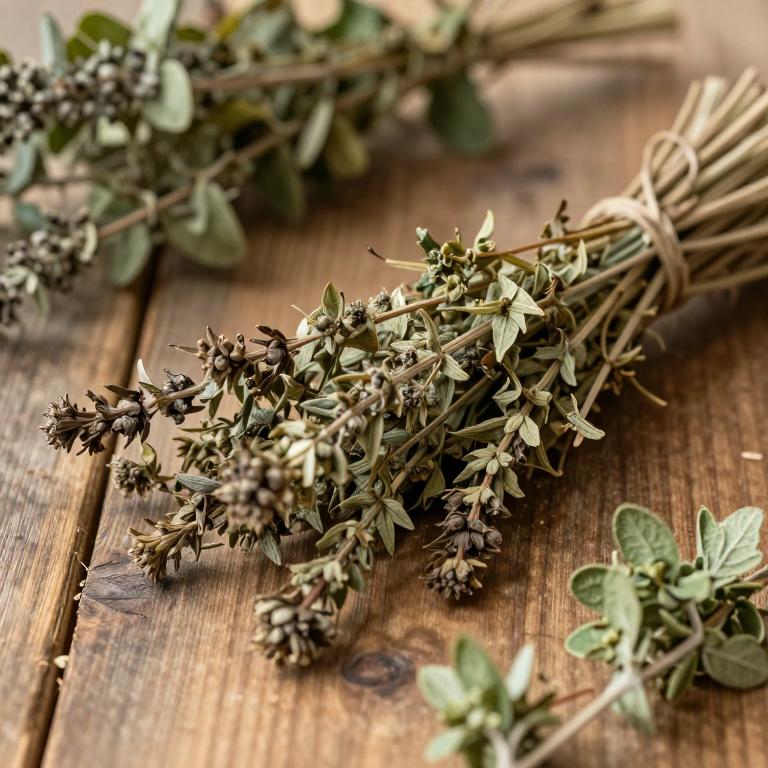
Wood Dock, scientifically known as Rumex sanguineus, is a perennial herb distinguished by its vibrant, reddish rhizomes. Often found in moist, disturbed habitats, this plant is valued in traditional medicine for its astringent and diuretic properties. Its distinctive coloring and resilient nature make it a unique botanical specimen.
Names and Synonyms
Common Names
- bloodwort dock
- bloody dock
- red-veined dock
- wood dock
- redvein dock
- Blood Dock
- Blood Sorrel
Scientific Names
Accepted name
Rumex sanguineusSynonyms
- Lapathum viride
- Lapathon sylvaticum
- Rumex sanguineus var. viridis
- Vibones auratus
- Acetosa sanguinea
- Rumex sanguineus var. exsanguis
- Rumex microdon
- Rumex nemolapathum var. sanguineus
- Rumex nemorosus var. sanguineus
- Rumex sanguineus subsp. viridis
- Rumex nemorosus subsp. sanguineus
- Rumex condylodes f. sanguinalis
- Rumex auratus
- Rumex sanguineus var. sanguinalis
- Rumex condylodes
- Rumex integer
- Lapathum nemorosum
- Lapathum sanguineum
Regional and Traditional Names
Spanish:
- Acedera sanguínea
German:
- Hain-Ampfer
- Blut-Ampfer
- Blutampfer
- Hain-Ampfer
French:
- oseille sanguine
- oseille sanguine
- patience des bois
- patience sang-de-dragon
- patience sanguine
- rumex sanguin
Sources: Wikidata, Catalogue of Life
Taxonomical Classification
This plant belongs to the kingdom Plantae and is classified within the phylum Streptophyta and the class Equisetopsida. As a member of the subclass Magnoliidae, it falls under the order Caryophyllales and the family Polygonaceae. Finally, it is identified by the genus Rumex.
| Rank | Classification |
|---|---|
| Kingdom | Plantae |
| Phylum | Streptophyta |
| Class | Equisetopsida |
| Subclass | Magnoliidae |
| Order | Caryophyllales |
| Family | Polygonaceae |
| Genus | Rumex |
Sources: The World Checklist of Vascular Plants (WCVP)
Distribution
This plant exhibits a specific distribution pattern across the northern regions of the European continent. Within Northern Europe, it can be found growing in the coastal and inland areas of Denmark. Its presence also extends across the British Isles, including Great Britain and Ireland. Furthermore, the species is documented in the Scandinavian territories of Norway. Finally, it completes its northern range within the borders of Sweden.
| Region | Area |
|---|---|
| Northern Europe | Denmark |
| Northern Europe | Great Britain |
| Northern Europe | Ireland |
| Northern Europe | Norway |
| Northern Europe | Sweden |
| Middle Europe | Austria |
| Middle Europe | Belgium |
| Middle Europe | Czechia-Slovakia |
| Middle Europe | Germany |
| Middle Europe | Hungary |
Sources: The World Checklist of Vascular Plants (WCVP)
Botanical Identification
Ecology
The ecology of Rumex sanguineus is characterized by its preference for forest habitats, where it thrives under specific environmental conditions. This species is typically found across a broad altitudinal gradient, occupying an elevational range that extends from sea level (0 m AMSL) up to a maximum of 500 m AMSL. Within these forested ecosystems, its distribution is closely tied to the moisture and shade profiles provided by the woodland canopy.
- Elevational range max:
- 500 m AMSL
- Elevational range min:
- 0 m AMSL
- Habitat :
- forest
Life history
The life history of Rumex sanguineus is characterized by its classification as a perennial plant, allowing it to persist through multiple growing seasons. As a hemicryptophyte, its perennating buds are located at or just below the soil surface, which provides a level of protection against environmental stressors during unfavorable periods. This species exhibits a deciduous nature, shedding its foliage as it transitions through its seasonal cycles. Its developmental strategy and structural organization are defined by this hemicryptophytic life form, ensuring its continued survival and regeneration within its ecological niche.
- Deciduousness :
- deciduous
- Life form :
- hemicryptophyte
- Lifecycle :
- perennial
Morphology
The morphology of Rumex sanguineus is characterized by its growth form as a non-woody herb and forb, existing as an independent organism rather than a parasite or epiphyte. As a terrestrial species, it maintains a self-supporting structure without the need to climb as a liana or vine. The plant typically reaches a height ranging from a minimum of 0.4 m to a maximum of 1.2 m, with an average plant height of approximately 0.788 m.
- Aquatic :
- terrestrial
- Climber :
- self-supporting
- Epiphyte :
- terrestrial
- Growth form :
- herb
- Growth form :
- forb
- Parasite :
- independent
- Plant height max:
- 1.2 m
- Plant height mean:
- 0.788 m
- Plant height min:
- 0.4 m
- Woodiness :
- non-woody
Physiology
The physiology of Rumex sanguineus is characterized by a C3 photosynthetic pathway, which dictates its carbon fixation processes and metabolic efficiency within its environment. The plant exhibits a non-carnivorous nutritional strategy, relying entirely on autotrophic methods for nutrient acquisition through soil uptake and photosynthesis. Morphologically, its foliage is defined by a mean leaf size of 47.34 cm², reflecting its structural investment in light interception. This is further supported by a mean Specific Leaf Area (SLA) of 250 cm²/g, a physiological metric that indicates the ratio of leaf area to dry mass, suggesting a strategy optimized for efficient gas exchange and light capture relative to its biomass.
- Carnivory :
- non-carnivorous
- Leaf size mean:
- 47.34 cm²
- Photosynthetic pathway :
- C3
- Specific Leaf Area (SLA) mean:
- 250 cm²/g
Reproduction
The reproduction of Rumex sanguineus is characterized by a specialized sexual cycle that relies on abiotic factors. The flowering period typically begins in June and concludes in August. During this phase, the plant utilizes an abiotic pollination syndrome, specifically functioning through wind pollination to ensure fertilization. Self-fertilization is present within the species, facilitating successful reproductive cycles. The resulting fruit is a dry, indehiscent achene. The seeds produced are quite small, with a mean mass of approximately 0.000994333333333333 g (ranging from a minimum of 0.00078 g to a maximum of 0.00113 g) and a consistent seed volume of 0.84 mm³. Dispersal of these seeds is achieved through a dual strategy involving both hydrochorous (water) and anemochorous (wind) syndromes, allowing the plant to colonize new areas via aquatic and aerial movements. Notably, asexual reproduction is absent in this species, making sexual seed production the primary method for propagation.
- Dehiscence :
- indehiscent
- Dispersal syndrome :
- hydrochorous
- Dispersal syndrome :
- anemochorous
- Flowering time :
- Jun
- Flowering time :
- Aug
- Fruit dryness :
- dry
- Fruit type :
- achene
- Pollination syndrome :
- wind
- Pollination syndrome :
- abiotic
- Reproduction asexual :
- absent
- Seed mass max:
- 0.00113 g
- Seed mass mean:
- 0.000994333333333333 g
- Seed mass min:
- 0.00078 g
- Seed volume max:
- 0.84 mm³
- Self fertilization :
- present
Sources: Global Inventory of Floras and Traits (GIFT)
Plant Parts
Rumex sanguineus has 3 reported plant parts identified across 3 scientific publications and several other databases that are studied for medicinal purposes. The most consistently reported plant part include leaf, root, stem.
| Plant part | Supporting sources | Consensus |
|---|---|---|
| Leaf | 1 supporting sources | ★☆☆☆☆ |
| Root | 1 supporting sources | ★☆☆☆☆ |
| Stem | 1 supporting sources | ★☆☆☆☆ |
Leaf
- Metabolomics : Official journal of the Metabolomic Society
Root
- Metabolomics : Official journal of the Metabolomic Society
Stem
- Metabolomics : Official journal of the Metabolomic Society
Chemicals
Rumex sanguineus has 3 reported phytochemicals identified across 3 scientific publications and several other databases. The most consistently reported chemicals include Proanthocyanidins, catechins, emodin.
| Chemical | Supporting sources | Consensus |
|---|---|---|
| Proanthocyanidins | 1 supporting sources | ★☆☆☆☆ |
| catechins | 1 supporting sources | ★☆☆☆☆ |
| emodin | 1 supporting sources | ★☆☆☆☆ |
Proanthocyanidins
- Antioxidants (Basel, Switzerland)
catechins
- Antioxidants (Basel, Switzerland)
emodin
- Metabolomics : Official journal of the Metabolomic Society