Canary Island Sorrel
Rumex lunaria · Accepted scientific name
Scientific literature: Very Sparse (3 studies) · ★☆☆☆☆
Canary Island Sorrel, scientifically known as Rumex lunaria, is a resilient perennial herb native to the Macaronesian islands. Characterized by its striking, moon-shaped leaves, this plant thrives in rocky, coastal habitats. Traditionally valued in regional folk medicine, it is recognized for its unique botanical features and ecological significance.
- Family
- Polygonaceae
- Native range
- Europe
- Parts used
- Leaf
- Common names
- Canary Island Sorrel
- Scientific synonyms
- Menophyla Polygama · Acetosa Lunaria · 3 more
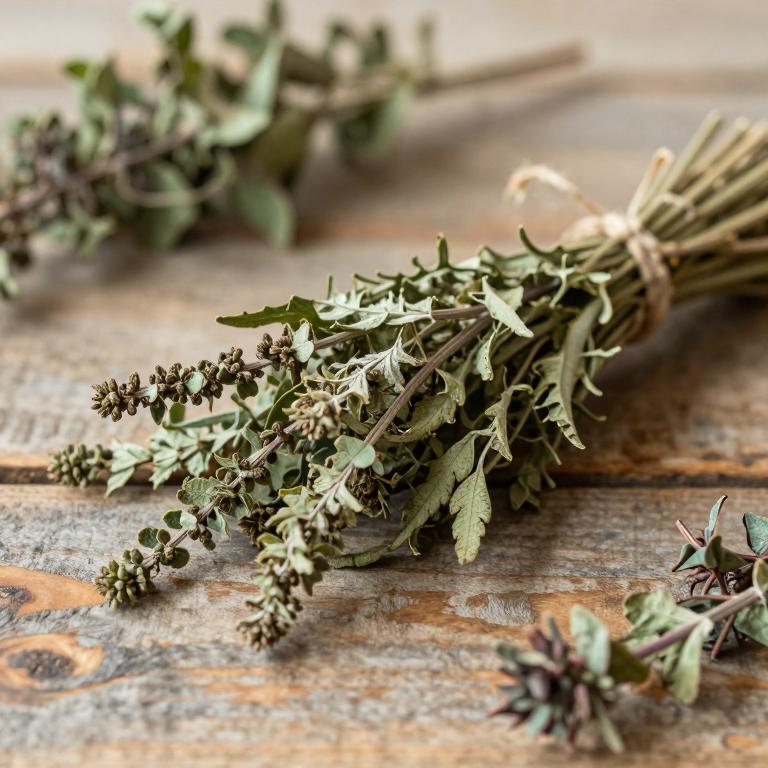
Names and Synonyms
Common Names
- Canary Island Sorrel
Scientific Names
Accepted name
Rumex lunariaSynonyms
- Menophyla polygama
- Acetosa lunaria
- Menophyla lunaria
- Rumex polygamus
- Lapathum arborescens
Regional and Traditional Names
German:
- Kanaren-Ampfer
- Kanaren-Ampfer
French:
- Oseille en lune
Sources: Wikidata, Catalogue of Life
Taxonomical Classification
This plant, known scientifically as Rumex lunaria, belongs to the kingdom Plantae and the phylum Streptophyta. Within the class Equisetopsida and subclass Magnoliidae, it is classified under the order Caryophyllales. It is a member of the Polygonaceae family and falls under the genus Rumex.
| Rank | Classification |
|---|---|
| Kingdom | Plantae |
| Phylum | Streptophyta |
| Class | Equisetopsida |
| Subclass | Magnoliidae |
| Order | Caryophyllales |
| Family | Polygonaceae |
| Genus | Rumex |
Sources: The World Checklist of Vascular Plants (WCVP)
Distribution
This plant exhibits a specific geographical range concentrated within certain Mediterranean and Atlantic regions. In Southwestern Europe, it can be found growing on the island of Sardegna. Its distribution extends into Southeastern Europe, where it is located in Italy. Furthermore, the species is present in the Southeastern European territory of Sicilia. Finally, its reach extends to Macaronesia, specifically within the Canary Is.
| Region | Area |
|---|---|
| Southwestern Europe | Sardegna |
| Southeastern Europe | Italy |
| Southeastern Europe | Sicilia |
| Macaronesia | Canary Is. |
Sources: The World Checklist of Vascular Plants (WCVP)
Botanical Identification
Life history
The life history of Rumex lunaria is characterized by its status as a perennial species, allowing it to persist through multiple growing seasons. Throughout its developmental stages, the plant exhibits an evergreen habit, maintaining its foliage and vegetative presence rather than shedding it seasonally.
- Deciduousness :
- evergreen
- Lifecycle :
- perennial
Morphology
The morphology of Rumex lunaria is characterized by a growth form that transitions between a herb and a shrub, exhibiting a woody nature in its structure. The plant is self-supporting rather than acting as a climber, requiring no external support such as a liana or vine to maintain its upright posture. It displays a versatile ecological habit, ranging from aquatic and semiaquatic environments to terrestrial habitats, and functions as an independent organism rather than a parasite or an epiphyte. In terms of stature, the plant reaches a height of at least 1 meter, with a maximum potential growth of up to 3 meters.
- Aquatic :
- terrestrial
- Climber :
- self-supporting
- Epiphyte :
- terrestrial
- Growth form :
- herb
- Growth form :
- shrub
- Parasite :
- independent
- Plant height max:
- 3 m
- Plant height min:
- 1 m
- Woodiness :
- woody
Physiology
The physiology of Rumex lunaria is characterized by a C3 photosynthetic pathway, indicating a reliance on the standard Calvin cycle for carbon fixation. The plant exhibits morphological adaptations for moisture retention through succulence, which assists in managing internal water potential. Its foliar structure consists of ovate-shaped leaves arranged in an alternate pattern along the stem. These leaves vary in size, with a minimum length of 2.5 cm and a maximum length of 5 cm, while their width ranges from a minimum of 2.5 cm to a maximum of 6 cm.
- Leaf arrangement :
- alternate
- Leaf form :
- ovate
- Leaf length max:
- 5 cm
- Leaf length min:
- 2.5 cm
- Leaf width max:
- 6 cm
- Leaf width min:
- 2.5 cm
- Photosynthetic pathway :
- C3
- Succulence :
- yes
Reproduction
The reproduction of Rumex lunaria is characterized by a flowering cycle that is highly flexible, with the flowering period capable of starting as early as December and concluding around May, though the timing remains variable. The plant produces its flowers in the form of a panicle inflorescence, which reaches a maximum length of 0.15 meters.
- Flowering time :
- Dec
- Flowering time :
- May
- Inflorescence :
- panicle
- Inflorescence length max:
- 0.15 m
Sources: Global Inventory of Floras and Traits (GIFT)
Plant Parts
Rumex lunaria has 1 reported plant parts identified across 1 scientific publications and several other databases that are studied for medicinal purposes. The most consistently reported plant part include leaf.
| Plant part | Supporting sources | Consensus |
|---|---|---|
| Leaf | 1 supporting sources | ★☆☆☆☆ |
Leaf
- Natural product research
Chemicals
Rumex lunaria has 1 reported phytochemicals identified across 1 scientific publications and several other databases. The most consistently reported chemicals include Carotenoids.
| Chemical | Supporting sources | Consensus |
|---|---|---|
| Carotenoids | 1 supporting sources | ★☆☆☆☆ |
Carotenoids
- Natural product research
Conditions
Rumex lunaria has 1 reported investigations on conditions identified across 1 scientific publications and several other databases. The most consistently reported conditions include free-radical.
| Condition | Supporting sources | Consensus |
|---|---|---|
| Free-radical | 1 supporting sources | ★☆☆☆☆ |
Free-radical
- Natural product research