Rumex hymenosepalus
Rumex hymenosepalus · Accepted scientific name
Scientific literature: Sparse (54 studies) · ★★☆☆☆
, scientifically known as Rumex hymenosepaulus, is a distinctive member of the Polygonaceae family. Renowned for its unique botanical characteristics, this plant holds significant potential in traditional herbalism. Researchers are increasingly exploring its bioactive compounds, investigating how its natural properties might offer therapeutic benefits for various medicinal applications.
- Family
- Not available
- Native range
- Northern America
- Parts used
- Not available
- Common names
- Not available
- Scientific synonyms
- Not available
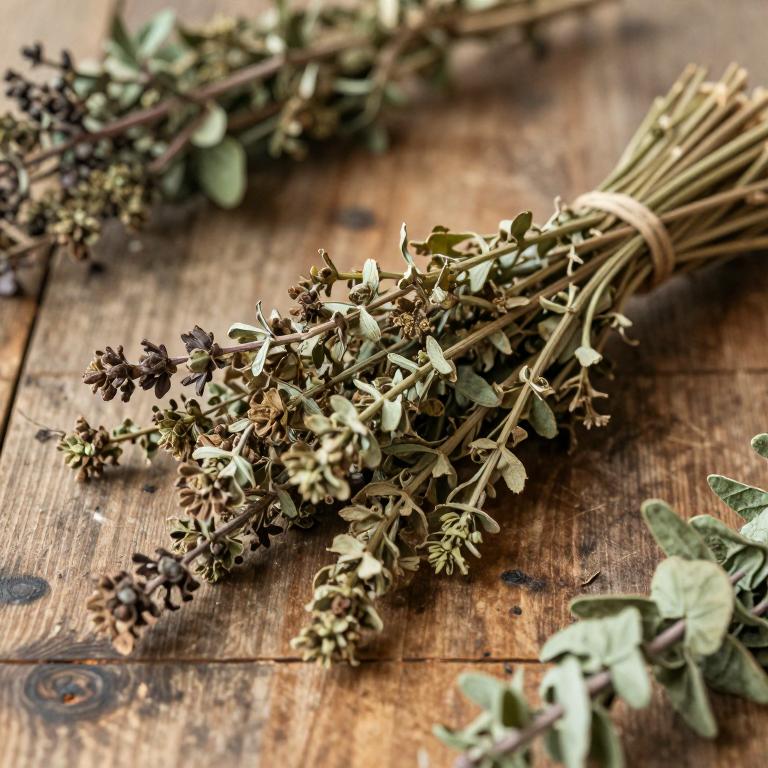
Names and Synonyms
Scientific Names
Accepted name
Rumex hymenosepalusDistribution
This plant exhibits a diverse geographical distribution across several regions of the United States. In the Northwestern U.S.A., it can be found growing in the states of Colorado, Montana, and Wyoming. Moving toward the North-Central U.S.A., the species is also present in Oklahoma. Additionally, its range extends into the Southwestern U.S.A., specifically within Arizona. Together, these locations highlight the varied environments where the species thrives.
| Region | Area |
|---|---|
| Northwestern U.S.A. | Colorado |
| Northwestern U.S.A. | Montana |
| Northwestern U.S.A. | Wyoming |
| North-Central U.S.A. | Oklahoma |
| Southwestern U.S.A. | Arizona |
| Southwestern U.S.A. | California |
| Southwestern U.S.A. | Nevada |
| Southwestern U.S.A. | Utah |
| South-Central U.S.A. | New Mexico |
| South-Central U.S.A. | Texas |
Sources: The World Checklist of Vascular Plants (WCVP)
Botanical Identification
Life history
The life history of Rumex hymenosepalus is characterized by a perennial lifecycle, allowing the plant to persist through multiple growing seasons. As a perennial species, it maintains a stable presence in its habitat, often utilizing underground structures to survive periods of dormancy and regrow during favorable environmental conditions. This long-term survival strategy enables the plant to establish robust populations and undergo repeated reproductive cycles over several years, rather than completing its entire biological process within a single season.
- Lifecycle :
- perennial
Morphology
The morphology of Rumex hymenosepalus is characterized by its growth form as a non-woody herb, specifically categorized as a forb. It functions as an independent organism, neither acting as a parasite nor as an epiphyte, as it maintains a primarily terrestrial existence. While its habitat can span a range of moisture conditions including aquatic and semiaquatic environments, its fundamental ecological positioning is terrestrial. Structurally, the plant is self-supporting rather than functioning as a liana, vine, or any form of obligatory or facultative climber.
- Aquatic :
- terrestrial
- Climber :
- self-supporting
- Epiphyte :
- terrestrial
- Growth form :
- herb
- Growth form :
- forb
- Parasite :
- independent
- Woodiness :
- non-woody
Physiology
The physiology of Rumex hymenosepalus is characterized by a robust vegetative growth pattern where leaf development serves as a primary indicator of the plant's metabolic vigor and resource acquisition strategy. The leaves exhibit significant morphological plasticity, with lengths ranging from a minimum of 6 cm to a maximum of 30 cm, reflecting adaptive responses to varying environmental light intensities and nutrient availability. This variation in leaf dimension suggests a highly regulated physiological mechanism for optimizing photosynthetic surface area; larger leaves facilitate increased photon capture and carbon fixation in shaded or resource-rich microhabitats, while smaller leaves may function as a mechanism to minimize transpirational water loss in more arid conditions. The expansion of the leaf lamina is governed by cellular elongation and division processes that are tightly linked to the plant's hydraulic conductance and turgor pressure maintenance. Consequently, the substantial range in leaf length underscores a dynamic physiological capacity to modulate its photosynthetic apparatus in direct response to the specific ecological niche it occupies.
- Leaf length max:
- 30 cm
- Leaf length min:
- 6 cm
Reproduction
Reproduction in Rumex hymenosepalus is characterized by the production of seeds that exhibit a highly uniform mass, suggesting a stabilized reproductive strategy within its ecological niche. Detailed morphological analysis reveals that the seed mass is consistent across all observed specimens, with a mean seed mass of 0.009488 g. This uniformity is absolute, as both the maximum and minimum recorded seed mass values are identical at 0.009488 g. This lack of variance in seed weight indicates a precise allocation of maternal resources during the developmental stage of the embryo, ensuring that each individual propagule maintains a standardized size and mass for dispersal and subsequent germination.
- Seed mass mean:
- 0.009488 g
Sources: Global Inventory of Floras and Traits (GIFT)
Chemicals
Rumex hymenosepalus has 8 reported phytochemicals identified across 0 scientific publications and several other databases. The most consistently reported chemicals include CHRYSOPHANIC ACID, Leucocyanidin, Leucodelphinidin, Leucopelargonidin, STARCH.
| Chemical | Supporting sources | Consensus |
|---|---|---|
| CHRYSOPHANIC ACID | 1 supporting sources | ★☆☆☆☆ |
| Leucocyanidin | 1 supporting sources | ★☆☆☆☆ |
| Leucodelphinidin | 1 supporting sources | ★☆☆☆☆ |
| Leucopelargonidin | 1 supporting sources | ★☆☆☆☆ |
| STARCH | 1 supporting sources | ★☆☆☆☆ |
| Tannin | 1 supporting sources | ★☆☆☆☆ |
| resin | 1 supporting sources | ★☆☆☆☆ |
| sugar | 1 supporting sources | ★☆☆☆☆ |
CHRYSOPHANIC ACID
- Dr. Duke
Leucocyanidin
- Dr. Duke
Leucodelphinidin
- Dr. Duke
Leucopelargonidin
- Dr. Duke
STARCH
- Dr. Duke
Tannin
- Dr. Duke
resin
- Dr. Duke
sugar
- Dr. Duke
Activities
Rumex hymenosepalus has 46 reported activities identified across 0 scientific publications and several other databases. The most consistently reported activities include Absorbent, Anthelmintic, AntiHIV, Antibacterial, Anticancer.
| Activity | Supporting sources | Consensus |
|---|---|---|
| Absorbent | 1 supporting sources | ★☆☆☆☆ |
| Anthelmintic | 1 supporting sources | ★☆☆☆☆ |
| AntiHIV | 1 supporting sources | ★☆☆☆☆ |
| Antibacterial | 1 supporting sources | ★☆☆☆☆ |
| Anticancer | 1 supporting sources | ★☆☆☆☆ |
| Anticariogenic | 1 supporting sources | ★☆☆☆☆ |
| Antidiarrheic | 1 supporting sources | ★☆☆☆☆ |
| Antidote (Iodine) | 1 supporting sources | ★☆☆☆☆ |
| Antidysenteric | 1 supporting sources | ★☆☆☆☆ |
| Antihepatotoxic | 1 supporting sources | ★☆☆☆☆ |
Absorbent
- Dr. Duke
Anthelmintic
- Dr. Duke
AntiHIV
- Dr. Duke
Antibacterial
- Dr. Duke
Anticancer
- Dr. Duke
Anticariogenic
- Dr. Duke
Antidiarrheic
- Dr. Duke
Antidote (Iodine)
- Dr. Duke
Antidysenteric
- Dr. Duke
Antihepatotoxic
- Dr. Duke
Preparations
Rumex hymenosepalus has 1 reported preparations identified across 0 scientific publications and several other databases. The most consistently reported preparations include crude extracts.
| Preparation | Supporting sources | Consensus |
|---|---|---|
| Crude extracts | 1 supporting sources | ★☆☆☆☆ |
Crude extracts
- The Journal of pharmacy and pharmacology