Horned Dock
Rumex bucephalophorus · Accepted scientific name
Scientific literature: Very Sparse (4 studies) · ★☆☆☆☆
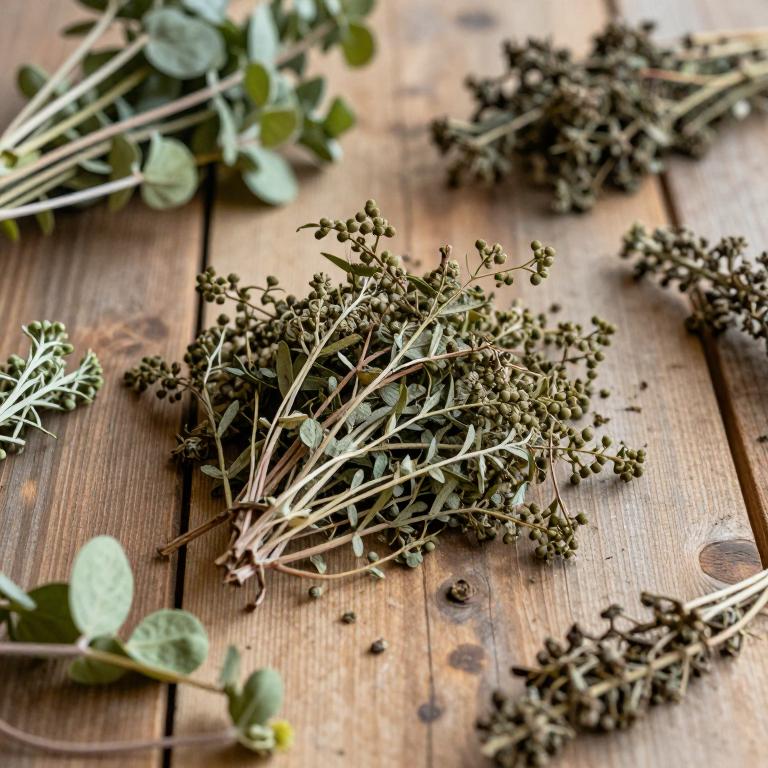
Horned Dock, scientifically known as Rumex bucephalophorus, is a distinctive medicinal herb valued for its therapeutic properties. Often found in diverse habitats, this plant contains bioactive compounds used in traditional medicine to address various ailments. Understanding its botanical characteristics and healing potential is essential for exploring its ethnopharmacological significance.
Names and Synonyms
Common Names
- Horned Dock
- red dock
- ruby dock
Scientific Names
Accepted name
Rumex bucephalophorusSynonyms
- Bucephalophora aculeata
- Acetosa bucephalophora
- Lapathum bucephalophorum
Regional and Traditional Names
Spanish:
- Bucephalophora aculeata
- Bucephalophora aculeata subsp gallica
- Vinagrera portuguesa
- Bucephalophora aculeata subsp hispanica
- Bucephalophora aculeata subsp. gallica
- Bucephalophora aculeata subsp. canariensis
- Rumex membranaceus
- Vinagrillos
- Lapathum bucephalophorum
- Acetosa aculeata
- Acetosa bucephalophora
- Vinagrera borde
- Bucephalophora aculeata subsp. hispanica
- Bucephalophora aculeata subsp canariensis
- Rumex aculeatus
German:
- Stierkopf-Ampfer
- Ochsenkopf-Ampfer
- Stierkopf-Ampfer
French:
- Oseille tête-de-bœuf
- Rumex Tête-de-boeuf
Sources: Wikidata, Catalogue of Life
Taxonomical Classification
This plant belongs to the kingdom Plantae and is classified under the phylum Streptophyta and class Equisetopsida. Within the subclass Magnoliidae, it falls under the order Caryophyllales and the family Polygonaceae. Finally, its taxonomic placement is completed within the genus Rumex.
| Rank | Classification |
|---|---|
| Kingdom | Plantae |
| Phylum | Streptophyta |
| Class | Equisetopsida |
| Subclass | Magnoliidae |
| Order | Caryophyllales |
| Family | Polygonaceae |
| Genus | Rumex |
Sources: The World Checklist of Vascular Plants (WCVP)
Distribution
This plant exhibits a diverse geographical distribution across several regions of Europe. In Middle Europe, it can be found growing within Germany. Its presence extends into Southwestern Europe, where it inhabits the islands of Baleares and Corse. Additionally, the species is recorded in the mainland territory of France. Finally, the distribution reaches the coastal areas of Portugal.
| Region | Area |
|---|---|
| Middle Europe | Germany |
| Southwestern Europe | Baleares |
| Southwestern Europe | Corse |
| Southwestern Europe | France |
| Southwestern Europe | Portugal |
| Southwestern Europe | Sardegna |
| Southwestern Europe | Spain |
| Southeastern Europe | Albania |
| Southeastern Europe | Greece |
| Southeastern Europe | Italy |
Sources: The World Checklist of Vascular Plants (WCVP)
Botanical Identification
Ecology
The ecology of Rumex bucephalophorus is defined by its ability to inhabit a broad vertical gradient across diverse mountainous and sub-montane landscapes. This species demonstrates significant environmental plasticity, occupying a wide elevational range that extends from as low as 100 m AMSL to altitudes reaching a maximum of 1700 m AMSL. This distribution pattern suggests an adaptability to varying climatic conditions, ranging from warmer, lower-altitude habitats to the cooler, more temperate environments found at higher elevations. Such a wide altitudinal span allows the plant to persist in a variety of ecological niches, potentially interacting with diverse soil compositions and moisture regimes found throughout these different topographic layers.
- Elevational range max:
- 1700 m AMSL
- Elevational range min:
- 100 m AMSL
Life history
The life history of Rumex bucephalophorus is characterized by its classification as an annual plant, meaning it completes its entire developmental cycle—from germination to seed production—within a single growing season. In terms of its ecological strategy and structural growth, it is categorized as a therophyte, a life form that survives unfavorable environmental periods primarily in the form of seeds. This life form allows the species to persist in its habitat by avoiding seasonal stresses through a dormant seed stage rather than maintaining vegetative structures above ground.
- Life form :
- therophyte
- Lifecycle :
- annual
Morphology
The morphology of Rumex bucephalophorus is characterized by its growth form as a non-woody herb and forb. The plant is independent, functioning as a terrestrial organism that can inhabit aquatic, semiaquatic, or terrestrial environments. It exhibits a self-supporting habit rather than acting as a climber, liana, or vine. The shoots maintain an ascending orientation, reaching a plant height that typically ranges from a minimum of 0.05 m to a maximum of 0.4 m.
- Aquatic :
- terrestrial
- Climber :
- self-supporting
- Epiphyte :
- terrestrial
- Growth form :
- herb
- Growth form :
- forb
- Parasite :
- independent
- Plant height max:
- 0.4 m
- Plant height min:
- 0.05 m
- Shoot orientation :
- ascending
- Woodiness :
- non-woody
Physiology
The physiology of Rumex bucephalophorus is characterized by specific vegetative dimensions and morphological structures that define its leaf development and surface area. The plant exhibits a leaf form that is predominantly ovate, a shape optimized for light interception and photosynthetic efficiency. These leaves vary in size, with a minimum length of 2 cm and a maximum length reaching up to 3 cm. Correspondingly, the lateral expansion of the foliage is regulated within a width range of 1 cm to 1.5 cm. This specific ratio of length to width and the ovate geometry contribute to the plant's overall biomass accumulation and its ability to manage gas exchange and transpiration within its physiological processes.
- Leaf form :
- ovate
- Leaf length max:
- 3 cm
- Leaf length min:
- 2 cm
- Leaf width max:
- 1.5 cm
- Leaf width min:
- 1 cm
Reproduction
The reproduction of Rumex bucephalophorus is characterized by a sexual process involving bisexual flowers. The flowering period begins in February and concludes in June, following a seasonal cycle. The pollination mechanism is categorized as biotic, specifically utilizing an insect pollination syndrome to facilitate fertilization. Notably, self-fertilization is absent in this species, emphasizing the importance of external agents for successful reproduction. Following fertilization, the plant produces a high volume of seeds, with a count ranging between 101 and 1000 seeds per fruit. These seeds are extremely lightweight, maintaining a consistent mass of approximately 0.00114 g (with minimum, maximum, and mean values all recorded at this figure). Dispersal is achieved through a zoochorous syndrome, specifically via epizoochory, where seeds are transported by attaching to animals.
- Dispersal syndrome :
- zoochorous
- Dispersal syndrome :
- epizoochorous
- Flowering time :
- Feb
- Flowering time :
- Jun
- Pollination syndrome :
- insect
- Pollination syndrome :
- biotic
- Reproduction sexual :
- bisexual
- Seed mass mean:
- 0.00114 g
- Seeds_per_fruit :
- 101-1000
- Self fertilization :
- absent
Sources: Global Inventory of Floras and Traits (GIFT)
Plant Parts
Rumex bucephalophorus has 1 reported plant parts identified across 1 scientific publications and several other databases that are studied for medicinal purposes. The most consistently reported plant part include root.
| Plant part | Supporting sources | Consensus |
|---|---|---|
| Root | 1 supporting sources | ★☆☆☆☆ |
Root
- Journal of natural products
Chemicals
Rumex bucephalophorus has 3 reported phytochemicals identified across 1 scientific publications and several other databases. The most consistently reported chemicals include 3,5,4'-Trihydroxystilbene, 3,5-Dihydroxy-4'-methoxystilbene, resveratrol.
| Chemical | Supporting sources | Consensus |
|---|---|---|
| 3,5,4'-Trihydroxystilbene | 1 supporting sources | ★☆☆☆☆ |
| 3,5-Dihydroxy-4'-methoxystilbene | 1 supporting sources | ★☆☆☆☆ |
| resveratrol | 1 supporting sources | ★☆☆☆☆ |
3,5,4'-Trihydroxystilbene
- Journal of natural products
3,5-Dihydroxy-4'-methoxystilbene
- Journal of natural products
resveratrol
- Journal of natural products