minnieroot
Ruellia tuberosa · Accepted scientific name
Scientific literature: Sparse (70 studies) · ★★☆☆☆
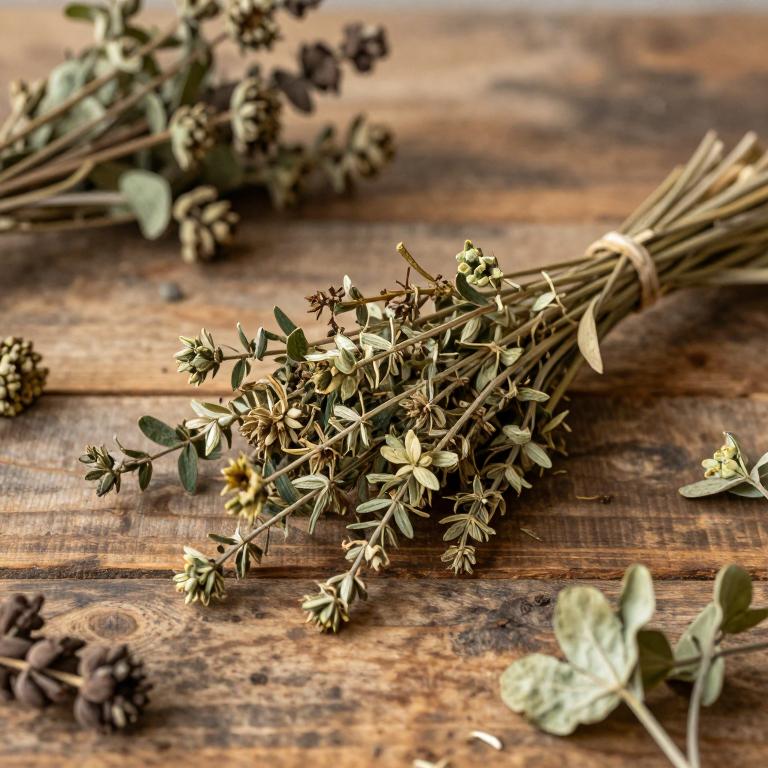
Minnieroot, scientifically known as Ruellia tuberosa, is a captivating climbing shrub native to the tropical Americas. Renowned for its vibrant, trumpet-shaped orange flowers, this plant is highly valued in traditional medicine. It is frequently utilized to treat various ailments, ranging from respiratory issues to skin inflammations and digestive discomfort.
Names and Synonyms
Common Names
- Devil's Bit
- Fever Bit
- Fever Root
- Duppy Gun Shot
- Kencana Ungu
- Popping Pod
Scientific Names
Accepted name
Ruellia tuberosaSynonyms
- Dipteracanthus clandestinus
- Ruellia tuberosa var. humilis
- Ruellia clandestina
Regional and Traditional Names
Spanish:
- hierba del toro
French:
- Ruellie tubéreuse
Sources: Wikidata, Catalogue of Life
Taxonomical Classification
This plant, Ruellia tuberosa, belongs to the kingdom Plantae within the phylum Streptophyta and the class Equisetopsida. It is further classified under the subclass Magnoliidae in the order Lamiales. Finally, it is a member of the family Acanthaceae and falls under the genus Ruellia.
| Rank | Classification |
|---|---|
| Kingdom | Plantae |
| Phylum | Streptophyta |
| Class | Equisetopsida |
| Subclass | Magnoliidae |
| Order | Lamiales |
| Family | Acanthaceae |
| Genus | Ruellia |
Sources: The World Checklist of Vascular Plants (WCVP)
Distribution
This plant exhibits a broad geographical range that spans across multiple continents and distinct ecological zones. In Northeast Tropical Africa, its presence is documented within the territories of Sudan and South Sudan. Moving toward East Tropical Africa, the species can be found throughout Kenya and Tanzania. Its distribution extends into the Western Indian Ocean, specifically reaching the islands of the Seychelles. Finally, the plant reaches much further east, appearing in the South-Central regions of China.
| Region | Area |
|---|---|
| Northeast Tropical Africa | Sudan-South Sudan |
| East Tropical Africa | Kenya |
| East Tropical Africa | Tanzania |
| Western Indian Ocean | Seychelles |
| China | China South-Central |
| Eastern Asia | Taiwan |
| Indian Subcontinent | Assam |
| Indian Subcontinent | Bangladesh |
| Indian Subcontinent | India |
| Indian Subcontinent | Nepal |
Sources: The World Checklist of Vascular Plants (WCVP)
Botanical Identification
Ecology
The ecology of Ruellia tuberosa is characterized by its remarkable adaptability to a wide variety of environmental conditions, allowing it to thrive across a diverse spectrum of landscapes. It exhibits a broad altitudinal distribution, occupying habitats ranging from sea level up to a maximum elevation of 1900 m AMSL. This expansive elevational range enables the species to colonize various ecological niches, from lowland coastal plains and disturbed forest edges to higher-altitude montane environments. Typically found in disturbed sites, open woodlands, and grassy areas, its presence is often linked to habitats with moderate light availability and varying soil moisture levels, demonstrating a high degree of resilience to different microclimates within its vertical range.
- Elevational range max:
- 1900 m AMSL
- Elevational range min:
- 0 m AMSL
Life history
The life history of Ruellia tuberosa is characterized by its classification as a perennial species, allowing the plant to persist through multiple growing seasons. While it exhibits a perennial nature, its development can appear variable depending on environmental conditions, sometimes displaying growth patterns that mimic annual or biennial cycles in less stable habitats. The plant typically establishes itself through underground structures, often utilizing tuberous roots to store nutrients, which facilitates its long-term survival and ability to regrow after periods of dormancy. As it matures, it undergoes a consistent reproductive cycle involving the production of flowers and seeds, ensuring its continued presence within its ecological niche over many years.
- Lifecycle :
- perennial
Morphology
The morphology of Ruellia tuberosa is characterized by its growth form as a non-woody herb, specifically classified as a forb. This species exhibits a self-supporting habit, functioning as a self-supporting climber rather than an obligatory liana or vine. It is a terrestrial plant, lacking any epiphytic or aquatic tendencies, and grows as an independent organism without parasitic behavior. In terms of stature, the plant maintains a relatively low profile, with a plant height that reaches a maximum of 0.5 m.
- Aquatic :
- terrestrial
- Climber :
- self-supporting
- Epiphyte :
- terrestrial
- Growth form :
- herb
- Growth form :
- forb
- Parasite :
- independent
- Plant height max:
- 0.5 m
- Plant height min:
- 0 m
- Woodiness :
- non-woody
Sources: Global Inventory of Floras and Traits (GIFT)
Plant Parts
Ruellia tuberosa has 1 reported plant parts identified across 1 scientific publications and several other databases that are studied for medicinal purposes. The most consistently reported plant part include leaf.
| Plant part | Supporting sources | Consensus |
|---|---|---|
| Leaf | 1 supporting sources | ★☆☆☆☆ |
Leaf
- Open life sciences
Chemicals
Ruellia tuberosa has 9 reported phytochemicals identified across 1 scientific publications and several other databases. The most consistently reported chemicals include BETA-SITOSTEROL, CAMPESTEROL, Glutathione (GSH), HENTRIACONTANE, NONACOSANE.
| Chemical | Supporting sources | Consensus |
|---|---|---|
| BETA-SITOSTEROL | 1 supporting sources | ★☆☆☆☆ |
| CAMPESTEROL | 1 supporting sources | ★☆☆☆☆ |
| Glutathione (GSH) | 1 supporting sources | ★☆☆☆☆ |
| HENTRIACONTANE | 1 supporting sources | ★☆☆☆☆ |
| NONACOSANE | 1 supporting sources | ★☆☆☆☆ |
| STIGMASTEROL | 1 supporting sources | ★☆☆☆☆ |
| Saponins | 1 supporting sources | ★☆☆☆☆ |
| Steroids | 1 supporting sources | ★☆☆☆☆ |
| Terpenes | 1 supporting sources | ★☆☆☆☆ |
BETA-SITOSTEROL
- Dr. Duke
CAMPESTEROL
- Dr. Duke
Glutathione (GSH)
- Recent advances in inflammation & allergy drug discovery
HENTRIACONTANE
- Dr. Duke
NONACOSANE
- Dr. Duke
STIGMASTEROL
- Dr. Duke
Saponins
- The Indian journal of medical research
Steroids
- The Indian journal of medical research
Terpenes
- The Indian journal of medical research
Activities
Ruellia tuberosa has 52 reported activities identified across 1 scientific publications and several other databases. The most consistently reported activities include Antibacterial, Antioxidant, Androgenic, Angiogenic, Anorexic.
| Activity | Supporting sources | Consensus |
|---|---|---|
| Antibacterial | 2 supporting sources | ★☆☆☆☆ |
| Antioxidant | 2 supporting sources | ★☆☆☆☆ |
| Androgenic | 1 supporting sources | ★☆☆☆☆ |
| Angiogenic | 1 supporting sources | ★☆☆☆☆ |
| Anorexic | 1 supporting sources | ★☆☆☆☆ |
| Antiadenomic | 1 supporting sources | ★☆☆☆☆ |
| Antiandrogenic | 1 supporting sources | ★☆☆☆☆ |
| Anticancer (Breast) | 1 supporting sources | ★☆☆☆☆ |
| Anticancer (Cervix) | 1 supporting sources | ★☆☆☆☆ |
| Anticancer (Lung) | 1 supporting sources | ★☆☆☆☆ |
Antibacterial
- Dr. Duke
- Pakistan journal of pharmaceutical sciences
Antioxidant
- Dr. Duke
- Recent advances in inflammation & allergy drug discovery
Androgenic
- Dr. Duke
Angiogenic
- Dr. Duke
Anorexic
- Dr. Duke
Antiadenomic
- Dr. Duke
Antiandrogenic
- Dr. Duke
Anticancer (Breast)
- Dr. Duke
Anticancer (Cervix)
- Dr. Duke
Anticancer (Lung)
- Dr. Duke
Conditions
Ruellia tuberosa has 6 reported investigations on conditions identified across 1 scientific publications and several other databases. The most consistently reported conditions include Alzheimer's disease, Aspergillus niger, Pseudomonas aeruginosa, Salmonella typhi, neurodegenerative diseases.
| Condition | Supporting sources | Consensus |
|---|---|---|
| Alzheimer's disease | 1 supporting sources | ★☆☆☆☆ |
| Aspergillus niger | 1 supporting sources | ★☆☆☆☆ |
| Pseudomonas aeruginosa | 1 supporting sources | ★☆☆☆☆ |
| Salmonella typhi | 1 supporting sources | ★☆☆☆☆ |
| Neurodegenerative diseases | 1 supporting sources | ★☆☆☆☆ |
| Prostate cancer | 1 supporting sources | ★☆☆☆☆ |
Alzheimer's disease
- Recent advances in inflammation & allergy drug discovery
Aspergillus niger
- Pakistan journal of pharmaceutical sciences
Pseudomonas aeruginosa
- Pakistan journal of pharmaceutical sciences
Salmonella typhi
- Pakistan journal of pharmaceutical sciences
Neurodegenerative diseases
- Recent advances in inflammation & allergy drug discovery
Prostate cancer
- Open life sciences
Preparations
Ruellia tuberosa has 2 reported preparations identified across 1 scientific publications and several other databases. The most consistently reported preparations include ethanolic extract, leaf extract.
| Preparation | Supporting sources | Consensus |
|---|---|---|
| Ethanolic extract | 1 supporting sources | ★☆☆☆☆ |
| Leaf extract | 1 supporting sources | ★☆☆☆☆ |
Ethanolic extract
- Recent advances in inflammation & allergy drug discovery
Leaf extract
- Open life sciences