Perennial Coneflower
Rudbeckia fulgida · Accepted scientific name
Scientific literature: Very Sparse (11 studies) · ★☆☆☆☆
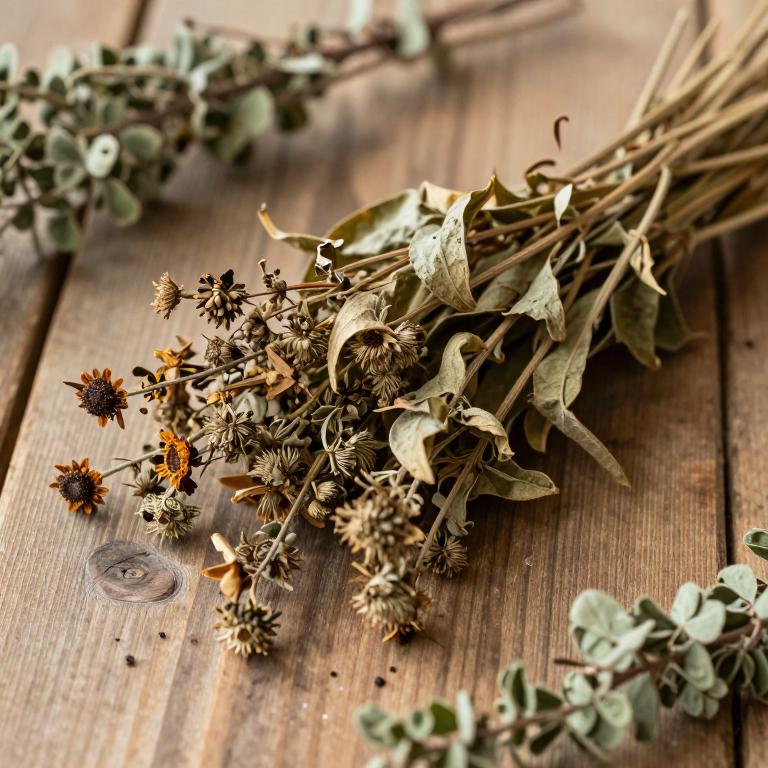
Perennial Coneflower, scientifically known as Rudbeckia fulgida, is a vibrant medicinal herb native to South Africa. Renowned for its striking golden blooms, it is traditionally used in holistic remedies to support immune health and skin vitality. This resilient plant offers both aesthetic beauty and valuable therapeutic potential in herbal medicine.
- Family
- Asteraceae
- Native range
- Europe
- Parts used
- Root · Leaf
- Common names
- Perennial Coneflower · Orange Coneflower
- Scientific synonyms
- Centrocarpha Chrysomela · Centrocarpha Discolor · 10 more
Names and Synonyms
Common Names
- Perennial Coneflower
- orange coneflower
Scientific Names
Accepted name
Rudbeckia fulgidaSynonyms
- Centrocarpha chrysomela
- Centrocarpha discolor
- Helianthus fulgidus
- Centrocarpha fulgida
- Rudbeckia chrysomela
- Rudbeckia acuminata
- Rudbeckia discolor
- Rudbeckia foliosa
- Rudbeckia newmanii
- Rudbeckia tenax
- Rudbeckia truncata
- Rudbeckia fulgida var. fulgida
Regional and Traditional Names
German:
- Gewöhnlicher Sonnenhut
- Leuchtender Sonnenhut
- Gewöhnlicher Sonnenhut
Sources: Wikidata, Catalogue of Life
Taxonomical Classification
This plant belongs to the kingdom Plantae and is classified under the phylum Streptophyta and class Equisetopsida. Within the subclass Magnoliidae and order Asterales, it is further organized into the family Asteraceae. Finally, it is identified by the genus Rudbeckia and the specific species Rudbeckia fulgida.
| Rank | Classification |
|---|---|
| Kingdom | Plantae |
| Phylum | Streptophyta |
| Class | Equisetopsida |
| Subclass | Magnoliidae |
| Order | Asterales |
| Family | Asteraceae |
| Genus | Rudbeckia |
Sources: The World Checklist of Vascular Plants (WCVP)
Distribution
This plant exhibits a specific geographical distribution across several key regions of Europe. In Northern Europe, its presence can be found within Great Britain. Moving into Middle Europe, the species is distributed across Austria, Germany, and Poland. Additionally, it extends into Southwestern Europe, specifically inhabiting France. These locations highlight the plant's range across diverse European landscapes.
| Region | Area |
|---|---|
| Northern Europe | Great Britain |
| Middle Europe | Austria |
| Middle Europe | Germany |
| Middle Europe | Poland |
| Southwestern Europe | France |
| Southeastern Europe | Romania |
| Eastern Europe | Baltic States |
| Eastern Europe | Krym |
| Eastern Europe | Ukraine |
| Central Asia | Tadzhikistan |
Sources: The World Checklist of Vascular Plants (WCVP)
Botanical Identification
Life history
The life history of Rudbeckia fulgida is characterized by its status as a perennial, allowing the plant to persist through multiple growing seasons. As a perennial species, it establishes a robust root system that enables it to survive periods of dormancy and re-emerge annually to complete its reproductive cycle. This longevity provides the plant with a competitive advantage in its natural habitat, as it can invest energy into structural stability and long-term survival rather than relying solely on the rapid seed production typical of annual or biennial life strategies. Through its continuous life cycle, it maintains a steady presence in its ecosystem, contributing to the seasonal succession of floral resources.
- Lifecycle :
- perennial
Morphology
The morphology of Rudbeckia fulgidia is characterized by its growth form as a non-woody herb and specifically a forb. It is a self-supporting plant, exhibiting neither climber nor liana tendencies, as it functions as a self-supporting structure without the need for external support. In terms of its habitat and ecological positioning, the species is terrestrial, rather than aquatic, semiaquatic, or epiphytic; it does not function as a holoepiphyte, hemiepiphyte, or any other form of epiphyte, remaining strictly grounded. Furthermore, the plant is an independent organism, showing no parasitic behavior, whether obligatory or facultative.
- Aquatic :
- terrestrial
- Climber :
- self-supporting
- Epiphyte :
- terrestrial
- Growth form :
- herb
- Growth form :
- forb
- Parasite :
- independent
- Woodiness :
- non-woody
Physiology
The physiology of Rudbeckia fulgida is fundamentally characterized by its utilization of the C3 photosynthetic pathway, a mechanism where carbon dioxide is fixed directly into a three-carbon compound during the initial stages of the Calvin cycle. This metabolic process dictates the plant's gas exchange dynamics and water-use efficiency, as it relies on the enzyme RuBisCO to catalyze the carboxylation of ribulose-1,5-bisphosphate. Consequently, the plant's physiological performance is closely tied to its stomatal conductance and its ability to manage photorespiration, especially when subjected to varying environmental temperatures and light intensities. The energy assimilation within its tissues is driven by this C3 metabolism, which supports the structural development and the production of secondary metabolites essential to its biological functions.
- Photosynthetic pathway :
- C3
Reproduction
The reproduction of Rudbeckia fulgida is characterized by a highly flexible flowering phenology and specific seed morphology. The flowering period for this species is notably broad and variable, with the onset of blooming occurring as early as December and continuing through various months of the year, while the flowering cycle typically concludes around October. This extensive window suggests an ability to adapt to diverse environmental conditions. Regarding its reproductive output, the plant produces seeds with a highly consistent mass; the mean, minimum, and maximum seed mass are all recorded at 5e-04 g, indicating a uniform seed size that is critical for its dispersal and establishment patterns.
- Flowering time :
- Dec
- Flowering time :
- Oct
- Seed mass mean:
- 5e-04 g
Sources: Global Inventory of Floras and Traits (GIFT)
Plant Parts
Rudbeckia fulgida has 2 reported plant parts identified across 3 scientific publications and several other databases that are studied for medicinal purposes. The most consistently reported plant part include root, leaf.
| Plant part | Supporting sources | Consensus |
|---|---|---|
| Root | 2 supporting sources | ★☆☆☆☆ |
| Leaf | 1 supporting sources | ★☆☆☆☆ |
Root
- Die Pharmazie
- International journal of biological macromolecules
Leaf
- Biological research
Chemicals
Rudbeckia fulgida has 4 reported phytochemicals identified across 3 scientific publications and several other databases. The most consistently reported chemicals include Complex, Flavonoids, arabinose, xylose.
| Chemical | Supporting sources | Consensus |
|---|---|---|
| Complex | 1 supporting sources | ★☆☆☆☆ |
| Flavonoids | 1 supporting sources | ★☆☆☆☆ |
| arabinose | 1 supporting sources | ★☆☆☆☆ |
| xylose | 1 supporting sources | ★☆☆☆☆ |
Complex
- Die Pharmazie
Flavonoids
- Biological research
arabinose
- International journal of biological macromolecules
xylose
- International journal of biological macromolecules
Conditions
Rudbeckia fulgida has 1 reported investigations on conditions identified across 3 scientific publications and several other databases. The most consistently reported conditions include cough.
| Condition | Supporting sources | Consensus |
|---|---|---|
| Cough | 1 supporting sources | ★☆☆☆☆ |
Cough
- International journal of biological macromolecules
Preparations
Rudbeckia fulgida has 7 reported preparations identified across 3 scientific publications and several other databases. The most consistently reported preparations include alkali-extracted low-molecular glucuronoxylan, complex from the aerial parts, complex from the roots, crude polysaccharides, crushed roots.
| Preparation | Supporting sources | Consensus |
|---|---|---|
| Alkali-extracted low-molecular glucuronoxylan | 1 supporting sources | ★☆☆☆☆ |
| Complex from the aerial parts | 1 supporting sources | ★☆☆☆☆ |
| Complex from the roots | 1 supporting sources | ★☆☆☆☆ |
| Crude polysaccharides | 1 supporting sources | ★☆☆☆☆ |
| Crushed roots | 1 supporting sources | ★☆☆☆☆ |
| Leaves | 1 supporting sources | ★☆☆☆☆ |
| Water-extractable polysaccharide complexes | 1 supporting sources | ★☆☆☆☆ |
Alkali-extracted low-molecular glucuronoxylan
- Die Pharmazie
Complex from the aerial parts
- Die Pharmazie
Complex from the roots
- Die Pharmazie
Crude polysaccharides
- Fitoterapia
Crushed roots
- International journal of biological macromolecules
Leaves
- Biological research
Water-extractable polysaccharide complexes
- Die Pharmazie