Rubus ulmifolius
Rubus ulmifolius · Accepted scientific name
Scientific literature: Very Sparse (3 studies) · ★☆☆☆☆
Rubus ulmifolius is a versatile botanical species known for its significant therapeutic potential in various medicinal applications. Research indicates that its fruit and leaf extracts possess potent antidiabetic, antimicrobial, and antioxidant activities. These biological benefits are driven by key phytochemicals such as Rubanthrone A, tannins, and ellagic acid. When prepared through aqueous, dichloromethane, ethyl acetate, or hexane extractions, the plant shows promise in treating conditions like hypertension and fighting Staphylococcus aureus. Furthermore, its chemical properties support healing processes such as re-epithelialization and the treatment of burns.
- Synonyms
- Rubus Ulmifolius Var. Calcareus · Rubus Ulmifolius Subf. Calcicola · 241 more
- Common names
- Not available
- Family
- Rosaceae
- Distribution
- Not available
- Plant Parts
- Fruit · Leaf
Classification
Common Names
Rubus ulmifolius is a versatile plant known by many different names across various languages and regions. It is most frequently referred to in English as the Common Bramble or the Elm-leaved Bramble. In Spanish-speaking areas, it is widely recognized as Zarza comun, while French speakers call it Ronce rustique. Other regional monikers include the term Amora-negra and the name Esbarzer. This diversity in nomenclature highlights the widespread presence of the species throughout different cultures.
Sources: Catalogue of Life (COL)
Synonyms
Rubus ulmifolius is a complex species that has been categorized under various botanical synonyms throughout history. For instance, it has been identified in scientific literature as Rubus abruptus and Rubus aetneus. The plant's classification also includes the name Rubus albescens, reflecting different taxonomic perspectives. Furthermore, it is linked to specific varieties such as Rosa × andegavensis var. lemaitrei and Rubus amoenus var. hispanicus. Understanding these overlapping relationships is essential for accurately identifying this versatile member of the bramble family.
Sources: The World Checklist of Vascular Plants (WCVP)
Taxonomy
Rubus ulmifolius belongs to the expansive kingdom Plantae, marking its place among the diverse world of living plants. Within this kingdom, it is classified under the class Equisetopsida, reflecting its fundamental biological structure. This species is further organized into the order Rosales, a group that shares significant evolutionary traits. It falls specifically under the family Rosaceae, which is known for producing many familiar and beloved flowering plants. Ultimately, it is identified by its genus, Rubus, which defines its unique botanical identity.
| Rank | Classification |
|---|---|
| Kingdom | Plantae |
| Phylum | Streptophyta |
| Class | Equisetopsida |
| Subclass | Magnoliidae |
| Order | Rosales |
| Family | Rosaceae |
| Genus | Rubus |
Sources: The World Checklist of Vascular Plants (WCVP)
Distribution
Geographic Regions
Rubus ulmifolius is a widespread species with a significant presence across the African continent. Its distribution extends prominently throughout Northern Africa, specifically within the territories of Algeria and Morocco. Beyond the mainland, the plant is well-established in the Macaronesia region. This includes specific island habitats such as the Azores, Madeira, and the Canary Islands. Consequently, its geographic reach encompasses a diverse range of Atlantic and African environments.
Sources: The World Checklist of Vascular Plants (WCVP)
Identification
Morphology
Rubus ulmifolius is a robust shrub characterized by its sturdy, self-supporting growth form. This resilient plant typically reaches a minimum height of 1 meter, though it often establishes itself at 1.25 meters. As it matures, the species can extend its reach significantly to achieve a maximum height of 4 meters. These varying dimensions allow the shrub to adapt effectively to its surrounding environment. Consequently, its structural stability makes it a prominent feature in its natural habitat.
Sources: Global Inventory of Floras and Traits (GIFT)
Biological Activities
Rubus ulmifolius exhibits a diverse range of therapeutic properties that make it a significant subject for medicinal research. The fruit extract has demonstrated potent antidiabetic potential by effectively inhibiting α-glucosidase activity and preventing islet amyloid polypeptide aggregation. Furthermore, the plant possesses notable antioxidant activity in both cellular and acellular systems, which helps protect against oxidative stress. Beyond these metabolic benefits, specific compounds isolated from its aerial parts, such as rubanthrone A, have shown clear antimicrobial activity against pathogens like Staphylococcus aureus. Collectively, these multifaceted biological activities suggest that R. ulmifolius could serve as a valuable functional food for managing various health conditions.
Compounds
Rubus ulmifolius, commonly known as the wild blackberry, is a plant rich in diverse bioactive compounds that support its traditional medicinal uses. Phytochemical analyses reveal that the plant contains significant amounts of polyphenols and tannins, which contribute to its potent antioxidant properties. Additionally, the presence of flavonoids within its extracts plays a crucial role in its complex chemical profile. Research has also successfully isolated specific anthrones from the plant, most notably rubanthrone A and rubanthrone B. These specialized metabolites highlight the therapeutic potential of the species in various biological applications.
Conditions
Rubus ulmifolius demonstrates significant therapeutic potential by reducing Caspase-1 activity in intestinal cells to provide anti-inflammatory benefits. The fruit extract also effectively treats type 2 diabetes-related issues by inhibiting IAPP aggregation and the formation of Islet Amyloid PolyPeptide fibrils. Beyond metabolic health, the plant shows antimicrobial properties, specifically through the action of rubanthrone A against Staphylococcus aureus. Additionally, the extract has been identified as one of the medicinal plants capable of inhibiting biofilm formation. These diverse biological activities highlight the plant's multifaceted medicinal utility.
Preparations
Rubus ulmifolius is prepared as aqueous, hexane, dichloromethane, ethyl acetate, and methanol extracts for scientific evaluation. These various crude leaf extracts are obtained using a Soxhlet apparatus to study their medicinal properties. Specifically, the methanol extract of the plant is utilized to analyze its potent antioxidant and hypotensive activities. Each of these preparation methods, including the aqueous and non-polar solvent options, is tested for concentration-dependent vasorelaxation. Through these different extraction processes, researchers can identify the specific phytochemical profile of the wild blackberry.
Parts used
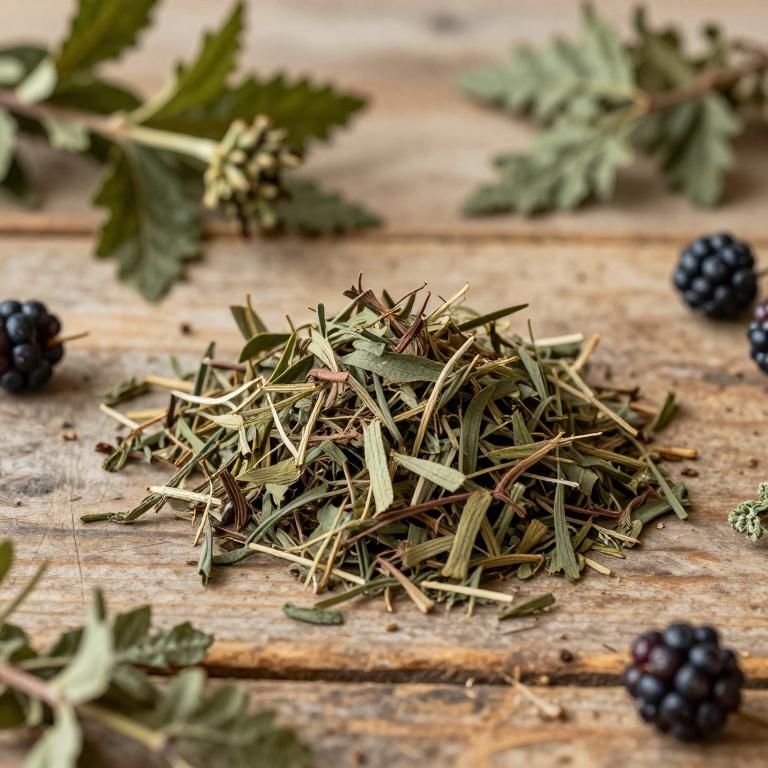
Rubus ulmifolius, commonly known as the wild blackberry, is a versatile perennial plant utilized extensively for its diverse medicinal properties. Research indicates that the fruit of this species contains high concentrations of anthocyanins and phenolic compounds, offering significant potential in managing type 2 diabetes. Specifically, the fruit extract has demonstrated a powerful ability to inhibit α-glucosidase activity and prevent islet amyloid polypeptide aggregation. Beyond its nutritional value, the leaves of the plant serve as a potent therapeutic resource for topical applications. Studies show that an extract derived from the leaves can significantly accelerate wound healing by modulating inflammatory responses and promoting tissue regeneration.