Raspberry
Rubus rosifolius · Accepted scientific name
Scientific literature: Very Sparse (13 studies) · ★☆☆☆☆
Raspberry, scientifically known as Rubus rosifolius, is a versatile medicinal plant celebrated for its profound health benefits. Rich in antioxidants, vitamins, and essential minerals, it serves as a potent remedy for inflammation and digestive issues. Traditionally used in various cultures, this berry supports immunity and promotes overall holistic wellness.
- Family
- Rosaceae
- Native range
- Africa
- Parts used
- Stem · Fruit
- Common names
- Raspberry · Mauritius Raspberry · 6 more
- Scientific synonyms
- Not available
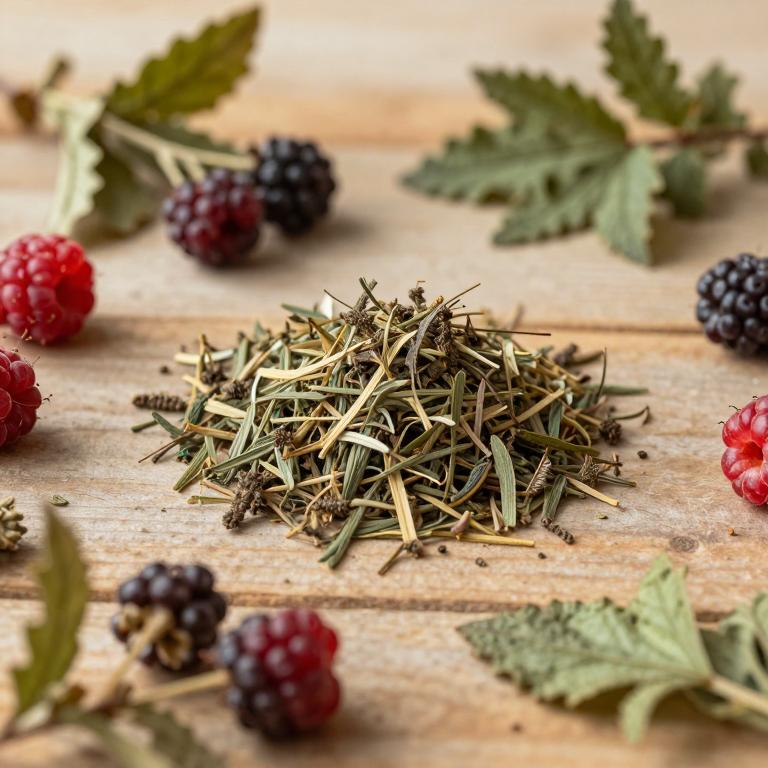
Names and Synonyms
Common Names
- Raspberry
- Mauritius raspberry
- bramble-of-the-Cape
- raspberry-bush
- rose-leaf bramble
- thimbleberry
- roseleaf bramble
- roseleaf raspberry
Scientific Names
Accepted name
Rubus rosifoliusRegional and Traditional Names
Spanish:
- frambueso de Africa
- frambuesa
German:
- javanische Himbeere
French:
- Framboisier d'Asie
Sources: Wikidata, Catalogue of Life
Taxonomical Classification
This plant belongs to the kingdom Plantae and the phylum Streptophyta, specifically falling under the class Equisetopsida and subclass Magnoliidae. Within the order Rosales and the family Rosaceae, it is classified under the genus Rubus.
| Rank | Classification |
|---|---|
| Kingdom | Plantae |
| Phylum | Streptophyta |
| Class | Equisetopsida |
| Subclass | Magnoliidae |
| Order | Rosales |
| Family | Rosaceae |
| Genus | Rubus |
Sources: The World Checklist of Vascular Plants (WCVP)
Distribution
This plant exhibits a diverse presence across several key regions within the African continent. In West-Central Tropical Africa, its range extends through Cameroon and the islands of the Gulf of Guinea. It is also documented within the borders of Rwanda in the same central region. Moving toward the northeast, the species can be found growing in Ethiopia. Finally, its distribution reaches into East Tropical Africa, specifically within Tanzania.
| Region | Area |
|---|---|
| West-Central Tropical Africa | Cameroon |
| West-Central Tropical Africa | Gulf of Guinea Is. |
| West-Central Tropical Africa | Rwanda |
| Northeast Tropical Africa | Ethiopia |
| East Tropical Africa | Tanzania |
| East Tropical Africa | Uganda |
| South Tropical Africa | Malawi |
| South Tropical Africa | Zambia |
| South Tropical Africa | Zimbabwe |
| Southern Africa | Cape Provinces |
Sources: The World Checklist of Vascular Plants (WCVP)
Botanical Identification
Ecology
The ecology of Rubus rosifolius is characterized by a broad adaptability to various environmental conditions, spanning an extensive elevational range from sea level (0 m AMSL) up to a maximum altitude of 2500 m AMSL. This species thrives in diverse ecological settings, specifically finding suitable niches within the Cerrado (latu sensu) and within Umbrophilous Forests, which includes both Ombrophilous Forests and Pluvial Forests. This wide distribution across different altitudinal gradients and vegetation types highlights its ability to persist in both seasonally dry tropical savannas and high-moisture forest ecosystems.
- Elevational range max:
- 2500 m AMSL
- Elevational range min:
- 0 m AMSL
- Habitat :
- Cerrado (lato sensu), Floresta Ombrófila (= Floresta Pluvial)
Life history
The life history of Rubus rosifolius is characterized by its classification as a perennial plant, allowing it to persist through multiple growing seasons. In terms of its growth architecture and structural habit, the species exhibits characteristics of both phanerophyte and nanophanerophyte life forms, depending on the environmental conditions and the development of its woody stems. Furthermore, the plant maintains an evergreen deciduousness, retaining its foliage to support continuous biological activity throughout its lifecycle.
- Deciduousness :
- evergreen
- Life form :
- nanophanerophyte
- Life form :
- phanerophyte
- Lifecycle :
- perennial
Morphology
The morphology of Rubus rosifolius is characterized by its growth form as a woody shrub, typically exhibiting an erect shoot orientation. It is a terrestrial plant that functions independently, neither acting as a parasite nor an epiphyte. The plant generally reaches a height of approximately 1.5 m to 2 m, maintaining a self-supporting structure rather than acting as a liana, vine, or climbing plant.
- Aquatic :
- terrestrial
- Climber :
- self-supporting
- Epiphyte :
- terrestrial
- Growth form :
- shrub
- Parasite :
- independent
- Plant height max:
- 1.5 m
- Plant height mean:
- 2 m
- Shoot orientation :
- erect
- Woodiness :
- woody
Physiology
The physiology of Rubus rosifolius is characterized by a C3 photosynthetic pathway, which dictates its metabolic carbon fixation processes and environmental adaptations. Morphologically, its foliage exhibits significant variability in dimensions; the leaf length ranges from a minimum of 1.5 cm to a maximum of 8 cm, while the leaf width varies between a minimum of 1 cm and a maximum of 3 cm, with a mean width recorded at 1.5 cm. Regarding nutrient acquisition and symbiotic relationships, the plant does not function as a nitrogen fixer, meaning it relies on the uptake of nitrogen from the soil rather than through biological nitrogen fixation.
- Leaf length max:
- 8 cm
- Leaf length min:
- 1.5 cm
- Leaf width max:
- 3 cm
- Leaf width mean:
- 1.5 cm
- Leaf width min:
- 1 cm
- Nitrogen fixer :
- no
- Photosynthetic pathway :
- C3
Reproduction
The reproduction of Rubus rosifolius involves both sexual and asexual mechanisms, with asexual reproduction being present to facilitate plant spread. Sexual reproduction is driven by a biotic pollination syndrome, specifically relying on insects to facilitate the transfer of pollen. The plant produces white flowers that typically range in length from 0.8 cm to a maximum of 1.5 cm. Following successful pollination, the plant develops fleshy fruit characterized as an "other" fruit type (aggregate structure). These fruits vary in size, with an average length of 1.5 cm and a width of 1.7 cm, though they can reach a maximum length of 3.5 cm and a minimum length of 2 cm. The dispersal of these fruits follows a zoochorous syndrome, meaning they are dispersed by animals. Within the fruit, the seeds exhibit specific morphological traits: they have a mean mass of approximately 0.000611157 g (ranging from a minimum of 0.0003 g to a maximum of 0.00201 g) and a mean volume of 2 mm³ (ranging from 1.4 mm³ to a maximum of 2.6 mm³), with a maximum seed length of 1.5 mm.
- Dispersal syndrome :
- zoochorous
- Flower colour :
- white
- Flower length max:
- 1.5 cm
- Flower length min:
- 0.8 cm
- Fruit dryness :
- fleshy
- Fruit length max:
- 3.5 cm
- Fruit length mean:
- 1.5 cm
- Fruit length min:
- 2 cm
- Fruit type :
- other
- Fruit width mean:
- 1.7 cm
- Pollination syndrome :
- insect
- Pollination syndrome :
- biotic
- Reproduction asexual :
- present
- Seed length max:
- 1.5 mm
- Seed mass max:
- 0.00201 g
- Seed mass mean:
- 0.000611157 g
- Seed mass min:
- 3e-04 g
- Seed volume max:
- 2.6 mm³
- Seed volume mean:
- 2 mm³
- Seed volume min:
- 1.4 mm³
Sources: Global Inventory of Floras and Traits (GIFT)
Plant Parts
Rubus rosifolius has 3 reported plant parts identified across 4 scientific publications and several other databases that are studied for medicinal purposes. The most consistently reported plant part include stem, fruit, leaf.
| Plant part | Supporting sources | Consensus |
|---|---|---|
| Stem | 2 supporting sources | ★☆☆☆☆ |
| Fruit | 1 supporting sources | ★☆☆☆☆ |
| Leaf | 1 supporting sources | ★☆☆☆☆ |
Stem
- Journal of toxicology and environmental health. Part A
- Toxicology in vitro : an international journal published in association with BIBRA
Fruit
- International journal of food science
Leaf
- Journal of toxicology and environmental health. Part A
Activities
Rubus rosifolius has 5 reported activities identified across 4 scientific publications and several other databases. The most consistently reported activities include Analgesic, Antihypertensive, Antimicrobial, Genotoxic, Mutagenic.
| Activity | Supporting sources | Consensus |
|---|---|---|
| Analgesic | 1 supporting sources | ★☆☆☆☆ |
| Antihypertensive | 1 supporting sources | ★☆☆☆☆ |
| Antimicrobial | 1 supporting sources | ★☆☆☆☆ |
| Genotoxic | 1 supporting sources | ★☆☆☆☆ |
| Mutagenic | 1 supporting sources | ★☆☆☆☆ |
Analgesic
- Journal of toxicology and environmental health. Part A
Antihypertensive
- Journal of toxicology and environmental health. Part A
Antimicrobial
- Journal of toxicology and environmental health. Part A
Genotoxic
- Journal of toxicology and environmental health. Part A
Mutagenic
- Journal of toxicology and environmental health. Part A
Conditions
Rubus rosifolius has 3 reported investigations on conditions identified across 4 scientific publications and several other databases. The most consistently reported conditions include analgesic, antihypertensive, gastrointestinal diseases.
| Condition | Supporting sources | Consensus |
|---|---|---|
| Analgesic | 1 supporting sources | ★☆☆☆☆ |
| Antihypertensive | 1 supporting sources | ★☆☆☆☆ |
| Gastrointestinal diseases | 1 supporting sources | ★☆☆☆☆ |
Analgesic
- Journal of toxicology and environmental health. Part A
Antihypertensive
- Journal of toxicology and environmental health. Part A
Gastrointestinal diseases
- Journal of toxicology and environmental health. Part A
Preparations
Rubus rosifolius has 4 reported preparations identified across 4 scientific publications and several other databases. The most consistently reported preparations include extracts obtained from leaves and stems, leaves and stems extracts, leaves extract, stem extract.
| Preparation | Supporting sources | Consensus |
|---|---|---|
| Extracts obtained from leaves and stems | 1 supporting sources | ★☆☆☆☆ |
| Leaves and stems extracts | 1 supporting sources | ★☆☆☆☆ |
| Leaves extract | 1 supporting sources | ★☆☆☆☆ |
| Stem extract | 1 supporting sources | ★☆☆☆☆ |
Extracts obtained from leaves and stems
- Journal of toxicology and environmental health. Part A
Leaves and stems extracts
- Journal of toxicology and environmental health. Part A
Leaves extract
- Journal of toxicology and environmental health. Part A
Stem extract
- Toxicology in vitro : an international journal published in association with BIBRA