Rubus rigidus
Rubus rigidus · Accepted scientific name
Scientific literature: Very Sparse (1 studies) · ★☆☆☆☆
Rubus rigidus is a botanical species that has garnered significant scientific interest due to its diverse pharmacological potential. Recent studies have focused extensively on its biological activities, particularly its promising anticancer properties. Researchers have explored these therapeutic effects by utilizing various solvent-based preparations to isolate bioactive compounds. Specifically, investigations have employed dichloromethane extracts, ethanol extracts, and methanolic extracts to evaluate the plant's efficacy. This systematic approach aims to fully uncover the chemical constituents responsible for its medicinal value.
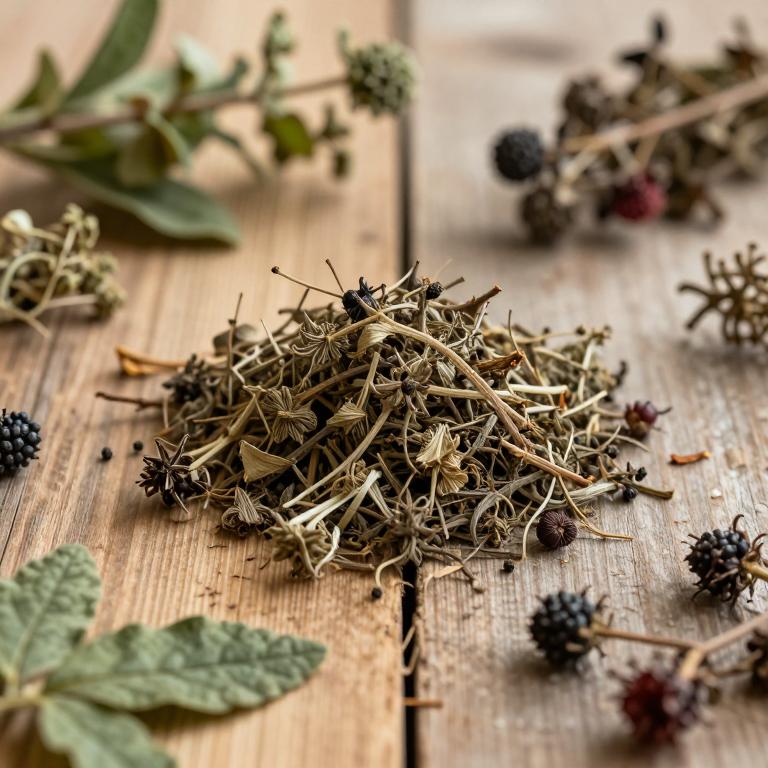
- Synonyms
- Dyctisperma Rigidus
- Common names
- Not available
- Family
- Rosaceae
- Distribution
- Not available
- Plant Parts
- Not available
Classification
Common Names
Rubus rigidus is a versatile shrub known by a wide variety of regional names. It is frequently referred to as the African Bramble or the White Bramble due to its distinct physical characteristics. In many local areas, people also call it the Wild Bramble or simply the Witbraam. Some communities even use the colloquial term gato to identify this thorny plant. This diversity of nomenclature highlights the plant's deep integration into various cultural landscapes.
Sources: Catalogue of Life (COL)
Synonyms
Rubus rigidus is a botanical species that is also recognized by its formal synonym, Dyctisperma rigidus. While these two names may appear different, they both refer to the exact same plant within scientific classification. Understanding these nomenclatural connections is essential for researchers tracking the species across various botanical databases. This synonymy ensures that botanical data remains consistent even when different naming conventions are employed. Consequently, identifying both terms allows for a more accurate study of the plant's natural history.
Sources: The World Checklist of Vascular Plants (WCVP)
Taxonomy
Rubus rigidus is a fascinating member of the kingdom Plantae that showcases the incredible diversity of the natural world. As a representative of the class Equisetopsida, this plant belongs to the diverse order Rosales. It is further classified within the well-known family Rosaceae, a group famous for its many ornamental and edible species. Within this botanical framework, the plant is identified under the genus Rubus. Understanding these specific taxonomic relationships helps botanists better categorize and study its unique characteristics.
| Rank | Classification |
|---|---|
| Kingdom | Plantae |
| Phylum | Streptophyta |
| Class | Equisetopsida |
| Subclass | Magnoliidae |
| Order | Rosales |
| Family | Rosaceae |
| Genus | Rubus |
Sources: The World Checklist of Vascular Plants (WCVP)
Distribution
Geographic Regions
Rubus rigidus is a resilient species with a broad distribution spanning across various regions of the African continent. Within East Tropical Africa, this plant can be found growing in the diverse landscapes of Kenya, Tanzania, and Uganda. Its presence also extends into the southern reaches of the continent, covering significant areas of South Tropical Africa. Specifically, populations are well-established within the borders of both Angola and Malawi. This wide geographical range highlights the plant's ability to adapt to multiple tropical environments.
Sources: The World Checklist of Vascular Plants (WCVP)
Identification
Morphology
Rubus rigidus is a distinctive shrub characterized by its obligatory climbing habit. This vigorous plant uses its structure to scale surrounding vegetation, reaching impressive proportions as it matures. Depending on the environment, its height typically ranges from a minimum of 0.5 m to a maximum of 3.5 m. In many established settings, the species frequently achieves a more substantial stature with a minimum height of 2.75 m. Such growth patterns make it a dynamic component of its natural ecosystem.
Sources: Global Inventory of Floras and Traits (GIFT)
Biological Activities
Rubus rigidus has demonstrated significant potential in pharmacological studies regarding its biological activity. During toxicity evaluations of traditional medicines in Tanzania, extracts of this plant were found to exhibit moderate toxicity levels. Notably, the dichloromethane extracts of the species showed results closely comparable to the standard drug cyclophosphamide. This specific level of toxicity suggests that the plant may harbor unique chemical properties. Consequently, researchers believe there is a remote possibility that Rubus rigidus could yield active anticancer compounds.
Compounds
Conditions
Rubus rigidus exhibits significant biological activity by inhibiting the enzymes HIV1-reverse transcriptase (HIV1-RT) and TK p56(lck). In toxicity studies involving brine shrimp, its ethanol extracts have been categorized as mildly toxic with an LC50 of 41.7 microg/ml. Additionally, the dichloromethane extracts of this plant are classified as moderately toxic, showing an LC50 of 19.8 microg/ml. These varying levels of toxicity suggest that while the plant is active, its different extracts present distinct safety profiles. Overall, the medicinal properties of Rubus rigidus encompass both specific enzyme inhibition and measurable toxicity levels.
Preparations
Rubus rigidus is prepared as dichloromethane extracts, which were found to be moderately toxic in brine shrimp assays. The plant is also prepared as ethanol extracts that are categorized as mildly toxic. Additionally, Rubus rigidus is prepared as a methanolic extract used for biological activity testing. This specific methanolic preparation was shown to inhibit the activity of both HIV1-reverse transcriptase and the enzyme TK p56(lck). Together, these different extraction methods highlight the varying toxicological and enzymatic inhibitory properties of the species.