Molucca bramble
Rubus moluccanus · Accepted scientific name
Scientific literature: Very Sparse (9 studies) · ★☆☆☆☆
Molucca bramble, scientifically known as Rubus moluccanus, is a versatile medicinal shrub native to tropical regions. Renowned for its antioxidant-rich berries, it is traditionally used to support digestive health and reduce inflammation. This potent plant offers significant therapeutic potential, bridging ancient herbal wisdom with modern pharmacological interest.
- Family
- Rosaceae
- Native range
- Asia-Tropical
- Parts used
- Not available
- Common names
- Wild Raspberry · Broad-Leaf Bramble · 3 more
- Scientific synonyms
- Not available
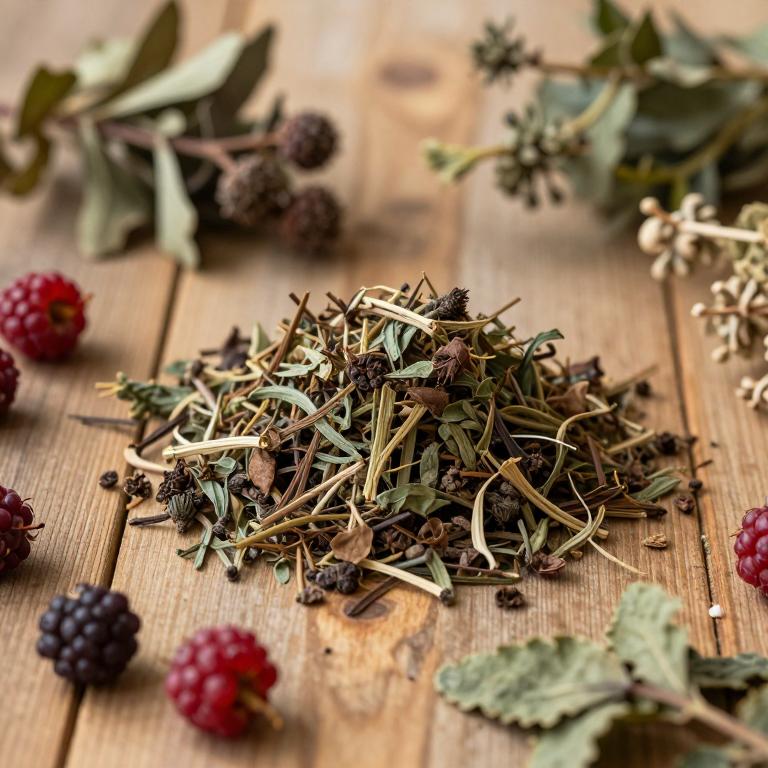
Names and Synonyms
Common Names
- wild raspberry
- Broad-leaf Bramble
- Common Queensland Bramble
- Molucca Bramble
- wild blackberry
Scientific Names
Accepted name
Rubus moluccanusSources: Wikidata, Catalogue of Life
Taxonomical Classification
This plant belongs to the kingdom Plantae and is classified under the phylum Streptophyta and the class Equisetopsida. Within the subclass Magnoliidae, it is organized under the order Rosales and the family Rosaceae. Finally, it is identified by its specific genus, Rubus.
| Rank | Classification |
|---|---|
| Kingdom | Plantae |
| Phylum | Streptophyta |
| Class | Equisetopsida |
| Subclass | Magnoliidae |
| Order | Rosales |
| Family | Rosaceae |
| Genus | Rubus |
Sources: The World Checklist of Vascular Plants (WCVP)
Distribution
This plant exhibits a broad presence across various regions within the Indian Subcontinent. Its natural range includes the specific mountainous terrain of the East Himalaya and the West Himalaya. Furthermore, it can be found growing in the lush landscapes of Assam. The species also extends its reach to encompass much of India. Finally, its geographical distribution reaches as far south as Sri Lanka.
| Region | Area |
|---|---|
| Indian Subcontinent | Assam |
| Indian Subcontinent | East Himalaya |
| Indian Subcontinent | India |
| Indian Subcontinent | Sri Lanka |
| Indian Subcontinent | West Himalaya |
| Indo-China | Laos |
| Indo-China | Myanmar |
| Indo-China | Thailand |
| Indo-China | Vietnam |
| Malesia | Borneo |
Sources: The World Checklist of Vascular Plants (WCVP)
Botanical Identification
Ecology
The ecology of Rubus moluccanus is characterized by its preference for colonizing disturbed environments, specifically thriving within dense secondary shrublands and ruderal vegetation. As a pioneer species, it excels in habitats where natural or anthropogenic disturbances have cleared existing canopy cover, allowing it to exploit increased light availability. By establishing itself in these ruderal zones, the plant plays a significant role in the early stages of ecological succession, often forming thickets that contribute to the structural complexity of the developing plant community. Its ability to flourish in such transitional and high-light environments allows it to effectively compete with other opportunistic species in rapidly changing landscapes.
- Habitat :
- dense secondary shrub and ruderal vegetation
Life history
The life history of Rubus moluccanus is characterized by its status as a perennial species, allowing it to persist in its environment over many growing seasons through repeated cycles of growth and dormancy. As a deciduous plant, it undergoes a seasonal transformation where it sheds its foliage annually, typically in response to changing environmental conditions or cooler temperatures, entering a period of rest before regenerating new leaves and stems in the subsequent growing season.
- Deciduousness :
- deciduous
- Lifecycle :
- perennial
Morphology
The morphology of Rubus moluccanus is characterized by a woody growth form, primarily manifesting as a shrub. This terrestrial species exhibits a substantial stature, reaching an average plant height of approximately 6 meters. In terms of its climbing habit, the plant is classified as an obligatory climber, although it maintains a self-supporting structural capability. As a terrestrial organism, it does not function as an epiphyte or a parasite, instead maintaining an independent life cycle.
- Aquatic :
- terrestrial
- Climber :
- self-supporting
- Climber :
- obligatory
- Epiphyte :
- terrestrial
- Growth form :
- shrub
- Parasite :
- independent
- Plant height mean:
- 6 m
- Woodiness :
- woody
Physiology
The physiology of Rubus moluccanus is characterized by a C3 photosynthetic pathway, which dictates its metabolic processes and carbon fixation efficiency. The plant's vegetative development is supported by leaves that exhibit significant morphological variability, with leaf lengths ranging from a minimum of 2 cm to a maximum of 15 cm. Correspondingly, the leaf width fluctuates between a minimum of 3 cm and a maximum of 10 cm, providing a diverse surface area for light interception. Furthermore, the plant does not function as a nitrogen fixer, meaning it relies on the uptake of available nitrogen from the soil rather than through symbiotic biological nitrogen fixation.
- Leaf length max:
- 15 cm
- Leaf length min:
- 2 cm
- Leaf width max:
- 10 cm
- Leaf width min:
- 3 cm
- Nitrogen fixer :
- no
- Photosynthetic pathway :
- C3
Reproduction
The reproduction of Rubus moluccanus is characterized by a biotic pollination syndrome, relying primarily on insect vectors to facilitate the transfer of pollen. This insect-mediated process is a critical component of its reproductive cycle, ensuring genetic diversity through targeted biological interactions. Following successful pollination, the plant produces seeds that exhibit highly uniform physical properties. The seed mass is remarkably consistent, with a mean, minimum, and maximum value all recorded at 0.00085 g, indicating a very narrow range of variation in individual seed weight. This precise seed mass and the dependence on biotic pollinators underscore the specific ecological requirements necessary for the successful propagation of this species.
- Pollination syndrome :
- insect
- Pollination syndrome :
- biotic
- Seed mass mean:
- 0.00085 g
Sources: Global Inventory of Floras and Traits (GIFT)
Chemicals
Rubus moluccanus has 2 reported phytochemicals identified across 0 scientific publications and several other databases. The most consistently reported chemicals include Flavonoids, Terpenes.
| Chemical | Supporting sources | Consensus |
|---|---|---|
| Flavonoids | 1 supporting sources | ★☆☆☆☆ |
| Terpenes | 1 supporting sources | ★☆☆☆☆ |
Flavonoids
- Natural product research
Terpenes
- Natural product research
Activities
Rubus moluccanus has 4 reported activities identified across 0 scientific publications and several other databases. The most consistently reported activities include Antibacterial, Antifungal, Antihelminthic, Antioxidant.
| Activity | Supporting sources | Consensus |
|---|---|---|
| Antibacterial | 1 supporting sources | ★☆☆☆☆ |
| Antifungal | 1 supporting sources | ★☆☆☆☆ |
| Antihelminthic | 1 supporting sources | ★☆☆☆☆ |
| Antioxidant | 1 supporting sources | ★☆☆☆☆ |
Antibacterial
- Natural product research
Antifungal
- Natural product research
Antihelminthic
- Natural product research
Antioxidant
- Natural product research
Conditions
Rubus moluccanus has 3 reported investigations on conditions identified across 0 scientific publications and several other databases. The most consistently reported conditions include abdominal pain, dysentery, headache.
| Condition | Supporting sources | Consensus |
|---|---|---|
| Abdominal pain | 1 supporting sources | ★☆☆☆☆ |
| Dysentery | 1 supporting sources | ★☆☆☆☆ |
| Headache | 1 supporting sources | ★☆☆☆☆ |
Abdominal pain
- Natural product research
Dysentery
- Natural product research
Headache
- Natural product research