Common Bramble
Rubus apetalus · Accepted scientific name
Scientific literature: Very Sparse (7 studies) · ★☆☆☆☆
Common Bramble, scientifically known as Rubus apetalus, is a versatile deciduous shrub celebrated for its nutritious berries. Beyond its culinary appeal, this plant holds significant ethnobotanical value. Traditionally used in herbal medicine, its leaves and fruits are valued for their antioxidant properties, supporting digestive health and reducing systemic inflammation.
- Family
- Rosaceae
- Native range
- Africa
- Parts used
- Leaf
- Common names
- Common Bramble · Sombre Bramble
- Scientific synonyms
- Rubus Borbonicus · Dyctisperma Apetalus · 1 more
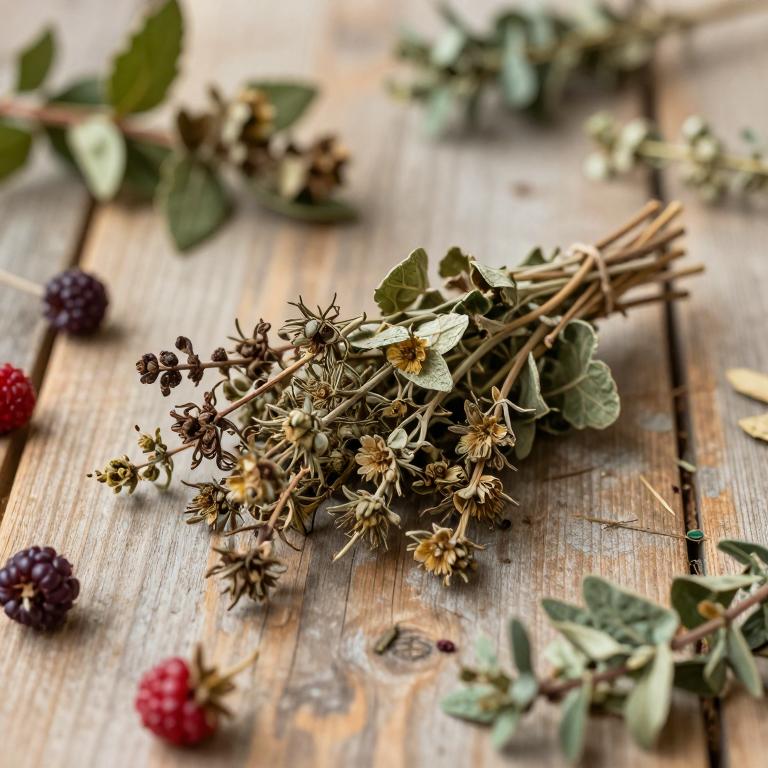
Names and Synonyms
Common Names
- Common Bramble
- Sombre Bramble
Scientific Names
Accepted name
Rubus apetalusSynonyms
- Rubus borbonicus
- Dyctisperma apetalus
- Rubus borbonicus f. pyramidalis
Sources: Wikidata, Catalogue of Life
Taxonomical Classification
This plant belongs to the kingdom Plantae and is classified under the phylum Streptophyta within the class Equisetopsida. Further taxonomic progression places it in the subclass Magnoliidae and the order Rosales, specifically within the family Rosaceae. Finally, it is identified under the genus Rubus, where its species designation is Rubus apetalus.
| Rank | Classification |
|---|---|
| Kingdom | Plantae |
| Phylum | Streptophyta |
| Class | Equisetopsida |
| Subclass | Magnoliidae |
| Order | Rosales |
| Family | Rosaceae |
| Genus | Rubus |
Sources: The World Checklist of Vascular Plants (WCVP)
Distribution
This plant, known scientifically as Rubus apetalus, exhibits a very specific and limited geographical range. Its presence is primarily documented within the unique ecosystems of the Western Indian Ocean. Specifically, the species can be found growing on the island of Réunion. This localized distribution suggests that the plant may be adapted to the particular climatic conditions of this volcanic island. Consequently, its natural habitat is confined to this relatively small maritime region.
| Region | Area |
|---|---|
| Western Indian Ocean | Réunion |
Sources: The World Checklist of Vascular Plants (WCVP)
Botanical Identification
Ecology
The ecology of Rubus apetalus is characterized by its broad adaptability to varying topographical gradients, allowing it to colonize a diverse range of habitats. This species exhibits a significant altitudinal plasticity, establishing itself in environments ranging from lowland areas starting at just 3 m AMSL to much higher montane regions. Its vertical distribution extends up to a maximum elevation of 1730 m AMSL, demonstrating a capacity to thrive across diverse climatic zones and temperature regimes within this elevational breadth.
- Elevational range max:
- 1730 m AMSL
- Elevational range min:
- 3 m AMSL
Life history
The life history of Rubus apetalus is characterized by its status as a perennial plant, allowing it to persist through multiple growing seasons and establish long-term presence in its habitat. Structurally, it is classified as a phanerophyte, specifically exhibiting traits consistent with both phanerophyte and nanophanerophyte life forms, which indicates that its regenerative buds are located on aerial shoots well above the soil surface. This growth strategy enables the species to navigate seasonal environmental shifts by maintaining its structural integrity and reproductive potential through its perennial lifecycle.
- Life form :
- phanerophyte
- Lifecycle :
- perennial
Morphology
The morphology of Rubus apetalus is characterized by a woody growth form, primarily functioning as a shrub. It exhibits a climbing habit, specifically classified as a liana, and acts as an obligatory climber to support its structure. The plant is a terrestrial species and maintains an independent existence, functioning as a non-parasite and non-epiphyte. In terms of stature, its height is variable, with a minimum height of 0.5 m, a maximum height of 2 m, and a mean plant height of approximately 2.5 m.
- Aquatic :
- terrestrial
- Climber :
- liana
- Climber :
- obligatory
- Epiphyte :
- terrestrial
- Growth form :
- shrub
- Parasite :
- independent
- Plant height max:
- 2 m
- Plant height mean:
- 2.5 m
- Plant height min:
- 0.5 m
- Woodiness :
- woody
Physiology
The physiology of Rubus apetalus is characterized by a C3 photosynthetic pathway, a metabolic process typical of most temperate woody shrubs where carbon dioxide fixation occurs via the Calvin cycle during the light-independent reactions. This pathway dictates the plant's water-use efficiency and its reliance on specific environmental conditions, such as moderate temperatures and adequate moisture, to optimize sugar production. Furthermore, Rubus apetalus is not a nitrogen fixer; it lacks the specialized symbiotic relationship with nitrogen-fixing bacteria, such as Rhizobium, required to convert atmospheric nitrogen into bioavailable forms. Consequently, the plant relies on the uptake of nitrates and ammonium directly from the soil through its root system to meet its nutritional requirements for growth and development.
- Nitrogen fixer :
- no
- Photosynthetic pathway :
- C3
Reproduction
The reproduction of Rubus apetalus is characterized by a complex interplay of biotic interactions involving specialized pollination and dispersal mechanisms. Pollination is primarily biotic, driven specifically by insects, which ensures the successful fertilization of the flowers. Once fertilization occurs, the plant produces fleshy fruits, a trait that facilitates its dispersal strategy. The dispersal syndrome is categorized as zoochorous, specifically utilizing endozoochory, where animals consume the fruit and disperse the seeds internally. The seeds themselves are quite small, with a mean mass of 0.00212 g (ranging from a minimum of 0.00166 g to a maximum of 0.00327 g) and a consistent seed volume of 2.4 mm³.
- Dispersal syndrome :
- zoochorous
- Dispersal syndrome :
- endozoochorous
- Fruit dryness :
- fleshy
- Pollination syndrome :
- insect
- Pollination syndrome :
- biotic
- Seed mass max:
- 0.00327 g
- Seed mass mean:
- 0.00212 g
- Seed mass min:
- 0.00166 g
- Seed volume max:
- 2.4 mm³
Sources: Global Inventory of Floras and Traits (GIFT)
Plant Parts
Rubus apetalus has 1 reported plant parts identified across 1 scientific publications and several other databases that are studied for medicinal purposes. The most consistently reported plant part include leaf.
| Plant part | Supporting sources | Consensus |
|---|---|---|
| Leaf | 1 supporting sources | ★☆☆☆☆ |
Leaf
- Zeitschrift fur Naturforschung. C, Journal of biosciences
Chemicals
Rubus apetalus has 4 reported phytochemicals identified across 1 scientific publications and several other databases. The most consistently reported chemicals include Astragalin, Palmityl alcohol, Tiliroside, palmitic acid.
| Chemical | Supporting sources | Consensus |
|---|---|---|
| Astragalin | 1 supporting sources | ★☆☆☆☆ |
| Palmityl alcohol | 1 supporting sources | ★☆☆☆☆ |
| Tiliroside | 1 supporting sources | ★☆☆☆☆ |
| palmitic acid | 1 supporting sources | ★☆☆☆☆ |
Astragalin
- Zeitschrift fur Naturforschung. C, Journal of biosciences
Palmityl alcohol
- Zeitschrift fur Naturforschung. C, Journal of biosciences
Tiliroside
- Zeitschrift fur Naturforschung. C, Journal of biosciences
palmitic acid
- Zeitschrift fur Naturforschung. C, Journal of biosciences
Activities
Rubus apetalus has 1 reported activities identified across 1 scientific publications and several other databases. The most consistently reported activities include Antibacterial.
| Activity | Supporting sources | Consensus |
|---|---|---|
| Antibacterial | 1 supporting sources | ★☆☆☆☆ |
Antibacterial
- Zeitschrift fur Naturforschung. C, Journal of biosciences
Conditions
Rubus apetalus has 1 reported investigations on conditions identified across 1 scientific publications and several other databases. The most consistently reported conditions include bacterial diseases.
| Condition | Supporting sources | Consensus |
|---|---|---|
| Bacterial diseases | 1 supporting sources | ★☆☆☆☆ |
Bacterial diseases
- Zeitschrift fur Naturforschung. C, Journal of biosciences
Preparations
Rubus apetalus has 1 reported preparations identified across 1 scientific publications and several other databases. The most consistently reported preparations include leaves extract.
| Preparation | Supporting sources | Consensus |
|---|---|---|
| Leaves extract | 1 supporting sources | ★☆☆☆☆ |
Leaves extract
- Zeitschrift fur Naturforschung. C, Journal of biosciences