Rostellularia diffusa
Rostellularia diffusa · Accepted scientific name
Scientific literature: Very Sparse (3 studies) · ★☆☆☆☆
, scientifically known as Rostellularia diffusa, is a resilient medicinal herb valued for its diverse therapeutic properties. Often found in tropical regions, this plant is traditionally utilized to treat various ailments, including skin irritations and digestive issues. Its unique phytochemical profile makes it a significant subject for botanical research.
- Family
- Acanthaceae
- Native range
- Africa
- Parts used
- Not available
- Common names
- Not available
- Scientific synonyms
- Justicia Diffusa · Justicia Linarifolia · 19 more
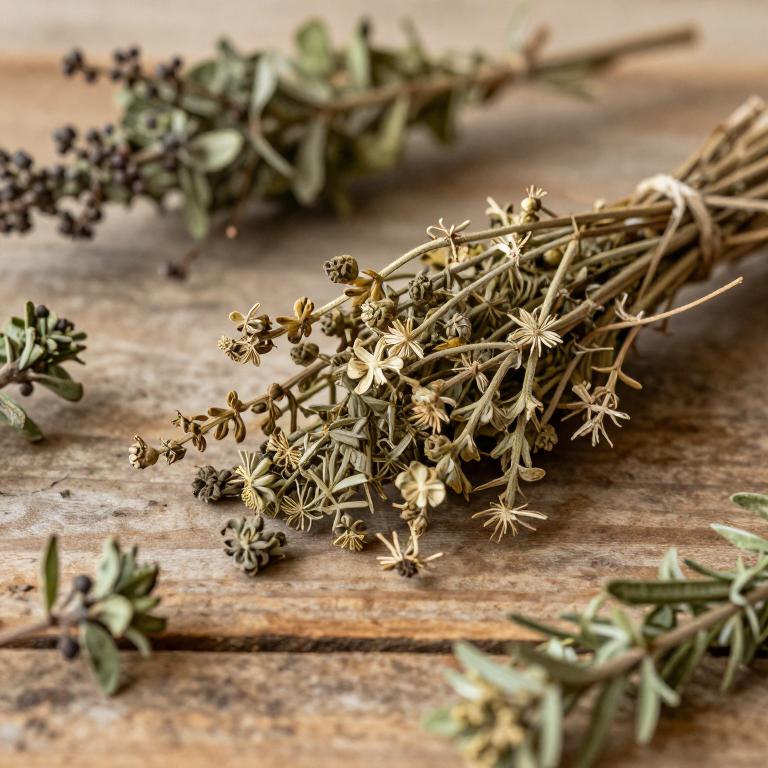
Names and Synonyms
Scientific Names
Accepted name
Rostellularia diffusaSynonyms
- Justicia diffusa
- Justicia linarifolia
- Justicia orbiculata
- Ziziphora siliquosa
- Rostellularia hedyotidifolia
- Justicia gambleana
- Rostellularia diffusa var. hedyotidifolia
- Rostellularia diffusa var. rotundifolia
- Rostellularia diffusa var. orbiculata
- Rostellularia pumila
- Ecbolium diffusum
- Rostellularia rotundifolia
- Justicia hedyotidifolia
- Rostellularia ramosissima
- Justicia diffusa var. orbiculata
- Justicia diffusa var. hedyotidifolia
- Rostellularia abyssinica
- Rostellaria rotundifolia
- Rostellaria diffusa
- Rostellaria hedyotidifolia
- Barleria pumila
Sources: Wikidata
Taxonomical Classification
This plant belongs to the kingdom Plantae and the phylum Streptophyta within the class Equisetopsida. It is classified under the subclass Magnoliidae and the order Lamiales, specifically falling into the family Acanthaceae. Finally, it is identified by the genus Rostellularia and the species name diffusa.
| Rank | Classification |
|---|---|
| Kingdom | Plantae |
| Phylum | Streptophyta |
| Class | Equisetopsida |
| Subclass | Magnoliidae |
| Order | Lamiales |
| Family | Acanthaceae |
| Genus | Rostellularia |
Sources: The World Checklist of Vascular Plants (WCVP)
Distribution
This plant exhibits a diverse geographical distribution spanning across several distinct regions. In Northeast Tropical Africa, its presence is documented in both Eritrea and Ethiopia. The species also extends into the Arabian Peninsula, specifically within the country of Oman. Moving toward East Asia, it can be found throughout various parts of China. Specifically, its range includes the South-Central and Southeast regions of the Chinese landscape.
| Region | Area |
|---|---|
| Northeast Tropical Africa | Eritrea |
| Northeast Tropical Africa | Ethiopia |
| Arabian Peninsula | Oman |
| China | China South-Central |
| China | China Southeast |
| Eastern Asia | Taiwan |
| Indian Subcontinent | Bangladesh |
| Indian Subcontinent | India |
| Indian Subcontinent | Nepal |
| Indian Subcontinent | Pakistan |
Sources: The World Checklist of Vascular Plants (WCVP)
Botanical Identification
Life history
The life history of Rostellularia diffusa is characterized by its status as a perennial plant, allowing it to persist through multiple growing seasons rather than completing its cycle in a single year. As a perennial species, it possesses the biological capacity to survive beyond the initial flowering period, often establishing robust root systems that facilitate long-term survival and regrowth. This life cycle enables the plant to adapt to its environment by potentially spreading vegetatively or through seed production over several years, contributing to its stability within its ecological niche.
- Lifecycle :
- perennial
Morphology
The morphology of Rostellularia diffusa is characterized by its growth form as a non-woody herb and forb. As a non-woody plant, it lacks permanent woody tissue, maintaining a soft, herbaceous structure throughout its life cycle. In terms of its habit, the species is a self-supporting plant rather than a climber, meaning it possesses the structural integrity to grow upright without the need for external support. Its ecological distribution and habitat adaptability are reflected in its ability to exist across various moisture gradients, ranging from terrestrial to semiaquatic environments. Furthermore, Rostellularia diffusa functions as an independent organism, exhibiting no parasitic behavior toward other plants.
- Aquatic :
- terrestrial
- Climber :
- self-supporting
- Growth form :
- herb
- Parasite :
- independent
- Woodiness :
- non-woody
Sources: Global Inventory of Floras and Traits (GIFT)
Activities
Rostellularia diffusa has 2 reported activities identified across 0 scientific publications and several other databases. The most consistently reported activities include Adaptogenic, Antioxidant.
| Activity | Supporting sources | Consensus |
|---|---|---|
| Adaptogenic | 1 supporting sources | ★☆☆☆☆ |
| Antioxidant | 1 supporting sources | ★☆☆☆☆ |
Adaptogenic
- Pharmacognosy magazine
Antioxidant
- Pharmacognosy magazine
Conditions
Rostellularia diffusa has 1 reported investigations on conditions identified across 0 scientific publications and several other databases. The most consistently reported conditions include oxidative stress.
| Condition | Supporting sources | Consensus |
|---|---|---|
| Oxidative stress | 1 supporting sources | ★☆☆☆☆ |
Oxidative stress
- Pharmacognosy magazine