Ronabea emetica
Ronabea emetica · Accepted scientific name
Scientific literature: Very Sparse (9 studies) · ★☆☆☆☆
, scientifically known as Ronabea emeetica, is a medicinal plant prized in traditional herbalism for its potent therapeutic properties. Primarily recognized for its emetic and purgative qualities, this species is utilized to treat digestive ailments. Understanding its biological characteristics is essential for exploring its significant role in natural pharmacology.
- Family
- Rubiaceae
- Native range
- Southern America
- Parts used
- Leaf · Rhizome
- Common names
- Not available
- Scientific synonyms
- Cephaelis Emetica · Evea Emetica · 2 more
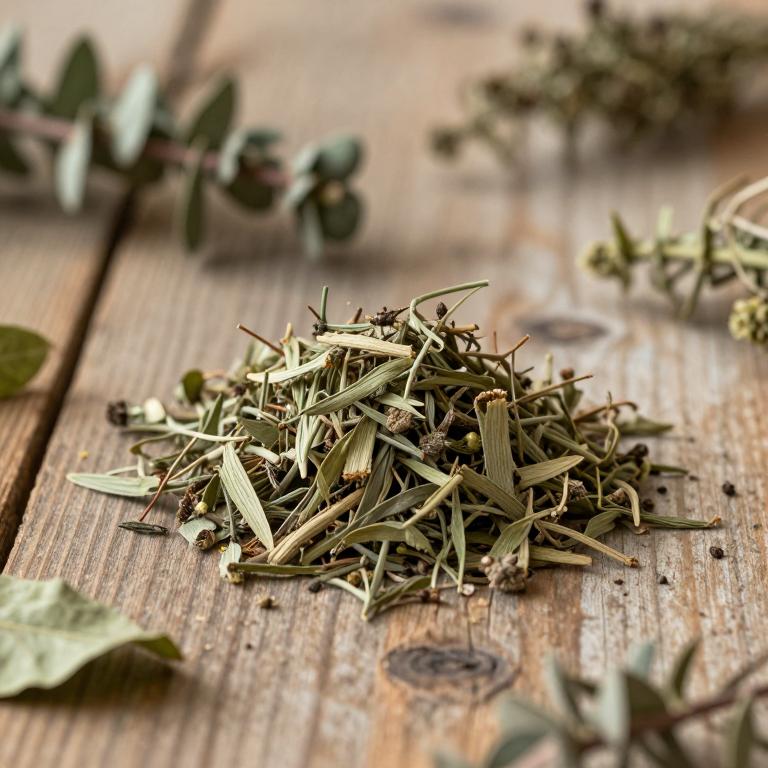
Names and Synonyms
Scientific Names
Accepted name
Ronabea emeticaSynonyms
- Cephaelis emetica
- Evea emetica
- Uragoga emetica
- Psychotria emetica
Regional and Traditional Names
French:
- Psychotria emetica
Sources: Wikidata
Taxonomical Classification
This plant belongs to the kingdom Plantae and the phylum Streptophyta. Within the class Equisetopsida and subclass Magnoliidae, it is classified under the order Gentianaales and the family Rubiaceae. Finally, it is identified by its specific genus, Ronabea, and its species name, emetica.
| Rank | Classification |
|---|---|
| Kingdom | Plantae |
| Phylum | Streptophyta |
| Class | Equisetopsida |
| Subclass | Magnoliidae |
| Order | Gentianales |
| Family | Rubiaceae |
| Genus | Ronabea |
Sources: The World Checklist of Vascular Plants (WCVP)
Distribution
This plant exhibits a specific distribution across several regions in the tropical Americas. Within Central America, its presence is documented in Costa Rica and Honduras. It is also found throughout the neighboring countries of Nicaragua and Panamá. Moving toward the continent of South America, its range extends into the northern territory of Venezuela. Consequently, the geographical footprint of Ronabernea emetica spans both Central and Northern South America.
| Region | Area |
|---|---|
| Central America | Costa Rica |
| Central America | Honduras |
| Central America | Nicaragua |
| Central America | Panamá |
| Northern South America | Venezuela |
| Western South America | Bolivia |
| Western South America | Colombia |
| Western South America | Ecuador |
| Western South America | Peru |
Sources: The World Checklist of Vascular Plants (WCVP)
Botanical Identification
Ecology
The ecology of Ronabea emetica is characterized by its preference for specific tropical forest environments, specifically thriving within Floresta de Terra Firme and Floresta Ombrófila (also known as Floresta Pluvial). These habitats provide the necessary moisture and stable conditions typical of rainforest ecosystems. In terms of altitudinal distribution, the species occupies a broad vertical gradient, ranging from sea level (0 m AMSL) up to a maximum elevation of 1000 m AMSL.
- Elevational range max:
- 1000 m AMSL
- Elevational range min:
- 0 m AMSL
- Habitat :
- Floresta de Terra Firme, Floresta Ombrófila (= Floresta Pluvial)
Life history
The life history of Rauvolfia emetica is characterized by its status as a perennial plant, allowing it to persist in its environment over multiple growing seasons. It exhibits a chamaephyte life form, typically maintaining its reproductive structures close to the ground level or slightly above it. Additionally, the plant is evergreen, retaining its foliage throughout the year rather than undergoing a seasonal shedding process.
- Deciduousness :
- evergreen
- Life form :
- chamaephyte
- Lifecycle :
- perennial
Morphology
The morphology of Ronabea emeetica is characterized by a woody structure, manifesting primarily as a subshrub or shrub growth form. This plant typically reaches an average height of 0.5 m and is categorized as a self-supporting organism, lacking the climbing mechanisms of vines or lianas. It is a terrestrial species, neither aquatic nor epiphytic, functioning as an independent organism without parasitic tendencies.
- Aquatic :
- terrestrial
- Climber :
- self-supporting
- Epiphyte :
- terrestrial
- Growth form :
- shrub
- Growth form :
- subshrub
- Parasite :
- independent
- Plant height mean:
- 0.5 m
- Woodiness :
- woody
Physiology
The physiology of Rauvolfia emetica is characterized by complex metabolic pathways primarily focused on the biosynthesis of indole alkaloids within its specialized cellular structures. The plant utilizes a sophisticated secondary metabolism to produce bioactive compounds, such as ajmaline and reserpine, which are synthesized through the decarboxylation of tryptophan followed by a series of enzymatic transformations. These metabolic processes are supported by robust photosynthetic mechanisms and efficient nutrient uptake systems to sustain the energetic costs of alkaloid production. Regarding its nutrient cycling capabilities, the species is not a nitrogen fixer; it lacks the specialized symbiotic relationships with diazotrophic bacteria, such as Rhizobium, required to convert atmospheric nitrogen into usable forms. Consequently, its physiological nitrogen acquisition is entirely dependent on the uptake of nitrates and ammonium from the soil via its root system.
- Nitrogen fixer :
- no
Sources: Global Inventory of Floras and Traits (GIFT)
Plant Parts
Ronabea emetica has 2 reported plant parts identified across 2 scientific publications and several other databases that are studied for medicinal purposes. The most consistently reported plant part include leaf, rhizome.
| Plant part | Supporting sources | Consensus |
|---|---|---|
| Leaf | 1 supporting sources | ★☆☆☆☆ |
| Rhizome | 1 supporting sources | ★☆☆☆☆ |
Leaf
- Journal of ethnopharmacology
Rhizome
- Journal of ethnopharmacology
Chemicals
Ronabea emetica has 3 reported phytochemicals identified across 2 scientific publications and several other databases. The most consistently reported chemicals include Asperuloside, Asperulosidic acid, Deacetylasperulosidic acid.
| Chemical | Supporting sources | Consensus |
|---|---|---|
| Asperuloside | 1 supporting sources | ★☆☆☆☆ |
| Asperulosidic acid | 1 supporting sources | ★☆☆☆☆ |
| Deacetylasperulosidic acid | 1 supporting sources | ★☆☆☆☆ |
Asperuloside
- Journal of ethnopharmacology
Asperulosidic acid
- Journal of ethnopharmacology
Deacetylasperulosidic acid
- Journal of ethnopharmacology
Activities
Ronabea emetica has 1 reported activities identified across 2 scientific publications and several other databases. The most consistently reported activities include Emetic.
| Activity | Supporting sources | Consensus |
|---|---|---|
| Emetic | 1 supporting sources | ★☆☆☆☆ |
Emetic
- Journal of ethnopharmacology
Conditions
Ronabea emetica has 1 reported investigations on conditions identified across 2 scientific publications and several other databases. The most consistently reported conditions include emetic.
| Condition | Supporting sources | Consensus |
|---|---|---|
| Emetic | 1 supporting sources | ★☆☆☆☆ |
Emetic
- Journal of ethnopharmacology
Preparations
Ronabea emetica has 2 reported preparations identified across 2 scientific publications and several other databases. The most consistently reported preparations include leaves, rhizomes.
| Preparation | Supporting sources | Consensus |
|---|---|---|
| Leaves | 1 supporting sources | ★☆☆☆☆ |
| Rhizomes | 1 supporting sources | ★☆☆☆☆ |
Leaves
- Journal of ethnopharmacology
Rhizomes
- Journal of ethnopharmacology