Rolandra fruticosa
Rolandra fruticosa · Accepted scientific name
Scientific literature: Very Sparse (5 studies) · ★☆☆☆☆
Rolandra fruticosa, scientifically known as Rolandra fruticosa, is a versatile medicinal shrub celebrated in traditional healing practices. Renowned for its potent bioactive compounds, this plant offers significant therapeutic benefits, including anti-inflammatory and antimicrobial properties. Its unique botanical profile makes it a vital subject for modern pharmacological research and wellness.
- Family
- Asteraceae
- Native range
- Asia-Temperate
- Parts used
- Leaf
- Common names
- Not available
- Scientific synonyms
- Echinops Nodiflorus · Echinops Fruticosus · 3 more
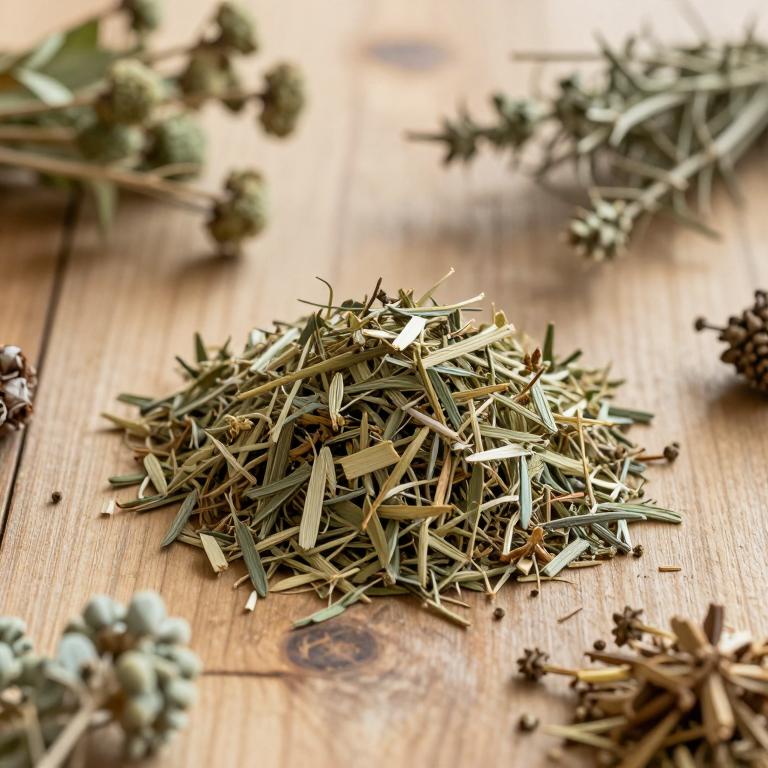
Names and Synonyms
Scientific Names
Accepted name
Rolandra fruticosaSynonyms
- Echinops nodiflorus
- Echinops fruticosus
- Rolandra diacantha
- Rolandra monacantha
- Rolandra argentea
Sources: Wikidata, Catalogue of Life
Taxonomical Classification
This plant belongs to the kingdom Plantae and the phylum Streptophyta within the class Equisetopsida. Classified under the subclass Magnoliidae and the order Asterales, it is a member of the Asteraceae family. It is specifically identified by the genus Rolandra.
| Rank | Classification |
|---|---|
| Kingdom | Plantae |
| Phylum | Streptophyta |
| Class | Equisetopsida |
| Subclass | Magnoliidae |
| Order | Asterales |
| Family | Asteraceae |
| Genus | Rolandra |
Sources: The World Checklist of Vascular Plants (WCVP)
Distribution
This plant exhibits a diverse geographical distribution that spans across several distinct regions of the world. In Eastern Asia, its presence is specifically noted within the country of Japan. Moving toward the Malesian region, it can be found growing on the island of Jawa. Its reach extends into Central America, where it inhabits both Costa Rica and Honduras. Additionally, the species is documented within the Central American Pacific Islands.
| Region | Area |
|---|---|
| Eastern Asia | Japan |
| Malesia | Jawa |
| Central America | Costa Rica |
| Central America | Central American Pacific Is. |
| Central America | Honduras |
| Central America | Nicaragua |
| Central America | Panamá |
| Caribbean | Dominican Republic |
| Caribbean | Leeward Is. |
| Caribbean | Puerto Rico |
Sources: The World Checklist of Vascular Plants (WCVP)
Botanical Identification
Ecology
The ecology of Rolandra fruticosa is characterized by its adaptation to specific low-lying wetland and coastal environments, primarily inhabiting Floresta de Igapó and Restinga ecosystems. It thrives within a broad altitudinal gradient, ranging from sea level up to an elevation of 1000 m AMSL. This distribution allows the species to occupy diverse niches, from the seasonally flooded blackwater forests to the sandy, coastal scrublands typical of restinga formations.
- Elevational range max:
- 1000 m AMSL
- Elevational range min:
- 0 m AMSL
- Habitat :
- Floresta de Igapó, Restinga
Life history
The life history of Rolandra fruticosa is characterized by its status as a perennial species, meaning it maintains its vegetative structures and remains living for multiple years rather than completing its cycle in a single growing season. Throughout its lifespan, the plant undergoes various stages of development, establishing a persistent root system that supports sustained growth and seasonal fluctuations. As a perennial, it possesses the capacity for continuous or cyclical regeneration, allowing it to endure through different environmental conditions and reproductive phases over an extended period.
- Lifecycle :
- perennial
Morphology
The morphology of Rolandra fruticosa is characterized by its distinct growth form and structural habits. It is a woody shrub that exhibits a self-supporting growth pattern, functioning as a non-climbing, independent organism rather than a liana, vine, or climber. As an independent species, it does not exhibit parasitic behavior, nor does it function as an epiphyte; instead, it maintains a strictly terrestrial existence, avoiding aquatic, semiaquatic, or epiphytic life cycles. Its structural integrity is defined by its woody nature, which supports its development as a perennial shrub within its terrestrial habitat.
- Aquatic :
- terrestrial
- Climber :
- self-supporting
- Epiphyte :
- terrestrial
- Growth form :
- herb
- Growth form :
- shrub
- Parasite :
- independent
- Woodiness :
- woody
Reproduction
Reproduction in Rauvolfia fruticosa is characterized by a diverse range of dispersal mechanisms that ensure the distribution of its offspring across various habitats. The plant exhibits multiple dispersal syndromes, primarily functioning through zoochorous methods where animals assist in the movement of seeds. However, its reproductive strategy is quite versatile, encompassing anemochorous, autochorous, and hydrochorous processes as well. This multifaceted approach includes unspecialized dispersal patterns, allowing the species to utilize wind, water, self-ejection, and animal vectors to effectively colonize new environments.
- Dispersal syndrome :
- zoochorous
Sources: Global Inventory of Floras and Traits (GIFT)
Plant Parts
Rolandra fruticosa has 1 reported plant parts identified across 1 scientific publications and several other databases that are studied for medicinal purposes. The most consistently reported plant part include leaf.
| Plant part | Supporting sources | Consensus |
|---|---|---|
| Leaf | 1 supporting sources | ★☆☆☆☆ |
Leaf
- Phytochemistry
Chemicals
Rolandra fruticosa has 1 reported phytochemicals identified across 1 scientific publications and several other databases. The most consistently reported chemicals include Isorolandrolide.
| Chemical | Supporting sources | Consensus |
|---|---|---|
| Isorolandrolide | 1 supporting sources | ★☆☆☆☆ |
Isorolandrolide
- Phytochemistry
Activities
Rolandra fruticosa has 1 reported activities identified across 1 scientific publications and several other databases. The most consistently reported activities include Cytotoxic.
| Activity | Supporting sources | Consensus |
|---|---|---|
| Cytotoxic | 1 supporting sources | ★☆☆☆☆ |
Cytotoxic
- Phytochemistry
Preparations
Rolandra fruticosa has 1 reported preparations identified across 1 scientific publications and several other databases. The most consistently reported preparations include methanol extract of the leaves and twigs.
| Preparation | Supporting sources | Consensus |
|---|---|---|
| Methanol extract of the leaves and twigs | 1 supporting sources | ★☆☆☆☆ |
Methanol extract of the leaves and twigs
- Phytochemistry