Rhynchosia pyramidalis
Rhynchosia pyramidalis · Accepted scientific name
Scientific literature: Sparse (74 studies) · ★★☆☆☆
, scientifically known as Rhynchosia pyramidalis, is a fascinating medicinal plant belonging to the Fabaceae family. Often found in tropical regions, it is traditionally valued for its unique bioactive properties. This study explores its botanical characteristics, therapeutic potential, and the traditional healing practices associated with its various medicinal applications.
- Family
- Not available
- Native range
- Northern America
- Parts used
- Not available
- Common names
- Not available
- Scientific synonyms
- Not available
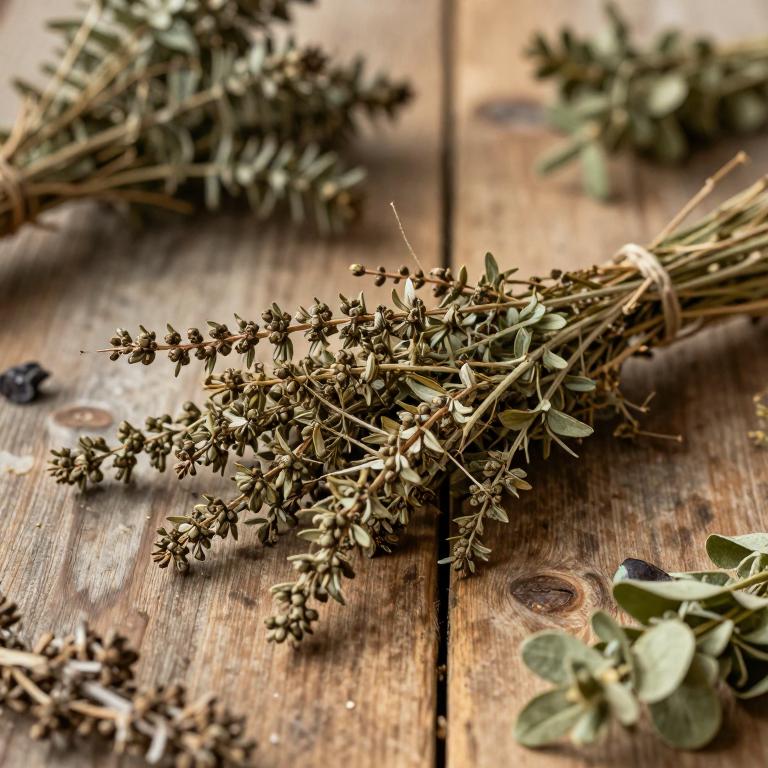
Names and Synonyms
Scientific Names
Accepted name
Rhynchosia pyramidalisDistribution
This plant exhibits a wide-ranging presence across various regions within the country of Mexico. Its distribution encompasses the central territories, covering much of the Mexico Central area. Additionally, it can be found extending into the Mexico Northeast and Mexico Gulf regions. The species is also documented throughout the Mexico Northwest, demonstrating significant ecological flexibility. Finally, its geographical reach concludes with its occurrence in the Mexico Southwest.
| Region | Area |
|---|---|
| Mexico | Mexico Central |
| Mexico | Mexico Northeast |
| Mexico | Mexico Gulf |
| Mexico | Mexico Northwest |
| Mexico | Mexico Southwest |
| Mexico | Mexico Southeast |
| Central America | Belize |
| Central America | El Salvador |
| Central America | Guatemala |
| Central America | Honduras |
Sources: The World Checklist of Vascular Plants (WCVP)
Botanical Identification
Ecology
The ecology of Rhynchosia pyramidalis is characterized by its ability to inhabit a broad altitudinal spectrum, allowing it to colonize diverse topographical landscapes. This species can be found across a significant vertical gradient, ranging from sea level (0 m AMSL) up to a maximum elevation of 1550 m AMSL. This expansive elevational range suggests a high degree of adaptability to varying climatic conditions, temperature fluctuations, and atmospheric pressures encountered between coastal lowlands and montane environments. Such ecological plasticity enables the plant to establish itself in a variety of habitats within this altitude window, likely interacting with diverse soil compositions and moisture regimes found throughout these different elevations.
- Elevational range max:
- 1550 m AMSL
- Elevational range min:
- 0 m AMSL
Morphology
The morphology of Rhynchosia pyramidalis is characterized by a woody structure and a growth form classified as a herb. It functions as an independent organism rather than a parasite, maintaining a terrestrial existence across its habitat. While it lacks aquatic or semiaquatic tendencies, its physical architecture is defined by a liana habit, acting as an obligatory climber that requires external support to ascend. It does not exhibit epiphytic characteristics, remaining strictly terrestrial in its ecological positioning.
- Aquatic :
- terrestrial
- Climber :
- liana
- Climber :
- obligatory
- Epiphyte :
- terrestrial
- Growth form :
- herb
- Parasite :
- independent
- Woodiness :
- woody
Physiology
The physiology of Rhynchosia pyramidalis is characterized by its utilization of the C3 photosynthetic pathway, which dictates its metabolic processes and carbon fixation mechanisms. In this pathway, the initial fixation of atmospheric carbon dioxide is catalyzed by the enzyme ribulose-1,5-bisphosphate carboxylase/oxygenase (RuBisCO), leading to the direct production of three-carbon molecules such as 3-phosphoglycerate. This biochemical strategy implies that the plant's energy conversion efficiency and gas exchange rates are closely tied to environmental variables, particularly temperature and moisture availability, as the C3 process is susceptible to photorespiration under high-temperature or water-limiting conditions. Consequently, its physiological performance and biomass accumulation are governed by the efficiency of these C3 metabolic cycles within the leaf tissues.
- Photosynthetic pathway :
- C3
Reproduction
The reproduction of Rhynchosia pyramidalis is characterized by a diverse range of dispersal syndromes, encompassing anemochorous, zoochorous, autochorous, hydrochorous, and unspecialized methods. Among these strategies, the zoochorous syndrome plays a significant role in the movement of its seeds. The seeds produced by this species exhibit specific mass variations, with a recorded minimum seed mass of 0.05595 g and a maximum seed mass of 0.095 g. On average, the seed mass is approximately 0.07371 g, reflecting a consistent biological investment in the progeny required for successful colonization and survival.
- Dispersal syndrome :
- zoochorous
- Seed mass max:
- 0.095 g
- Seed mass mean:
- 0.07371 g
- Seed mass min:
- 0.05595 g
Sources: Global Inventory of Floras and Traits (GIFT)
Chemicals
Rhynchosia pyramidalis has 2 reported phytochemicals identified across 0 scientific publications and several other databases. The most consistently reported chemicals include genistein, hydroxygenistein.
| Chemical | Supporting sources | Consensus |
|---|---|---|
| genistein | 1 supporting sources | ★☆☆☆☆ |
| hydroxygenistein | 1 supporting sources | ★☆☆☆☆ |
genistein
- Dr. Duke
hydroxygenistein
- Dr. Duke
Activities
Rhynchosia pyramidalis has 72 reported activities identified across 0 scientific publications and several other databases. The most consistently reported activities include Abortifacient, Aldose-Reductase-Inhibitor, Alpha-Reductase-Inhibitor, Antiaggregant, Antiangiogenic.
| Activity | Supporting sources | Consensus |
|---|---|---|
| Abortifacient | 1 supporting sources | ★☆☆☆☆ |
| Aldose-Reductase-Inhibitor | 1 supporting sources | ★☆☆☆☆ |
| Alpha-Reductase-Inhibitor | 1 supporting sources | ★☆☆☆☆ |
| Antiaggregant | 1 supporting sources | ★☆☆☆☆ |
| Antiangiogenic | 1 supporting sources | ★☆☆☆☆ |
| Antiatherosclerotic | 1 supporting sources | ★☆☆☆☆ |
| Anticancer (Breast) | 1 supporting sources | ★☆☆☆☆ |
| Anticarcinomic (Breast) | 1 supporting sources | ★☆☆☆☆ |
| Anticlimacteric | 1 supporting sources | ★☆☆☆☆ |
| Antiendoccytotic | 1 supporting sources | ★☆☆☆☆ |
Abortifacient
- Dr. Duke
Aldose-Reductase-Inhibitor
- Dr. Duke
Alpha-Reductase-Inhibitor
- Dr. Duke
Antiaggregant
- Dr. Duke
Antiangiogenic
- Dr. Duke
Antiatherosclerotic
- Dr. Duke
Anticancer (Breast)
- Dr. Duke
Anticarcinomic (Breast)
- Dr. Duke
Anticlimacteric
- Dr. Duke
Antiendoccytotic
- Dr. Duke