rosary snoutbean
Rhynchosia precatoria · Accepted scientific name
Scientific literature: Very Sparse (5 studies) · ★☆☆☆☆
rosary snoutbean, scientifically known as Rhynchosia precatoria, is a creeping legume widely distributed across tropical Asia. Renowned for its medicinal properties, this plant is utilized in traditional systems to treat various ailments, including skin diseases and inflammatory conditions. Its unique botanical characteristics make it a significant subject in ethnopharmacology.
- Family
- Fabaceae
- Native range
- Northern America
- Parts used
- Not available
- Common names
- Rosary Snoutbean
- Scientific synonyms
- Glycine Precatoria · Dolicholus Precatorius · 3 more
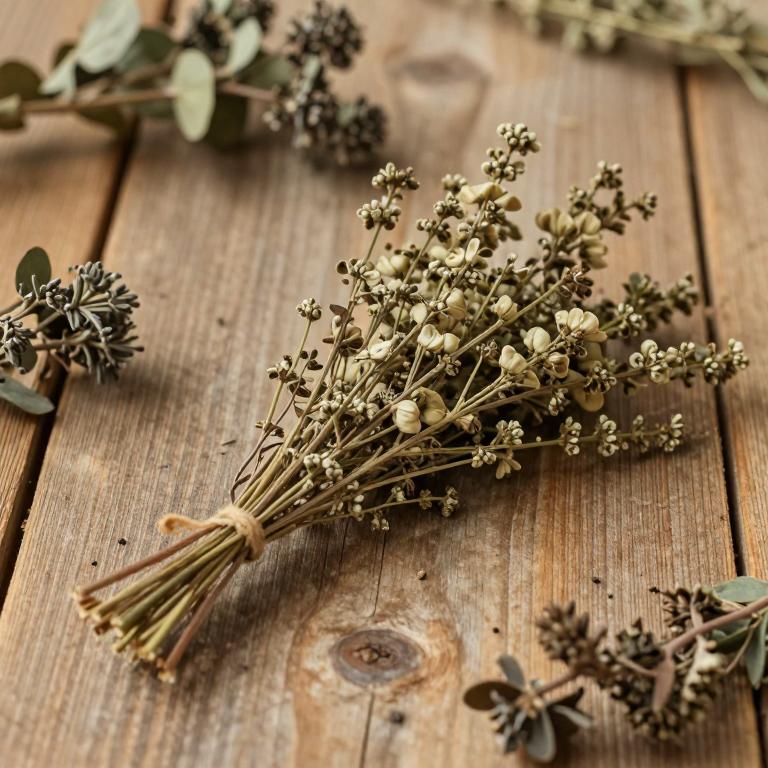
Names and Synonyms
Common Names
- rosary snoutbean
Scientific Names
Accepted name
Rhynchosia precatoriaSynonyms
- Glycine precatoria
- Dolicholus precatorius
- Indigofera volubilis
- Dolicholus vailiae
- Rhynchosia bicolor
Regional and Traditional Names
Spanish:
- Ojo de pajarito
- Ojos de cangrejo
Sources: Wikidata, Catalogue of Life
Taxonomical Classification
This plant belongs to the kingdom Plantae and is classified under the phylum Streptophyta and the class Equisetopsida. Within the subclass Magnoliidae, it is ordered under Fabales and specifically placed in the family Fabaceae. It is ultimately identified by the genus Rhynchosia.
| Rank | Classification |
|---|---|
| Kingdom | Plantae |
| Phylum | Streptophyta |
| Class | Equisetopsida |
| Subclass | Magnoliidae |
| Order | Fabales |
| Family | Fabaceae |
| Genus | Rhynchosia |
Sources: The World Checklist of Vascular Plants (WCVP)
Distribution
This plant exhibits a diverse range of habitats across North America. In the Southwestern United States, its presence is noted specifically in Arizona. Moving toward the Southeastern United States, it can be found growing in Florida. Within Mexico, its distribution covers several distinct regions including the central and northeastern areas. Additionally, the species extends its reach into the coastal regions of the Mexico Gulf.
| Region | Area |
|---|---|
| Southwestern U.S.A. | Arizona |
| Southeastern U.S.A. | Florida |
| Mexico | Mexico Central |
| Mexico | Mexico Northeast |
| Mexico | Mexico Gulf |
| Mexico | Mexico Northwest |
| Mexico | Mexico Southwest |
| Mexico | Mexico Southeast |
| Central America | Belize |
| Central America | Costa Rica |
Sources: The World Checklist of Vascular Plants (WCVP)
Botanical Identification
Ecology
The ecology of Rhynchosia precatoria is characterized by its ability to inhabit diverse landscapes across a significant altitudinal gradient, ranging from sea level up to a maximum elevation of 1000 m AMSL. This broad elevational range suggests a high degree of adaptability to varying atmospheric pressures and temperature fluctuations found between 0 and 1000 m AMSL. Typically found in tropical and subtropical environments, the species thrives in habitats where it can navigate different ecological niches within these lowland to mid-elevation zones. Its distribution within this specific altitudinal window implies that it is well-suited to the moisture levels and soil compositions characteristic of these specific topographical strata.
- Elevational range max:
- 1000 m AMSL
- Elevational range min:
- 0 m AMSL
Life history
The life history of Rhynchosia precatoria is characterized by its status as a perennial species, though its growth patterns can exhibit variability across different environmental conditions. As a long-lived plant, it maintains a continuous presence in its habitat, often establishing itself through a robust root system that supports its survival through multiple growing seasons. Its developmental cycle involves a transition from initial germination to a sustained vegetative phase, eventually leading to reproductive stages where it produces flowers and seeds to ensure the continuation of its lineage. This perennial nature allows the plant to endure seasonal fluctuations, potentially behaving with the characteristics of an annual or biennial depending on the stability of its ecological niche and the availability of resources.
- Lifecycle :
- perennial
Morphology
The morphology of Rhynchosia precatoria is characterized by its growth habit as a non-woody herb, specifically classified as a forb. It functions as an obligatory climber, adopting a vine or liana growth form to ascend through its environment. This plant is strictly terrestrial in nature, lacking any epiphytic tendencies such as being a holoepiphyte or hemiepiphyte, and it maintains an independent lifestyle without behaving as a parasite. Its physical structure is defined by this herbaceous, climbing architecture, which allows it to navigate terrestrial habitats through its vine-like extension.
- Aquatic :
- terrestrial
- Climber :
- vine
- Climber :
- obligatory
- Epiphyte :
- terrestrial
- Growth form :
- herb
- Growth form :
- forb
- Parasite :
- independent
- Woodiness :
- non-woody
Sources: Global Inventory of Floras and Traits (GIFT)
Chemicals
Rhynchosia precatoria has 3 reported phytochemicals identified across 0 scientific publications and several other databases. The most consistently reported chemicals include CAJANONE, lupinifolin, lupinifolinol.
| Chemical | Supporting sources | Consensus |
|---|---|---|
| CAJANONE | 1 supporting sources | ★☆☆☆☆ |
| lupinifolin | 1 supporting sources | ★☆☆☆☆ |
| lupinifolinol | 1 supporting sources | ★☆☆☆☆ |
CAJANONE
- Journal of ethnopharmacology
lupinifolin
- Journal of ethnopharmacology
lupinifolinol
- Journal of ethnopharmacology
Conditions
Rhynchosia precatoria has 2 reported investigations on conditions identified across 0 scientific publications and several other databases. The most consistently reported conditions include respiratory diseases, tuberculosis.
| Condition | Supporting sources | Consensus |
|---|---|---|
| Respiratory diseases | 1 supporting sources | ★☆☆☆☆ |
| Tuberculosis | 1 supporting sources | ★☆☆☆☆ |
Respiratory diseases
- Journal of ethnopharmacology
Tuberculosis
- Journal of ethnopharmacology