Jumby Bean
Rhynchosia minima · Accepted scientific name
Scientific literature: Extensive (186 studies) · ★★★★☆
Jumby Bean, scientifically known as Rhynchosia minima, is a small, creeping legume native to tropical regions. Renowned for its striking, eye-like seeds, this plant holds significant traditional value. In various cultures, it is utilized for its medicinal properties, particularly in treating skin ailments and supporting overall wellness through herbal applications.
- Family
- Fabaceae
- Native range
- Africa
- Parts used
- Root
- Common names
- Jumby Bean · Least Snout Bean · 4 more
- Scientific synonyms
- Dolicholus Minimus · Dolichos Minimus
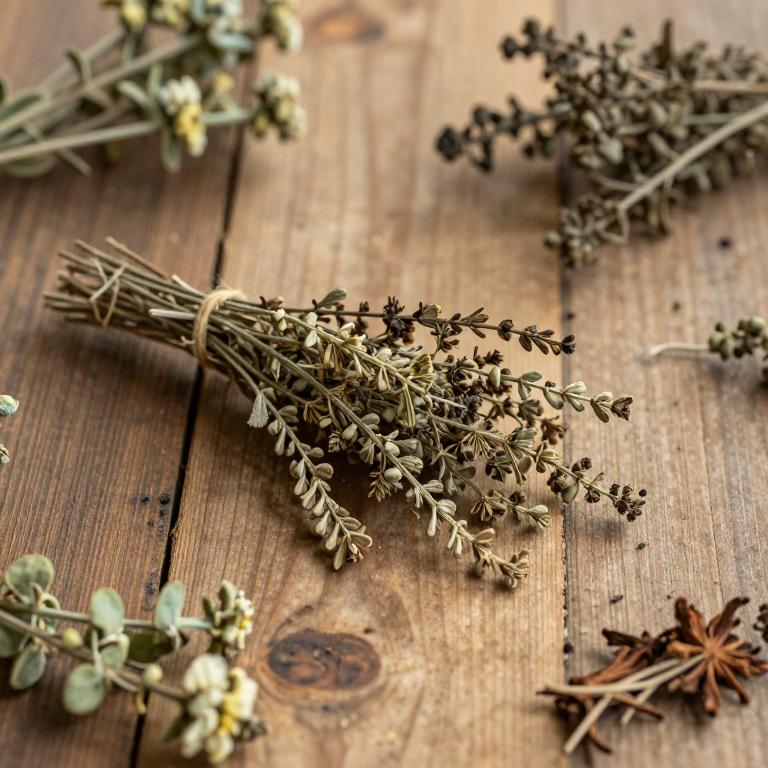
Names and Synonyms
Common Names
- Jumby Bean
- Least Snout Bean
- burn-mouth-vine
- jumby-bean
- least snout-bean
- Burn Mouth Vine
Scientific Names
Accepted name
Rhynchosia minimaSynonyms
- Dolicholus minimus
- Dolichos minimus
Regional and Traditional Names
Spanish:
- Frijolillo
French:
- Rhynchosia memnonia
Sources: Wikidata, Catalogue of Life
Taxonomical Classification
This plant belongs to the kingdom Plantae and is classified under the phylum Streptophyta within the class Equisetopsida. Further taxonomic placement includes its position in the subclass Magnoliidae and the order Fabales. Finally, it is a member of the family Fabaceae and is identified by the genus Rhynchosia.
| Rank | Classification |
|---|---|
| Kingdom | Plantae |
| Phylum | Streptophyta |
| Class | Equisetopsida |
| Subclass | Magnoliidae |
| Order | Fabales |
| Family | Fabaceae |
| Genus | Rhynchosia |
Sources: The World Checklist of Vascular Plants (WCVP)
Distribution
This plant exhibits a diverse geographical distribution spanning several distinct regions. In Northern Africa, it can be found across the territories of Algeria, Egypt, and Morocco. Its presence extends to the Macaronesian islands, specifically within Cape Verde. Additionally, the species is located in West Tropical Africa, notably in Benin. Together, these locations highlight the plant's ability to inhabit varied environments across the African continent.
| Region | Area |
|---|---|
| Northern Africa | Algeria |
| Northern Africa | Egypt |
| Northern Africa | Morocco |
| Macaronesia | Cape Verde |
| West Tropical Africa | Benin |
| West Tropical Africa | Burkina |
| West Tropical Africa | Ghana |
| West Tropical Africa | Ivory Coast |
| West Tropical Africa | Liberia |
| West Tropical Africa | Mali |
Sources: The World Checklist of Vascular Plants (WCVP)
Botanical Identification
Ecology
The ecology of Rhynchosia minima is characterized by its remarkable adaptability across a diverse array of ecosystems and a broad altitudinal gradient. This species inhabits a wide range of environments, ranging from anthropogenic areas (Área Antrópica) to highly specialized natural biomes including the Caatinga (strictu sensu), Cerrado (lato sensu), and Restinga. Its presence is also noted in various forest types, such as seasonal deciduous forests (Floresta Estacional Decidual), riparian or gallery forests (Floresta Ciliar ou Galeria), and ombrophilous/rainforests (Floresta Ombrófila), as well as in floodplain grasslands (Campo de Várzea). Spatially, the plant demonstrates significant topographical flexibility, occurring at elevations starting from sea level (0 m AMSL) up to a maximum height of 2440 m AMSL.
- Elevational range max:
- 2440 m AMSL
- Elevational range min:
- 0 m AMSL
- Habitat :
- Área Antrópica, Caatinga (stricto sensu), Campo de Várzea, Cerrado (lato sensu), Floresta Ciliar ou Galeria, Floresta Estacional Decidual, Floresta Ombrófila (= Floresta Pluvial), Restinga
Genetics
The genetics of Rhynchosia minima are characterized by a specific chromosomal configuration that defines its reproductive and cellular stability. The species possesses a chromosome number of 22, which serves as a fundamental cytogenetic marker for the taxon. Furthermore, its genetic makeup is defined by a diploid ploidy level of 2, indicating that the organism maintains two complete sets of chromosomes within its somatic cells.
- Chromosome number :
- 22
- Ploidy :
- 2
Life history
The life history of Rhynchosia minima is characterized by a variable lifecycle that can manifest as an annual, biennial, or perennial plant, allowing it to adapt to diverse environmental conditions. In terms of its structural growth and survival strategy, the species is classified as a chamaephyte, a life form where the majority of the vegetation is located close to the soil surface, often with buds situated just above the ground level. This chamaphyte habit enables the plant to endure different seasonal shifts while maintaining its reproductive potential throughout its varying developmental stages.
- Life form :
- chamaephyte
- Lifecycle :
- perennial
Morphology
The morphology of Rhynchosia minima is characterized by its growth form as a non-woody herb and forb. This plant functions as an independent organism, neither acting as a parasite nor as an epiphyte, as it maintains a strictly terrestrial existence. Regarding its structural habit, it is classified as an obligatory vine, exhibiting a prostrate shoot orientation. The plant's physical stature is variable, with a minimum height of 0 m and a maximum potential reach of 3 m, though it maintains a mean plant height of approximately 0.65 m.
- Aquatic :
- terrestrial
- Climber :
- vine
- Climber :
- obligatory
- Epiphyte :
- terrestrial
- Growth form :
- herb
- Growth form :
- forb
- Parasite :
- independent
- Plant height max:
- 3 m
- Plant height mean:
- 0.65 m
- Plant height min:
- 0 m
- Shoot orientation :
- prostrate
- Woodiness :
- non-woody
Physiology
The physiology of Rhynchosia minima is characterized by a C3 photosynthetic pathway, which dictates its carbon fixation processes and metabolic efficiency under typical environmental conditions. The vegetative structure displays significant morphological variability in its foliage, with leaf dimensions ranging from a minimum length of 0.8 cm to a maximum length of 6 cm. Correspondingly, the leaf width fluctuates between a minimum of 0.8 cm and a maximum of 5 cm, reflecting a dynamic leaf morphology that supports its overall physiological functions and resource acquisition strategies.
- Leaf length max:
- 6 cm
- Leaf length min:
- 0.8 cm
- Leaf width max:
- 5 cm
- Leaf width min:
- 0.8 cm
- Photosynthetic pathway :
- C3
Reproduction
The reproduction of Rhynchosia minima is characterized by a specific flowering period that typically commences in March and concludes in April. During this stage, the plant produces brown-colored flowers arranged in inflorescences that vary in length from a minimum of 0.02 m to a maximum of 0.15 m. Following pollination, the plant develops dry, pod-type fruits that are dehiscient in nature. These pods exhibit dimensions ranging from 0.6 cm to 3.5 cm in length and 0.3 cm to 0.5 cm in width. Each fruit contains a relatively small number of seeds, specifically between 1 and 10 seeds per pod. The seeds themselves are small, with a length of 2.5 mm to 3 mm and a width of 2 mm to 2.5 mm, resulting in a seed volume of approximately 9.5 mm³. In terms of mass, the seeds are lightweight, with a mean mass of 0.0100239 g, ranging from a minimum of 0.00547 g to a maximum of 0.02005 g. The dispersal of these seeds is achieved through an autochorous (autochorous) syndrome, meaning the plant relies on its own mechanisms to disperse its progeny.
- Dehiscence :
- dehiscent
- Dispersal syndrome :
- autochorous
- Flower colour :
- brown
- Flowering time :
- Mar
- Flowering time :
- Apr
- Fruit dryness :
- dry
- Fruit length max:
- 3.5 cm
- Fruit length min:
- 0.6 cm
- Fruit type :
- pod
- Fruit width max:
- 0.5 cm
- Fruit width min:
- 0.3 cm
- Inflorescence length max:
- 0.15 m
- Inflorescence length min:
- 0.02 m
- Seed length max:
- 3 mm
- Seed length min:
- 2.5 mm
- Seed mass max:
- 0.02005 g
- Seed mass mean:
- 0.0100239 g
- Seed mass min:
- 0.00547 g
- Seed volume max:
- 9.5 mm³
- Seed width max:
- 2.5 mm
- Seed width min:
- 2 mm
- Seeds_per_fruit :
- 1-10
Sources: Global Inventory of Floras and Traits (GIFT)
Plant Parts
Rhynchosia minima has 1 reported plant parts identified across 1 scientific publications and several other databases that are studied for medicinal purposes. The most consistently reported plant part include root.
| Plant part | Supporting sources | Consensus |
|---|---|---|
| Root | 1 supporting sources | ★☆☆☆☆ |
Root
- Carbohydrate polymers
Chemicals
Rhynchosia minima has 16 reported phytochemicals identified across 1 scientific publications and several other databases. The most consistently reported chemicals include 6-C-Glucosyl-8-C-xylosylapigenin, 6-C-Glucosylapigenin, Ash, CALCIUM, Epigallocatechin.
| Chemical | Supporting sources | Consensus |
|---|---|---|
| 6-C-Glucosyl-8-C-xylosylapigenin | 1 supporting sources | ★☆☆☆☆ |
| 6-C-Glucosylapigenin | 1 supporting sources | ★☆☆☆☆ |
| Ash | 1 supporting sources | ★☆☆☆☆ |
| CALCIUM | 1 supporting sources | ★☆☆☆☆ |
| Epigallocatechin | 1 supporting sources | ★☆☆☆☆ |
| FAT | 1 supporting sources | ★☆☆☆☆ |
| Gallic acid | 1 supporting sources | ★☆☆☆☆ |
| Hydroquinone diacetate | 1 supporting sources | ★☆☆☆☆ |
| PHOSPHORUS | 1 supporting sources | ★☆☆☆☆ |
| Prodelphinidin | 1 supporting sources | ★☆☆☆☆ |
6-C-Glucosyl-8-C-xylosylapigenin
- Dr. Duke
6-C-Glucosylapigenin
- Dr. Duke
Ash
- Dr. Duke
CALCIUM
- Dr. Duke
Epigallocatechin
- Scientifica
FAT
- Dr. Duke
Gallic acid
- Dr. Duke
Hydroquinone diacetate
- Dr. Duke
PHOSPHORUS
- Dr. Duke
Prodelphinidin
- Dr. Duke
Activities
Rhynchosia minima has 168 reported activities identified across 1 scientific publications and several other databases. The most consistently reported activities include ACE-Inhibitor, Abortifacient, Aldose-Reductase-Inhibitor, Allergenic, Alpha-Glucosidase-Inhibitor.
| Activity | Supporting sources | Consensus |
|---|---|---|
| ACE-Inhibitor | 1 supporting sources | ★☆☆☆☆ |
| Abortifacient | 1 supporting sources | ★☆☆☆☆ |
| Aldose-Reductase-Inhibitor | 1 supporting sources | ★☆☆☆☆ |
| Allergenic | 1 supporting sources | ★☆☆☆☆ |
| Alpha-Glucosidase-Inhibitor | 1 supporting sources | ★☆☆☆☆ |
| Alpha-Reductase-Inhibitor | 1 supporting sources | ★☆☆☆☆ |
| Analgesic | 1 supporting sources | ★☆☆☆☆ |
| Angiotensin-Receptor-Blocker | 1 supporting sources | ★☆☆☆☆ |
| AntiHIV | 1 supporting sources | ★☆☆☆☆ |
| AntiLegionella | 1 supporting sources | ★☆☆☆☆ |
ACE-Inhibitor
- Dr. Duke
Abortifacient
- Dr. Duke
Aldose-Reductase-Inhibitor
- Dr. Duke
Allergenic
- Dr. Duke
Alpha-Glucosidase-Inhibitor
- Dr. Duke
Alpha-Reductase-Inhibitor
- Dr. Duke
Analgesic
- Dr. Duke
Angiotensin-Receptor-Blocker
- Dr. Duke
AntiHIV
- Dr. Duke
AntiLegionella
- Dr. Duke