Rhus taitensis
Rhus taitensis · Accepted scientific name
Scientific literature: Very Sparse (8 studies) · ★☆☆☆☆
Rhus taitensis, scientifically known as Rhus taitensis, is a versatile medicinal plant valued in traditional practices. Known for its unique bioactive compounds, it is frequently utilized to address inflammatory conditions and skin ailments. Understanding its botanical properties and therapeutic potential offers promising insights into natural pharmacology and holistic healing.
- Family
- Anacardiaceae
- Native range
- Asia-Tropical
- Parts used
- Leaf
- Common names
- Not available
- Scientific synonyms
- Toxicodendron Simarubifolia · Rhus Simarubifolia Var. Taitensis · 10 more
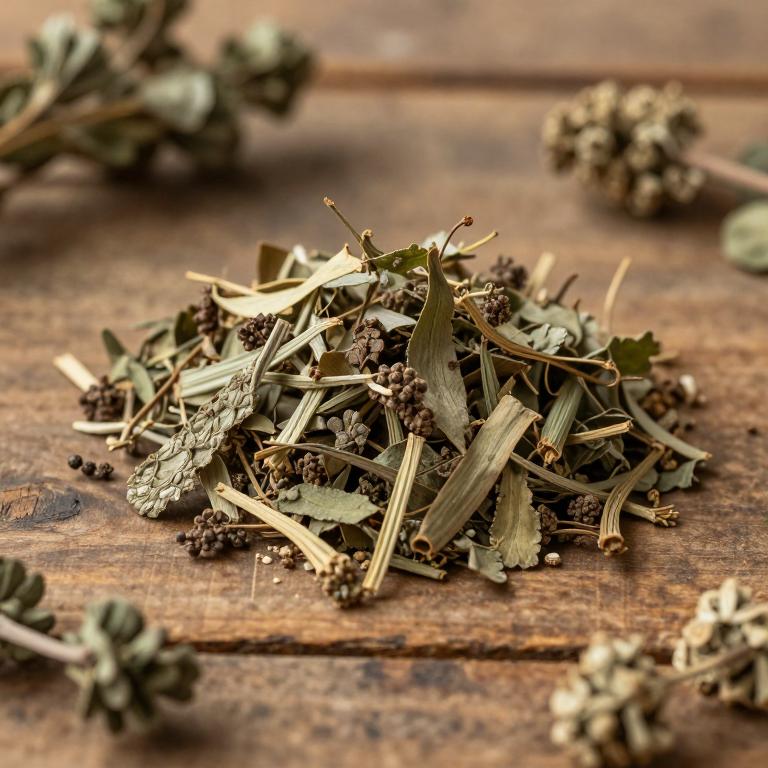
Names and Synonyms
Scientific Names
Accepted name
Rhus taitensisSynonyms
- Toxicodendron simarubifolia
- Rhus simarubifolia var. taitensis
- Duckera taitensis
- Rhus retusa var. blumei
- Melanococca tomentosa
- Otonychium retusum
- Rhus retusa
- Rhus simarubifolia
- Toxicodendron retusum
- Rhus engleriana
- Rhus panaciformis
- Rhus rufa
Regional and Traditional Names
French:
- apape
Sources: Wikidata
Taxonomical Classification
This plant belongs to the kingdom Plantae within the phylum Streptophyta and the class Equisetopsida. It is further classified under the subclass Magnoliidae and the order Sapindales, falling into the family Anacardiaceae. Finally, its taxonomic identity is defined by the genus Rhus.
| Rank | Classification |
|---|---|
| Kingdom | Plantae |
| Phylum | Streptophyta |
| Class | Equisetopsida |
| Subclass | Magnoliidae |
| Order | Sapindales |
| Family | Anacardiaceae |
| Genus | Rhus |
Sources: The World Checklist of Vascular Plants (WCVP)
Distribution
This plant is widely distributed across various regions within the Malesia botanical zone. Its presence is notably documented throughout the islands of Jawa and Sulawesi. Furthermore, it can be found spreading through the Lesser Sunda Islands. The species also extends its range to the Maluku archipelago. Finally, its geographical footprint reaches as far as the Philippines.
| Region | Area |
|---|---|
| Malesia | Jawa |
| Malesia | Lesser Sunda Is. |
| Malesia | Maluku |
| Malesia | Philippines |
| Malesia | Sulawesi |
| Papuasia | Bismarck Archipelago |
| Papuasia | New Guinea |
| Papuasia | Solomon Is. |
| Australia | Queensland |
| Southwestern Pacific | Fiji |
Sources: The World Checklist of Vascular Plants (WCVP)
Botanical Identification
Life history
The life history of Rhus taitensis is characterized by a perennial lifecycle, allowing the plant to persist in its habitat through multiple growing seasons. As a perennial species, it does not complete its biological development within a single year but instead establishes a long-term presence, often developing robust woody structures that support its survival over many years. This enduring nature enables the plant to navigate seasonal environmental fluctuations, repeatedly undergoing cycles of vegetative growth and reproductive phases. Through its extended lifespan, Rhus taitensis can establish stable populations within its ecological niche, contributing to the long-term continuity of its species.
- Lifecycle :
- perennial
Morphology
The morphology of Rhus taiintensis is characterized by a woody growth form that manifests primarily as a tree or shrub. This plant exhibits a significant stature, reaching an average plant height of approximately 25 m. In terms of its growth habit, it is a self-supporting species, functioning as neither an obligatory nor a facultative climber, but rather maintaining its own structural integrity. It is a terrestrial plant, lacking aquatic or semiaquatic tendencies, and functions as a terrestrial organism rather than an epiphyte.
- Aquatic :
- terrestrial
- Climber :
- self-supporting
- Epiphyte :
- terrestrial
- Growth form :
- tree
- Growth form :
- shrub
- Plant height mean:
- 25 m
- Woodiness :
- woody
Physiology
The physiology of Rhus taiintensis is characterized by a standard C3 photosynthetic pathway, which dictates its carbon fixation process and metabolic efficiency in typical temperate or subtropical environments. The plant does not exhibit succulence, meaning it lacks specialized thickened tissues for significant water storage, relying instead on regular moisture availability and standard transpiration regulation. Furthermore, Rhus taiintensis is not a nitrogen fixer, indicating that it does not form symbiotic relationships with nitrogen-fixing bacteria to convert atmospheric nitrogen into a usable form, and thus depends on soil nutrient availability for its nitrogen requirements.
- Nitrogen fixer :
- no
- Photosynthetic pathway :
- C3
- Succulence :
- no
Reproduction
The reproduction of Rhus taiintensis is characterized by specific biological mechanisms and physical traits that facilitate its life cycle. The plant does not engage in self-fertilization, as the trait is absent, suggesting a reliance on cross-pollination to maintain genetic diversity. Its dispersal strategy is primarily zoochorous, specifically utilizing endozoochory, where seeds are dispersed through the digestive tracts of animals. This reproductive process is supported by the development of fleshy fruits, which serve as an attractant for dispersal agents. The seeds themselves are uniform in size, with a consistent volume of 48 mm³, representing both the minimum and maximum recorded measurements as well as the mean volume for the species.
- Dispersal syndrome :
- zoochorous
- Dispersal syndrome :
- endozoochorous
- Fruit dryness :
- fleshy
- Seed volume max:
- 48 mm³
- Self fertilization :
- absent
Sources: Global Inventory of Floras and Traits (GIFT)
Plant Parts
Rhus taitensis has 1 reported plant parts identified across 2 scientific publications and several other databases that are studied for medicinal purposes. The most consistently reported plant part include leaf.
| Plant part | Supporting sources | Consensus |
|---|---|---|
| Leaf | 2 supporting sources | ★☆☆☆☆ |
Leaf
- Planta medica
- Journal of natural products
Chemicals
Rhus taitensis has 1 reported phytochemicals identified across 2 scientific publications and several other databases. The most consistently reported chemicals include Tetrahdroxysqualene.
| Chemical | Supporting sources | Consensus |
|---|---|---|
| Tetrahdroxysqualene | 1 supporting sources | ★☆☆☆☆ |
Tetrahdroxysqualene
- Journal of natural products
Conditions
Rhus taitensis has 2 reported investigations on conditions identified across 2 scientific publications and several other databases. The most consistently reported conditions include Mycobacterium tuberculosis, Tuberculosis.
| Condition | Supporting sources | Consensus |
|---|---|---|
| Mycobacterium tuberculosis | 1 supporting sources | ★☆☆☆☆ |
| Tuberculosis | 1 supporting sources | ★☆☆☆☆ |
Mycobacterium tuberculosis
- Journal of natural products
Tuberculosis
- Journal of natural products
Preparations
Rhus taitensis has 1 reported preparations identified across 2 scientific publications and several other databases. The most consistently reported preparations include methanolic extract of R. taitensis leaves and twigs.
| Preparation | Supporting sources | Consensus |
|---|---|---|
| Methanolic extract of r. taitensis leaves and twigs | 1 supporting sources | ★☆☆☆☆ |
Methanolic extract of r. taitensis leaves and twigs
- Journal of natural products