Common Forest Grape
Rhoicissus tridentata · Accepted scientific name
Scientific literature: Very Sparse (8 studies) · ★☆☆☆☆
Common Forest Grape, scientifically known as Rhoicissus tridentata, is a versatile evergreen shrub native to tropical regions. Renowned for its medicinal properties, it is traditionally used to treat inflammation and skin ailments. Its small, fleshy fruits and glossy foliage make it a significant botanical resource in holistic wellness practices.
- Family
- Vitaceae
- Native range
- Africa
- Parts used
- Leaf · Root
- Common names
- Common Forest Grape · Bushman Grape · 2 more
- Scientific synonyms
- Toxicodendron Tridentatum · Rhus Tridentata
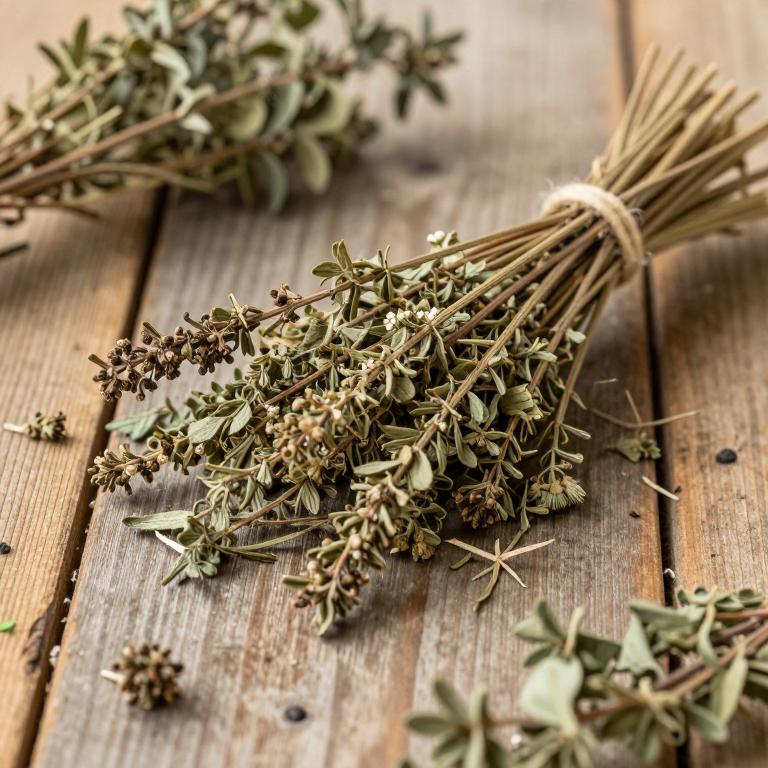
Names and Synonyms
Common Names
- Common Forest Grape
- Bushman Grape
- Bushman's grape
- Cape Bushman's Grape
Scientific Names
Accepted name
Rhoicissus tridentataSynonyms
- Toxicodendron tridentatum
- Rhus tridentata
Sources: Wikidata, Catalogue of Life
Taxonomical Classification
This plant belongs to the kingdom Plantae and the phylum Streptophyta, falling under the class Equisetopsida and subclass Magnoliidae. Within the order Vitales, it is classified under the family Vitaceae. Finally, it is identified by the genus Rhoicissus, specifically as the species Rhoicissus tridentata.
| Rank | Classification |
|---|---|
| Kingdom | Plantae |
| Phylum | Streptophyta |
| Class | Equisetopsida |
| Subclass | Magnoliidae |
| Order | Vitales |
| Family | Vitaceae |
| Genus | Rhoicissus |
Sources: The World Checklist of Vascular Plants (WCVP)
Distribution
This plant, Rh饰cisus tridentata, exhibits a specific geographical distribution across several regions of the African continent. In West Tropical Africa, it can be found growing in the Ivory Coast and Nigeria. Its presence extends into West-Central Tropical Africa as well. Within this central region, the species is documented in Cameroon. Additionally, its range reaches further east into Burundi and Rwanda.
| Region | Area |
|---|---|
| West Tropical Africa | Ivory Coast |
| West Tropical Africa | Nigeria |
| West-Central Tropical Africa | Burundi |
| West-Central Tropical Africa | Cameroon |
| West-Central Tropical Africa | Rwanda |
| West-Central Tropical Africa | DR Congo |
| Northeast Tropical Africa | Djibouti |
| Northeast Tropical Africa | Eritrea |
| Northeast Tropical Africa | Ethiopia |
| Northeast Tropical Africa | Sudan-South Sudan |
Sources: The World Checklist of Vascular Plants (WCVP)
Botanical Identification
Ecology
The ecology of Rhoicisus tridentata is characterized by a broad altitudinal distribution, allowing it to inhabit diverse montane and submontane landscapes. This species thrives across a significant vertical gradient, with its documented elevational range extending from a minimum of 60 m AMSL to a maximum of 1800 m AMSL. This wide range suggests an ability to adapt to varying temperature regimes, moisture levels, and atmospheric pressures found from lowland environments up to higher elevations. Such ecological flexibility enables the plant to occupy a variety of niche habitats within its geographic territory, playing a role in different forest strata and successional stages depending on the specific local environmental conditions.
- Elevational range max:
- 1800 m AMSL
- Elevational range min:
- 60 m AMSL
Life history
The life history of Rhoicissus tridentata is characterized by its status as a perennial plant, allowing it to persist across multiple growing seasons rather than completing its cycle within a single year. In terms of its structural growth habit and ecological positioning, the species is classified as a phanerophyte, specifically functioning as a phanerophyte in its developmental stage. This life form indicates that its perennially renewing buds are located high above the ground level, typically on woody stems or branches, which supports its long-term survival and structural complexity within its natural habitat.
- Life form :
- phanerophyte
- Lifecycle :
- perennial
Morphology
The morphology of Rhoxicissus tridentata is characterized by its woody structure and growth form, primarily manifesting as a shrub or shrubby liana. As an obligatory climber, this plant utilizes a liana growth habit to ascend, though it maintains a terrestrial existence rather than being aquatic, semiaquatic, or epiphytic. In terms of stature, the plant exhibits significant variability in height, ranging from a minimum of 0.5 m to a maximum of 1 m, with a mean height recorded at approximately 5 m depending on its climbing success and environmental conditions. Furthermore, it functions as an independent organism, lacking any parasitic relationship with its host plants.
- Aquatic :
- terrestrial
- Climber :
- liana
- Climber :
- obligatory
- Epiphyte :
- terrestrial
- Growth form :
- shrub
- Parasite :
- independent
- Plant height max:
- 1 m
- Plant height mean:
- 5 m
- Plant height min:
- 0.5 m
- Woodiness :
- woody
Reproduction
The reproduction of Rhoicisuss tridentata is characterized by the production of fruit classified as a berry, which is notably indehiscent in nature. These fruits possess a mean length of 1.45 cm and a mean width of 1.45 cm. The plant utilizes a zoochorous dispersal syndrome, specifically employing endozoochory to facilitate the spread of its offspring. Within these fruits, the seeds exhibit a highly consistent mass, with a mean, maximum, and minimum value all recorded at 0.07016 g.
- Dehiscence :
- indehiscent
- Dispersal syndrome :
- zoochorous
- Dispersal syndrome :
- endozoochorous
- Fruit length mean:
- 1.45 cm
- Fruit type :
- berry
- Fruit width mean:
- 1.45 cm
- Seed mass mean:
- 0.07016 g
Sources: Global Inventory of Floras and Traits (GIFT)
Plant Parts
Rhoicissus tridentata has 2 reported plant parts identified across 2 scientific publications and several other databases that are studied for medicinal purposes. The most consistently reported plant part include leaf, root.
| Plant part | Supporting sources | Consensus |
|---|---|---|
| Leaf | 1 supporting sources | ★☆☆☆☆ |
| Root | 1 supporting sources | ★☆☆☆☆ |
Leaf
- Journal of ethnopharmacology
Root
- Journal of ethnopharmacology
Chemicals
Rhoicissus tridentata has 1 reported phytochemicals identified across 2 scientific publications and several other databases. The most consistently reported chemicals include Tannin.
| Chemical | Supporting sources | Consensus |
|---|---|---|
| Tannin | 1 supporting sources | ★☆☆☆☆ |
Tannin
- Antibiotics (Basel, Switzerland)
Conditions
Rhoicissus tridentata has 5 reported investigations on conditions identified across 2 scientific publications and several other databases. The most consistently reported conditions include Candida albicans, Respiratory Infections, breast cancer, cancer, erectile dysfunction.
| Condition | Supporting sources | Consensus |
|---|---|---|
| Candida albicans | 1 supporting sources | ★☆☆☆☆ |
| Respiratory infections | 1 supporting sources | ★☆☆☆☆ |
| Breast cancer | 1 supporting sources | ★☆☆☆☆ |
| Cancer | 1 supporting sources | ★☆☆☆☆ |
| Erectile dysfunction | 1 supporting sources | ★☆☆☆☆ |
Candida albicans
- Journal of ethnopharmacology
Respiratory infections
- Antibiotics (Basel, Switzerland)
Breast cancer
- Journal of multidisciplinary healthcare
Cancer
- BMC complementary medicine and therapies
Erectile dysfunction
- Journal of ethnopharmacology
Preparations
Rhoicissus tridentata has 3 reported preparations identified across 2 scientific publications and several other databases. The most consistently reported preparations include Chloroform and ethanol extracts of root bark, ethanolic leaf extracts, water extracts.
| Preparation | Supporting sources | Consensus |
|---|---|---|
| Chloroform and ethanol extracts of root bark | 1 supporting sources | ★☆☆☆☆ |
| Ethanolic leaf extracts | 1 supporting sources | ★☆☆☆☆ |
| Water extracts | 1 supporting sources | ★☆☆☆☆ |
Chloroform and ethanol extracts of root bark
- Journal of ethnopharmacology
Ethanolic leaf extracts
- Journal of ethnopharmacology
Water extracts
- Antibiotics (Basel, Switzerland)